I from the magazine ‘Illustrated Times1878Mural @ Complex High School, St. Croix.
Fireburn
The largest labour riot in the history of Denmark broke out in the island of St. Croix on October 1. 1878. The rebellion became known as The Fireburn.
Historical Sources highlighting the labour riot of 1878
This page contains a collection of source material highlighting Fireburn. The material is based on archival records as well as oral history and folklore. The selection is based on methodologies necessary to shed light on both sides of our shared history – not just the one found in the Danish colonial archives. The material is aimed at students in junior high, high school and college – on both sides of the Atlantic.
End of slavery
Slavery was abolished in the Danish West Indies in 1848. Discussions of abolition had taken place within the colonial council since the 1830s, and had been on the agenda of the enslaved people since the beginning of slavery.
It came to an end when a large group of enslaved and free African Caribbeans organized a demonstration: On July 3. 1848 more than 8000 people gathered and marched to show their disapproval of forced labour. The laws and systems of forced labour were followed by a temporary set of regulations: The Labour Act of 1849.
The essence of the new labour regulation was, that a worker on a plantation now had the right to live on the plantation, to use a plot of land and to earn a wage. Except for the right to earn a wage, the use of a house and the use of a plot of land had been common practice on plantations during slavery as well.
a. The use of a house or dwelling for them and their children. Building and maintenance is the responsibility of the plantation but appropriate order is to be kept by the inhabitant.
b. The use of a plot of land, 30 square feet, as usual, for any labourer of 1st and 2nd class or, if it is a plot of land which can not be exchanged, 50 square feet. Labourers of 3rd class are not entitled to a plot of land.
c. A weekly salary of 15 cents pr. day to any labourer of 1. Class; 10 cents to any labourer of 2nd class; and 5 cents for a labourer of 3rd class, for all days of work.
From: The Labour Act of 1849
Riot on ‘Changeover-Day’ – the first day of October
Another crucial point in the Labour Act was that workers could only leave their job on something called Changeover Day. This was one time a year only – on the first day of October.
Some historians have called the regulations under the Labour Act a continuation of slavery because the reality for plantation workers often resembled conditions prior to 1848. Although The Labour Act of 1849 was designed to be temporary, it remained in force year after year. The wages paid were lower than in most of the other Caribbean colonies. The plantation workers’ hopes of improvements were replaced by disappointment and discontent, and after 30 years with bad labour laws, the frustrations culminated in a new riot in 1878: The Fireburn.
On October 1st, 1878, on the annual ”quarter day”, rioters set fire to the town Frederikssted in protest. Also sugar mills, sugar cane fields and about 50 plantations were ruined. The riots were lead by a group of women: The Fireburn Queens.
In the wake of the riot followed a court martial and a number of trials. Many rioters were executed in the days that followed, and even more were imprisoned. Furthermore, the colonial administration enforced a citizens’ militia – meaning that white civilians were provided with weapons and shooting permits. Any black person could be shot without trial if he or she seemed to be involved with the riot. When the governor-general August Garde reported the riot to the Danish ministry of finance in a telegram on August 5 1878, he stated that 150 rioters had been killed. Additionally, a plantation owner and two soldiers had been killed.
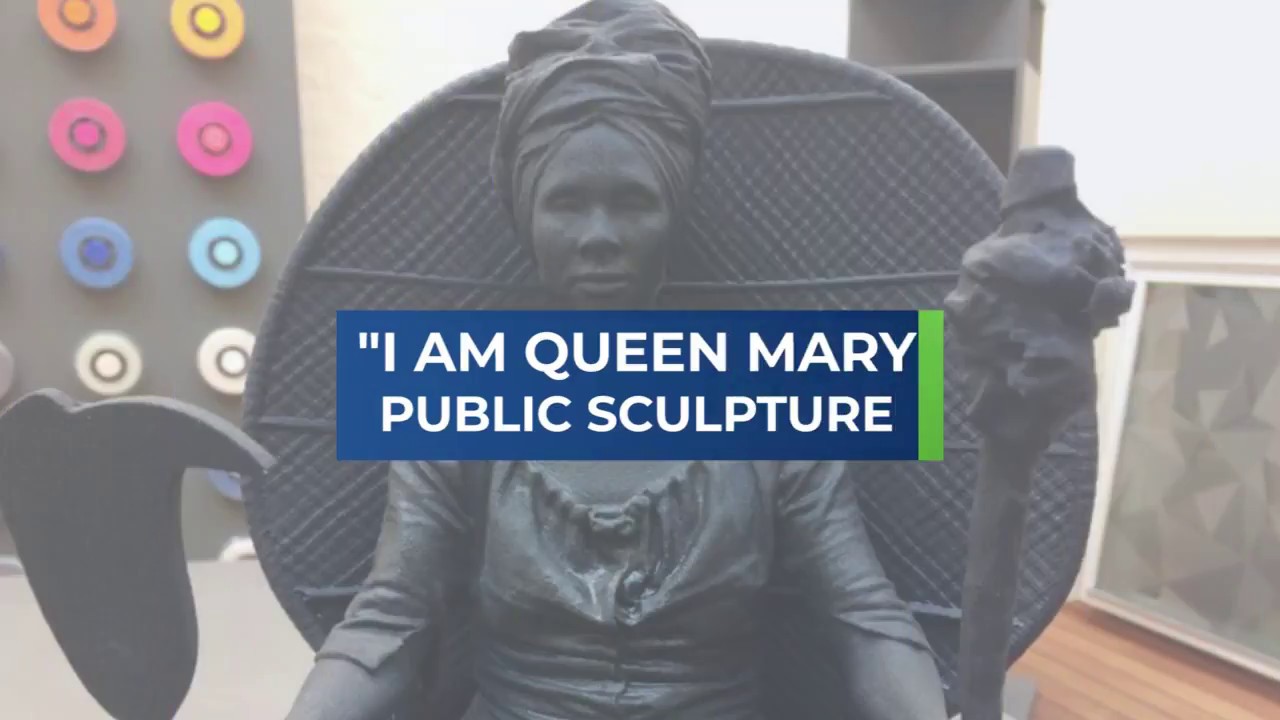
I am queen Mary – A Memorial
Mary Thomas was one of the arrested leaders of the riot. She is known as Queen Mary and together with three other women she is a strong symbol of the workers fight against the colony power. Watch the interview with the artist La Vaughn Belle, whom created the memorial Queen Mary together with artist Jeanette Ehlers in 2018. The memorial is the first statue in Denmark portraying a black woman.
 Søg
Søg