Search
By Jesper Jørgensen | 01.09.2008
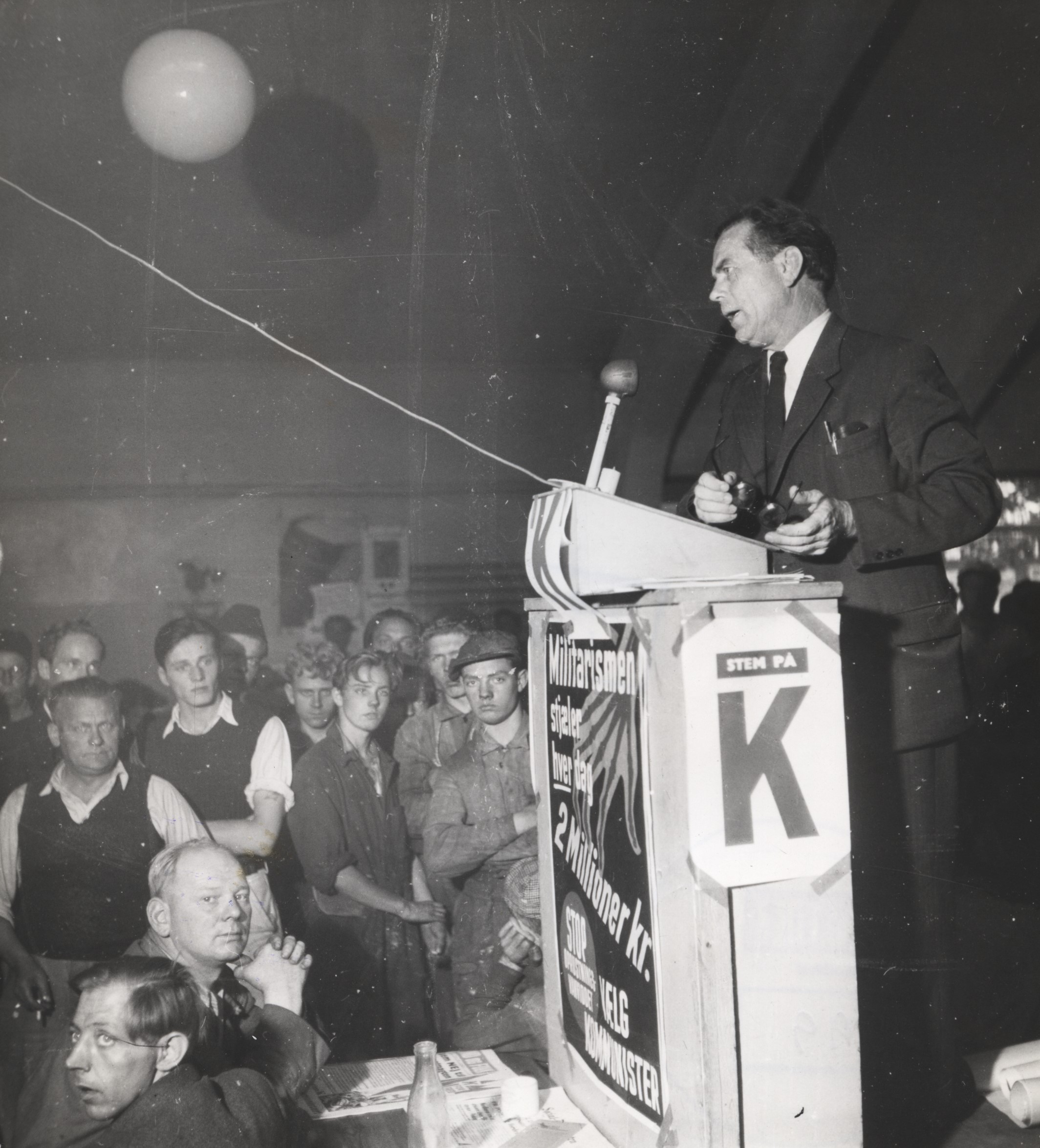
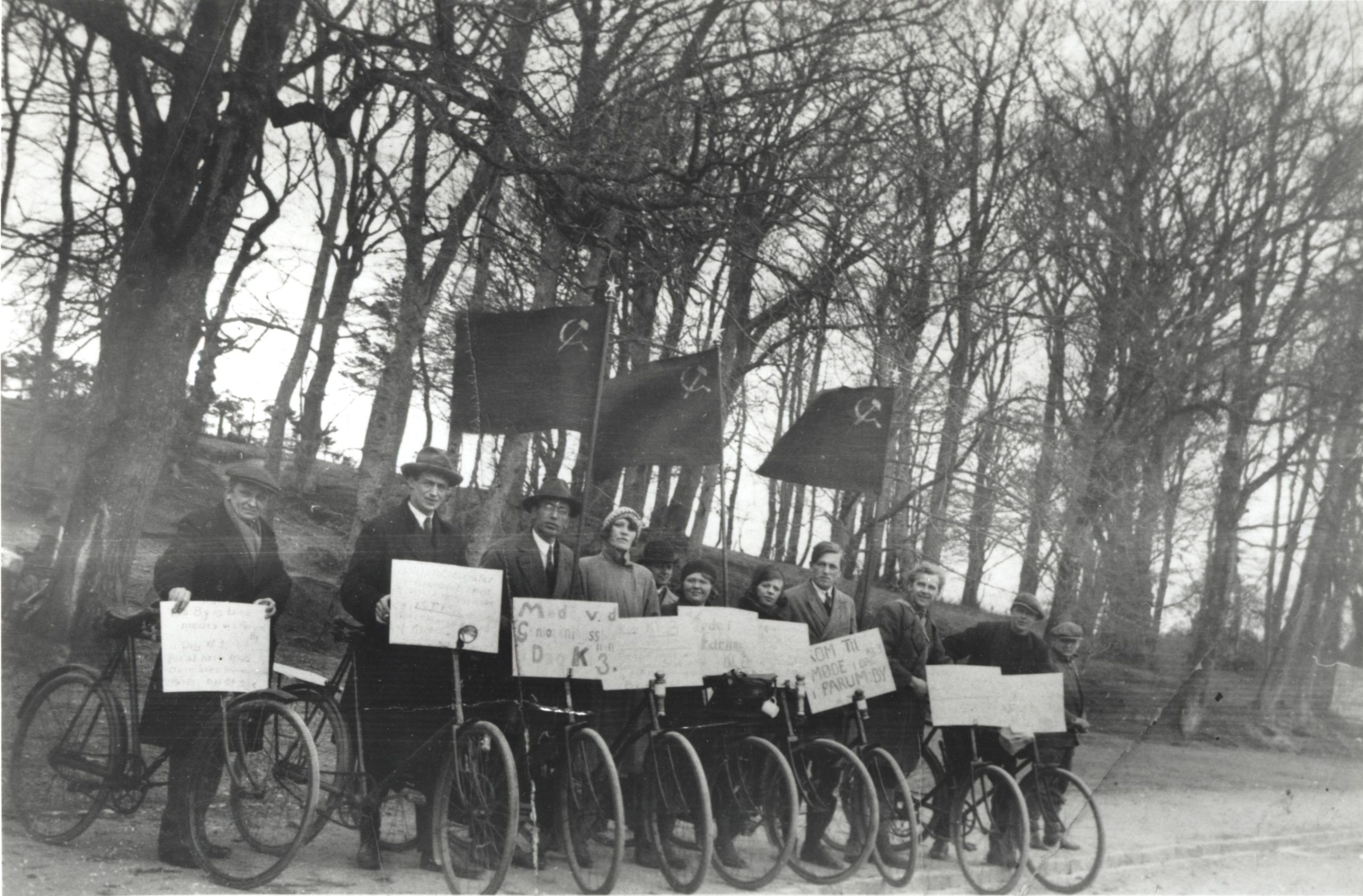
In recent years, the Workers’ Museum & ABA has had ‘Communism in Denmark’ as one of its focus areas. For the archive, this has meant continued, prioritized work with the archives collected from the DKP party house in Dr. Tværgade in 1989-1990. Since then, the two largest single parts, the party archive and DKU’s archive, have been organized and made accessible. Hans Uwe Petersen, Torsten Lange and Knud Holt Nielsen in particular have made a great effort, but several others have been involved over the years in working with the extensive and not yet fully registered material.
Since 2004, it has primarily been yours truly who has worked with the ever-growing ‘communist collection’. New archive material that has been added in recent years includes Ib Nørlund’s diaries, the archive of the National Association Denmark-Soviet Union and Villy Fuglsang’s surviving papers. For a number of years, the registration work has focused on the archives of leading communists, including Ib Nørlund’s archive, but material has also been registered from the Danish Red Aid, the Comintern Archive in Moscow, Vietnam 69 and several smaller organizations associated with DKP. Furthermore, large parts of the almost 700 archive boxes of party archives have been newly registered in connection with the ongoing work of transferring the paper records to ABA’s web-based library and archive system, Reindex.
Most recently, the archives of the National Association for Cooperation between Denmark and the Soviet Union and the Danish Committee for the Workers’ Conference have been registered. Both archives provide an interesting insight into the communists’ friendship work for the party’s two most important partner countries, which, as part of the Cold War, made great efforts to be promoted to a wider public in the Western neighboring countries, e.g. by funding various activities. According to the DIIS report Denmark during the Cold War (2005) (and PET), these associations were archetypal examples of so-called front organizations, where communists behind a non-communist facade pulled the strings and misled the general population.
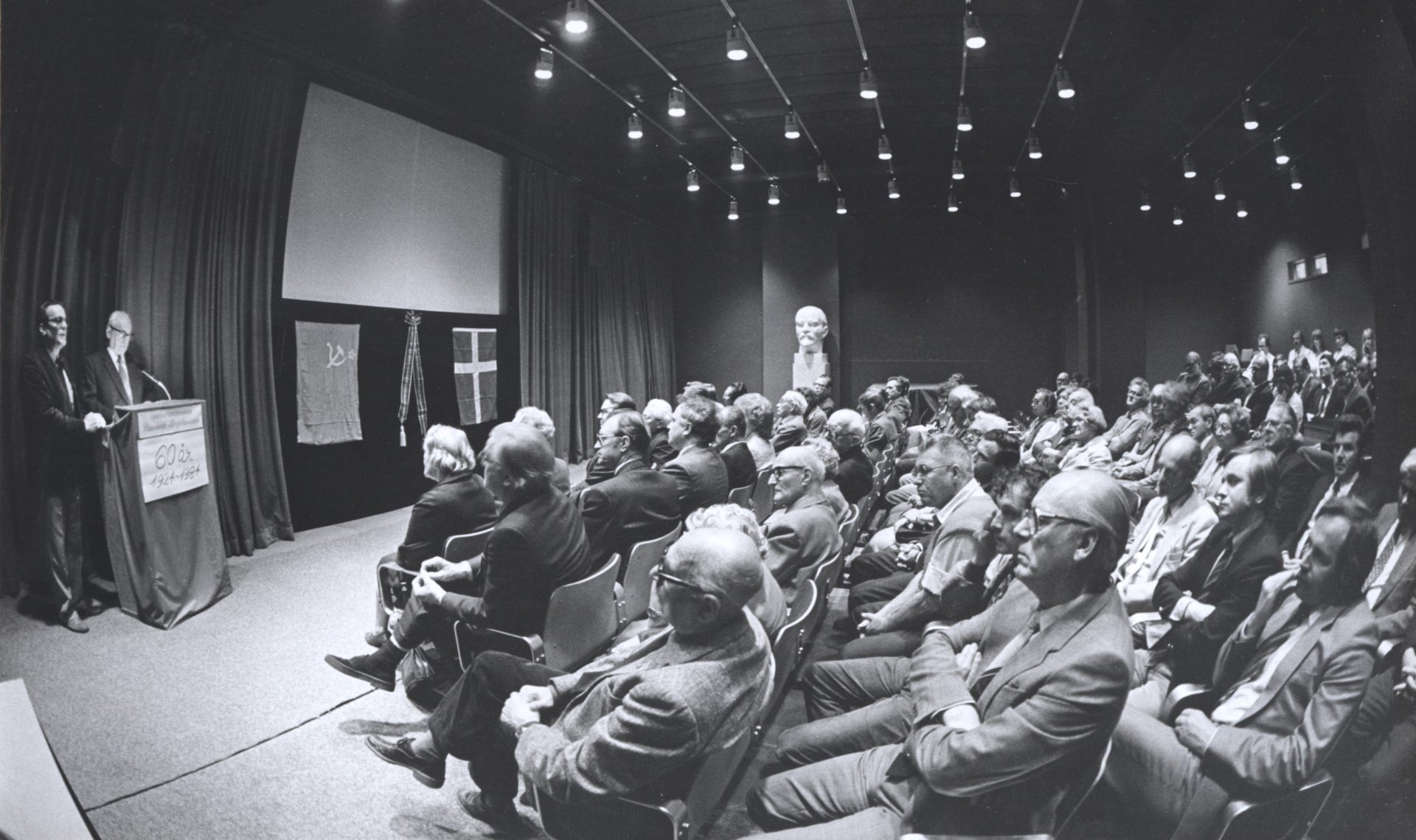
The National Association Denmark-Soviet Union was a traditional friendship association with a seemingly cross-political composition, typically with a radical chairman (e.g. Jørgen Jørgensen and Hermod Lannung) and a communist vice-chairman (e.g. Allfred Jensen and Ingmar Wagner). The foundation dates back to 1924, when Dansk-Russisk Samvirke was formed, the same year Denmark established diplomatic relations with the Soviet Union. The archive covers the period 1933-1992, but the majority of the material originates from the time after 2. World War II – especially from the 1970s, when the association had its heyday. From the Friendship House in Vester Vold street in Copenhagen, in collaboration with the Soviet partner, the Soviet Union-Denmark Association, a wealth of activities were launched, such as cultural days, the bookstore Sputnik, library, concerts, lectures, the cinema Kino Kosmos, language teaching, publishing and not least travel activities, which in the 1980s took on an almost commercial character. In 1992, the national association changed its name to the Danish-Russian Association and began a new chapter in its history. The archive comprises 105 archive boxes.
The Danish committee for the Workers’ Conference also had its peak in the 1970s with a sea of vacation and study trips to the GDR. However, the committee’s aim was initially somewhat narrower, as it served as a preparatory committee for the Danish participation in the Workers’ Conference, which was held in connection with the annual Baltic Sea Weeks in the GDR. The call to form the committee came from the local branch of the Freier Deutscher Gewerkschaftsbund in Rostock in 1958 with reference to the decisions of the World Congress of the Communist Trade Union Confederation the year before. Subsequently, the committee elected members each year to a national committee, which held meetings between conferences, and to the Permanent Committee, which was composed of members from the various national committees from the Baltic countries, Norway and Iceland, and which was responsible for overall planning. The committee worked in parallel with the Baltic Sea Week Bureau and the Denmark-DDR Friendship Association. While the Baltic Weeks were discontinued in 1975, the workers’ conferences continued until the fall of the Wall. The archive consists of 29 archive boxes covering the period 1958-1984.
Finally, 30 of the party’s district and local branches’ archives have been registered by archive intern, stud.mag. Katrine Madsbjerg, in the spring of 2008, so the ABA’s collection now contains 68 DKP and DKU branches from all over the country, from Thisted to Indre By in Copenhagen.
Others also read

THE STAUNING OF ALL OF DENMARK
Thorvald Stauning was a beacon in Danish politics and is the longest-serving prime minister of the 20th century

WITH THE LAW OR WITHOUT
In 1871, the living conditions for the few industrial workers in Denmark at the time were appalling. But when the labor..

THE BATTLE FOR TIME
Working 48 hours a week. It sounds like a lot for a Danish worker in 2019. But 100 years earlier, it was just..