 Search

Collections A‑Z
Archives
The archive holds organizational archives, party archives, cooperative archives and personal archives. Below you can get an overview of the many different archives. You can access most of them in our database.
Labor Unions
At roughly 1.5 kilometers of shelving, the archive of LO/FH is by far the largest archive in the collection, but FH member unions such as 3F, Metal, HK and BUPL, as well as many of these and other local unions and workplace clubs, are also represented with substantial collections in the archive. The same is true of the archive of the Danish Confederation of Professional Associations (Akademikernes Centralorganisation).
Parties
The party archives include the Social Democrats, the Socialist People’s Party and the Red-Green Alliance (Enhedslisten), as well as parties of earlier eras such as VS, DKP, Fælles Kurs, KAP, SAP and all sorts of small party-like groups on the political left.
Cultural and Social Associations
Archives covering cultural, social and similar associations can also be found in the archive collection. Examples include the Workers’ Educational Association (Arbejdernes Oplysningsforbund), the Labor Movement’s Business Council (Arbejderbevægelsens Erhvervsråd), and friendship and solidarity associations, such as the National Association for Cooperation between Denmark and the Soviet Union.
Cooperatives
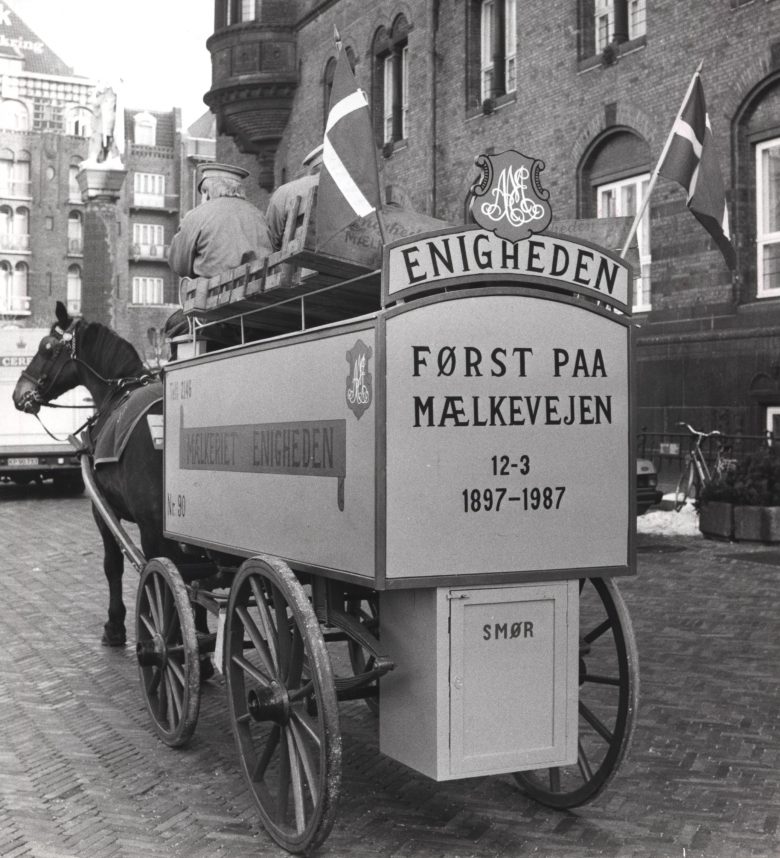
Archives from cooperative enterprises such as Arbejdernes Fællesbageri (the Workers’ Joint Bakery), Arbejdernes Andelsboligforening (AAB), the dairy Mælkeriet Enigheden and A-pressen are also part of the archive’s collections.
Personal Archives
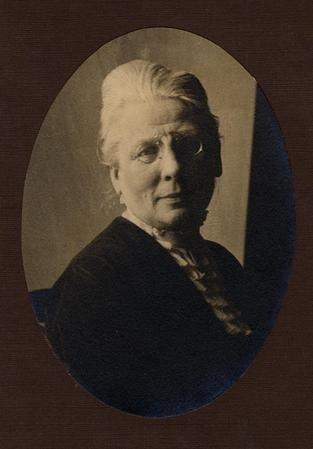
The personal archives, particularly the private archives of Social Democratic prime ministers, are, together with the LO/FH archive and the party archives, the archives most popular with the archive’s users. With the exception of Wilhelm Buhl’s archive, the archive holds the archives of all other Social Democratic prime ministers, from Thorvald Stauning to Helle Thorning-Schmidt. Besides the prime ministers’ archives, the archive holds a long list of other personal archives of people who have helped shape the history of the Danish labor movement in various ways, including the archive of Nina Bang, Denmark’s first female government minister.
Banners
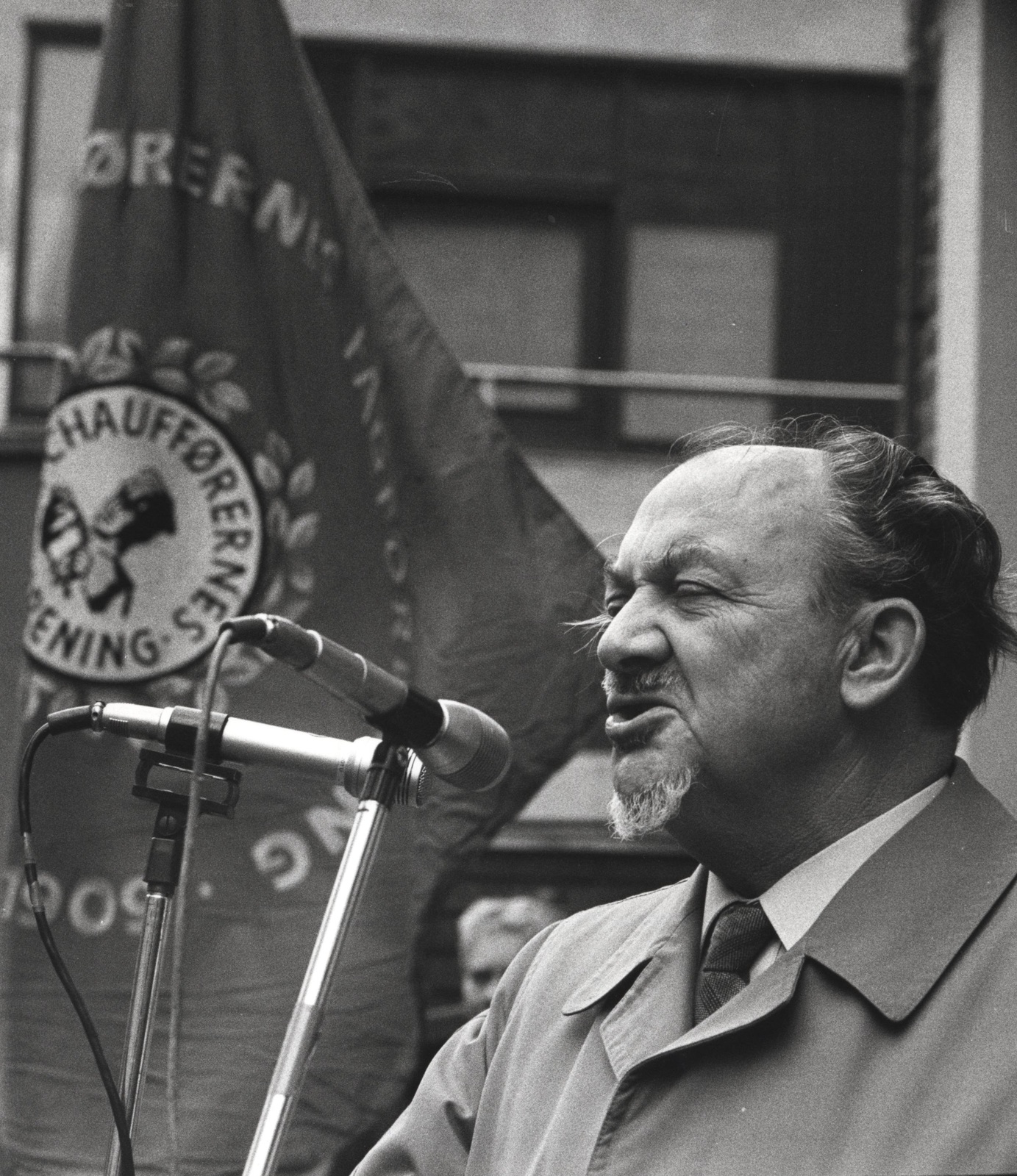
Since the early 1870s, these eye-catching banners have been symbols of the labor movement’s ideals and goals. Each banner is an important part of an organization’s history, and together the banners are part of the cultural expressions that have been used as rallying symbols at demonstrations, celebrations and labor disputes. The Danish labor movement got its first banner in the summer of 1872, and more soon followed.
Want to see more of the beautiful banners? Dive into the galleries and be sure to contact us if you have questions or are curious for more information: aba@arbejdermuseet.dk

BOOKS
The book collection spans a wide range of material types. The main groups are shown below.
Scholarly literature
Nonfiction on socialist theory, the labor movement, social and working life in the broadest sense. The main focus is on Nordic publications, but the collection also contains a selection, unique in the Nordic region, of historical English- and German-language literature on the political ideologies of the left and on the labor movement in other countries. We also have titles in other languages, including more than 1,000 titles in French.
Agitation and the movement’s publications
Polemical pamphlets, political analyses, anniversary publications about unions and cooperative associations, and more. Other, more specialized materials include labor-market publications such as collective agreements, cooperation agreements, wage statistics, and materials from courses for shop stewards. See also the Union Collection.
Biographies and fiction
We have about 5,000 biographies of individuals. Many are found only with us and cannot be borrowed from other libraries in Denmark.
In our library, working-class literature means books that deal broadly with themes of the working class and working life and the ideas surrounding them, and is thus not limited to, for example, agitational literature. You can see our fiction available for loan here.
Ephemera
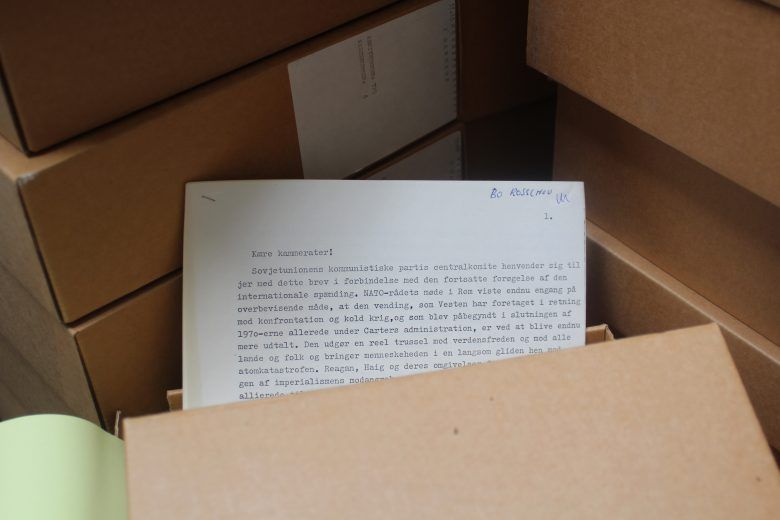
Ephemera, or everyday print, covers smaller materials that were printed and distributed on various occasions. You can find flyers, brochures, leaflets, campaign newspapers, election materials, party invitations, demonstration notices, press releases, printed lectures and the like.
The library’s digitized ephemera can be viewed in the library database and downloaded via the Workers Museum’s Wi-Fi in the reading room. They are organized by subject in the same way as the book collection.
The vast majority of the ephemera collection, however, is still only in paper form. Many ephemera items from union and political organizations are registered at the box level by union and subject and can be ordered to the reading room. Search the library database for “kasse med småtryk” (Danish for “box of ephemera”).
Most of our ephemera however, especially from political parties, has not yet been registered in the library database. It can only be accessed by appointment. Because the library has limited resources, it may be unavailable at times.
MEMOIRS
The archive holds memoirs from various larger and smaller collection efforts. The collections are registered differently in our systems and can therefore be hard to find all in one place. Here are entry points to the most important ones:
- The Labor Movement Library and Archive’s Memoir Database contains most of the archive’s memoirs, registered individually with information about the person, life course and keywords.
- The Labor Movement Library and Archive’s Memoir Collection I and II and Worker Memoirs in Aarhus are entry points to the collections as archives.
- The Workers Museum’s memoir collection among female Turkish guest workers
- Worker memoirs collected by Bjarne Lundis
- The National Museum’s Worker Memoirs 1950-1956 are held in the archive as a copy.
Newspapers
The newspaper collection contains weekly papers, dailies and similar publications, plus their supplements, from Danish left-wing organizations. We also have a large collection of foreign labor newspapers that cannot be viewed anywhere else in the country, primarily from after 1945. All materials can be ordered to the reading room.
Newspapers with no known rights holder in Mediestream can be accessed via the Workers Museum’s Wi-Fi in the reading room.
Objects and artworks
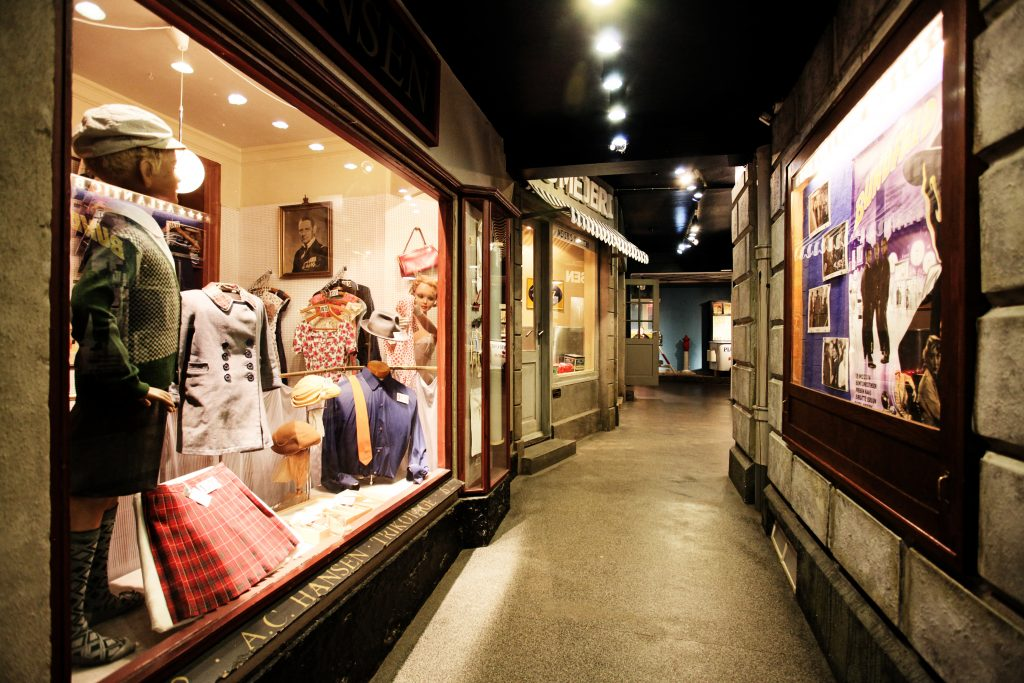
Since its inception in 1982, the Workers Museum has continuously collected objects and artworks that tell the story of the labor movement and of the ordinary worker. The first major collection effort laid the foundation for the exhibition on daily life in the 1950s, which has been a central part of the museum’s storytelling over the years. Since then, objects have also been collected from selected workplaces and trade unions. The collection includes thousands of works by well-known and lesser-known artists and illustrators who have drawn inspiration from motifs of workers’ everyday lives and history.
Today the Workers Museum has a collection of approximately 63,000 objects and 12,000 works of art. The museum collection is a significant contribution to Danish cultural heritage, which the Workers’ Museum looks after together with the other museums in Denmark. It is registered in the Danish Agency for Culture and Palaces’ shared museum registration system, SARA.
All objects and artworks are museum objects and are therefore not accessible through the library or the archive. Researchers can contact the collections’ curators about specific objects and artworks.
Periodicals
The library collection holds more than 6,000 different journals and union papers, yearbooks and annual reports, from the mid-1800s onward.
Union papers
The largest single group of periodicals in the collections consists of publications from union and political organizations. The collection holds trade union magazines from the first unions’ publications in the 1870s to today, when several unions are discontinuing their member magazines or publishing them only digitally. The papers of local unions and union clubs from all over the country are in many cases found only here. Union papers are very mixed publications with a very broad scope, and have been an essential part of workers’ organizing and identity formation from the very beginning.
FOA’s papers, from Tjenestepigernes Blad (1900-1913) to FOA-bladet, as well as papers from 9 selected unions 1870 – 1940, have been digitized and can be viewed and downloaded in our library database. Read about the project in the Workers Museum’s Yearbook 2025. Please note that the digitized material may be protected by copyright.
Yearbooks, bulletins and newsletters
Besides the main publications from unions, you can also find newsletters, yearbooks and internal publications from parties, the union movement, friendship organizations and grassroots groups, as well as youth magazines, syndicalist papers and periodicals from the international left, from social democracy through cooperatives and the union movement to anti-fascism.
Some of our periodicals were not published as such, but were distributed in closed circles for various reasons. Examples include illegal papers from the occupation era, anarchist school papers, and circulars to shop stewards or from grassroots organizations.
Scientific journals
The library has a number of international scholarly journals within our subject areas: history, working life, labor history and socialist theory. You can contact us to order a copy of a specific article for your own use. You can also order the copy via bibliotek.dk.
Photos
The Workers Museum’s photo collection holds around 2 million physical images, with photographs gathered over many years. The collection of press photos from the left’s union papers and newspapers, including Aktuelt and Land og Folk, is one of the largest in Denmark. We have also received larger donations from individual photographers. The photo collection shows many different aspects of working life and the labor movement, and documents national and international events.
Approximately 80,000 of those photos have been digitized. They can be searched in our library database and can be ordered in high resolution via the photo shop. The remaining photos can only be viewed by appointment.
Read about the terms of access to and use of photos.
Posters
The museum’s poster collection includes posters from labor movement organizations in and outside Denmark from around 1900 to the present. The posters were produced in connection with election campaigns, referendums, May Day events, peace and solidarity work, as well as strikes and demonstrations. Posters for study purposes can be viewed in the reading room by appointment.
And if you want to search our poster collection, you can find most of them in our library and archive database

Songbooks
Communal singing has been an important part of labor organizing and working life, and accordingly the library has a large collection of rare songbooks from both local, national and foreign parties, unions and others, going all the way back to the earliest days of the Danish labor movement.
Most of the songbooks in the library can be ordered for either home loan or the reading room.
Theses
For many years the library has collected theses, dissertations and university papers within our subject areas, or based on our collections. Many of the theses cannot be viewed anywhere else. You can look them up in our library system.
If you have written about something within our subject areas and would like to make your work available to others, we would love to have a copy. Write to us at aba@arbejdermuseet.dk.
Union collection
The Union Collection contains publications from local unions and national unions: reports, annual reports, minutes, financial statements, records, statistics and more, as well as a few anniversary publications and smaller printed items. The materials are arranged by trade group. They can be viewed here and ordered for either home loan or the reading room.
… Everything else
The Workers Museum has many sub-collections not mentioned above, for example of music and sheet music, or unique portfolios of images published on special occasions in the library, or the diversity of the archive collections and the museum’s object collection.
Explore labor history

ALL OF DENMARK’S STAUNING
Thorvald Stauning was a beacon in Danish politics and is the prime minister who held power for the longest time in the 20…

WITH OR WITHOUT THE LAW
In 1871, living conditions for the then few industrial workers in Denmark are dreadful. But when work…

THE FIGHT OVER TIME
Working 48 hours a week. That sounds like a lot for a Danish employee in 2019. But 100 years earlier, that was precisely…