What really happened in the spring of 1920 when the king was in trouble, the workers threatened a general strike, and the parties fought for power? We unfold that story and take a closer look at Stauning’s role in the matter.
The government was deposed
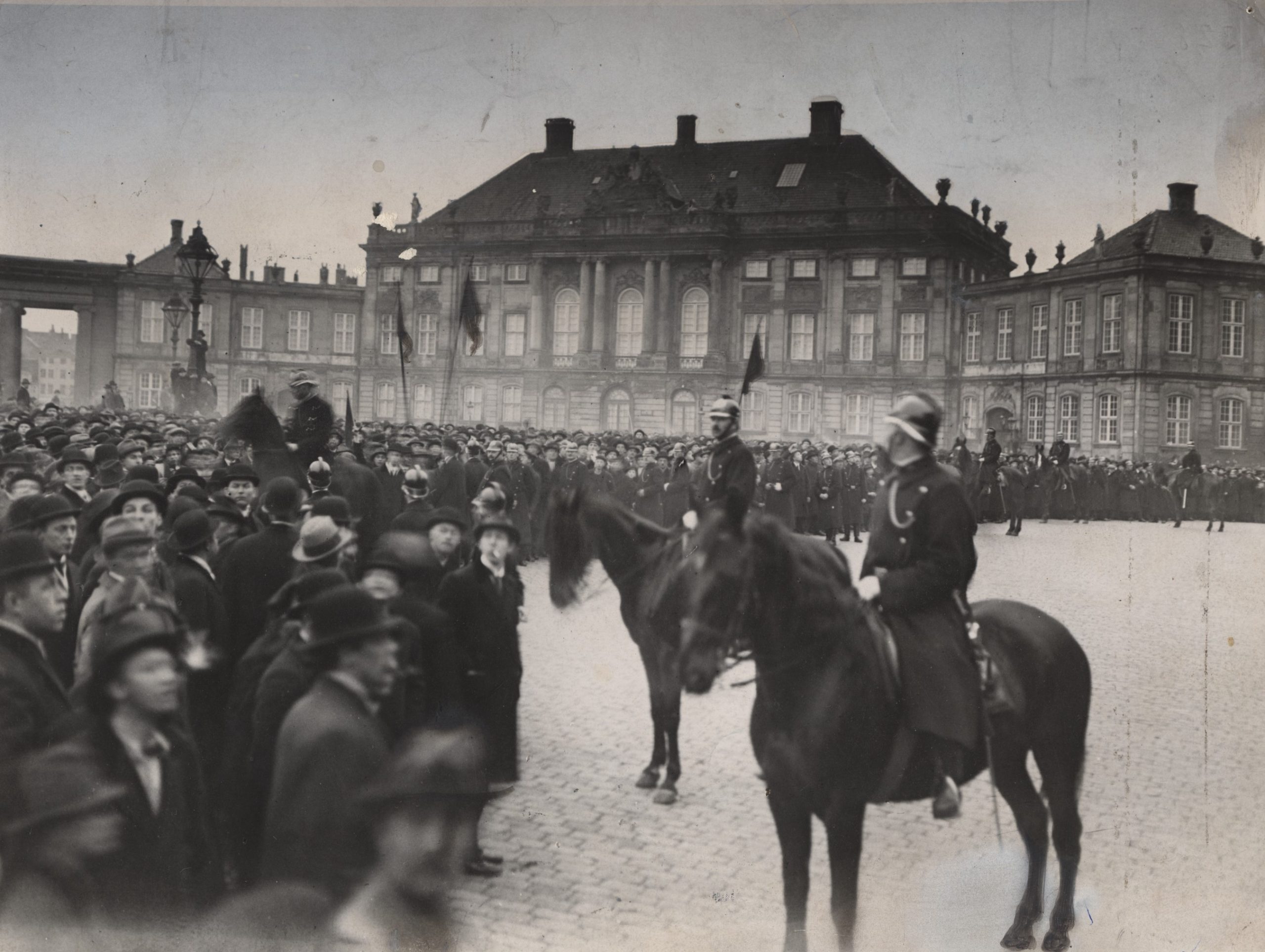
On Monday, March 29, 1920, at around 11:45 am, King Christian the 10th dismissed the government headed by Zahle after a previous dispute between the parliament’s leading parties over the Southern Jutland border issue and disagreement over a new election law. A few days earlier, after some tough constitutional revision negotiations, Thorvald Stauning had gone on Easter vacation in his summer cottage in southern Zealand. Still, when he received the news from the postal service, which kept him informed due to the cottage’s lack of telephone connection, he immediately rushed to the capital.
After arriving at Copenhagen Central Station at 5 pm, Stauning rushed to the Social-Democrat editorial office, where editor Frederik Borgbjerg had already sent out an extra issue of the Social-Democrat at 1 pm with the headline “the king commits a coup d’état”.
Borgbjerg, who in Stauning’s absence had been informed of the events by the deposed government, immediately informed Stauning about the crucial meeting between the King and the Prime Minister that had taken place at Amalienborg, which had now triggered one of the biggest parliamentary crises in Danish history – but what role did Stauning, Borgbjerg, and the rest of the trade union movement play in the days that followed and in restoring the rules of parliamentary politics?
Editor Frederik Borgbjerg had proclaimed the trade union movement’s reaction in the extra issue of the Social-Democrat and more than hinted at the possibility of a general strike with the phrase: “The reaction shall witness a popular uprising of unprecedented magnitude”. Probably inspired by Germany, where a similar incident had been met by two days of popular strike and ended with the reinstatement of the coalition government and Reich President and saddle-maker, Friedrich Ebert. In contrast to Borgbjerg, who wanted the people’s strike to be triggered immediately, Stauning seemed to take a more pragmatic and strategic approach, and made it clear to Borgbjerg that such a serious move had to be decided and thoroughly prepared by the trade union movement’s leading bodies and not declared in the Social-Democrat. And so it was. During a meeting that evening between the Social Democratic Party, the Confederation of Danish Trade Unions and the United Federation of Danish Workers, it was decided to inform the King that if the Zahle Ministry was not reinstated, a general strike would be proposed on 30 March at 09.30.
Between the King and the elected representatives
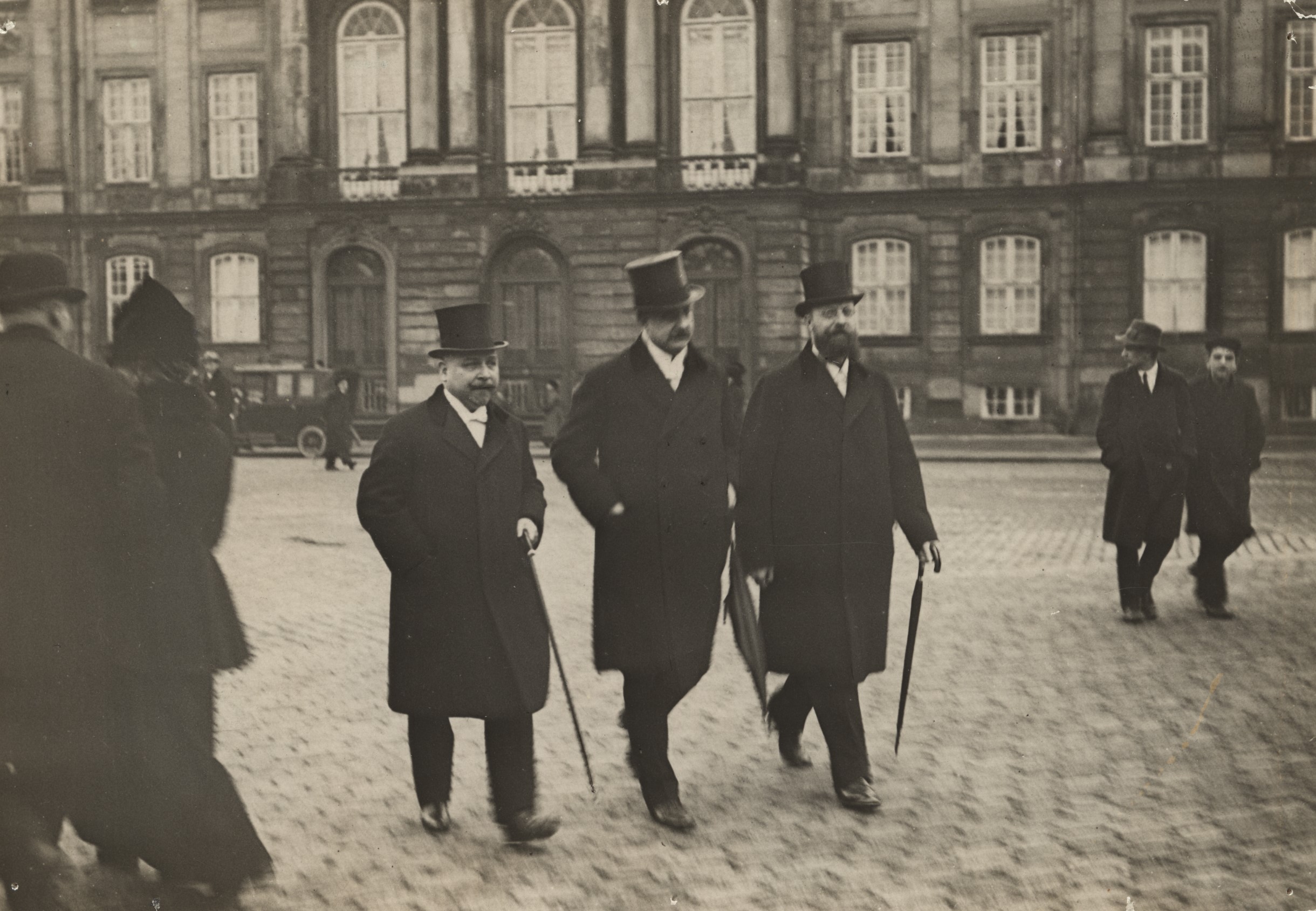
A deputation lead by Stauning, delivered the message to the King before midnight. After a period of reflection, the King rejected the union movement’s demands early the next morning and instead appointed the Liebe ministry at 4 pm the same day. Liebe’s Caretaker Ministry were given little faith, and it became the shortest-serving ministry in Danish history. The ministry that never slept it was subsequently called.
On Wednesday, March 31 at 9 pm, Carl F. Madsen opened the Confederation of Danish Trade Unions’ general meeting with the words:
“This is the most difficult and most serious situation we have ever been in”.
Serious, but at the same time interesting that, alongside the parliamentary crisis, the the Confederation of Danish Trade Unions’ executive committee had negotiated an agreement with the employers the night before that seemed to meet most of the union movement’s demands. Stauning was aware that an agreement would make it difficult to launch a general strike. Unlike Borgbjerg, who wanted it to happen quickly, Stauning also avoided giving the impression in his speech that the possibility of a general strike was weakened, and rejected Borgbjerg and others’ eagerness to bring the ultimate weapon into the fight.
 Search