 Search
The party’s history, like that of other parties, is rich in power struggles between individuals and groups of people.
The DKP demanded iron party discipline from its members and had it written into its statutes under the term democratic centralism, which meant that the individual communist had to follow the decisions of leading bodies. Yet the party was made up of individuals who did not always agree with fellow party members and party policy, and who had their own opinions on how loyalty to the cause was best expressed.
The study of the life and times of individual communists is therefore an important entry point into the party’s history. Below is an overview of Danish communists who have left their mark on the ABA’s collections in the form of biographies, memoirs, publications, archives and photos.
Communists in the ABA collections
Martin Nielsen (1900-1962)
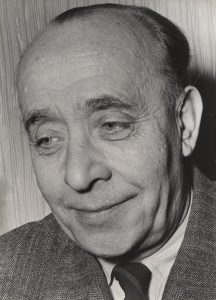
Born in Gjødvad near Silkeborg. In 1921-22 active in the unemployment movement in Randers, where he participated in the general strike in 1922. The following year he was elected to the main board of the DKP, where he was appointed party secretary in 1926. In 1928-30 he attended the Lenin School in Moscow. He was subsequently unemployed and active in the unemployment movement together with Aksel Larsen. In 1931, he was a candidate member of the party’s central committee and employed as business manager for the party newspaper Arbejderbladet. In 1934-41 he was editor of the newspaper and in 1939 he was elected to the Danish Parliament. On June 22, 1941, he was interned in Vestre Prison, then Horserød Camp and KZ-Stutthof. After the liberation, he rejoined the party leadership and the Danish Parliament. In 1952 he became co-editor of the party newspaper Land og Folk, 1955-1960 editor-in-chief. During the party campaign in 1956-1958, he stood on the side of the CK majority opposite Aksel Larsen.
The archive consists of 2 archive boxes with his letters, manuscripts, memoirs etc. Martin Nielsen’s letters from the internment 1941-1945 are particularly interesting. They provide a unique insight into a frustrated prison life with both deprivation for his family, especially his son Anton (1939-), bitterness towards the system and faith in better times for the communist cause.
Ragnhild Andersen (1907-1990)
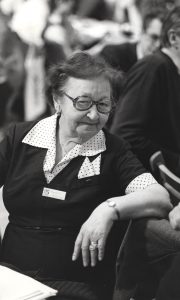
Ragnhild Nikoline Andersen joined the communist movement in the latter half of the 1920s. First in the Young Pioneers, then in both the DKU and DKP. During most of the occupation, she was imprisoned, first as a Danish internee in Horserød camp (1941-43) and then as a German prisoner in the Stutthof concentration camp (1943-45). Ragnhild Andersen was a member of the Danish Parliament for DKP in the period 1945-1960. In addition to her party work, she was active in the Danish Women’s Workers’ Union (KAD), where she was a member of the board of Branch 5 (metal workers) from 1935 and a member of KAD’s main board from 1945 to 1954.
The archive consists of 5 archive boxes with correspondence, manuscripts, etc. documenting her work for women’s equality. There are also diary entries from trips to the Soviet Union (and Bulgaria). Ragnhild Andersen also left behind several photographs, which are now placed in the Workers’ Museum & ABA’s photo collection.
Alfred Jensen (1903-1988)
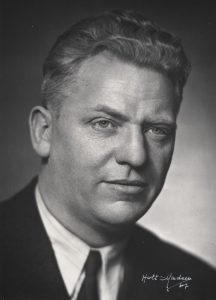
Peter Alfred Jensen was involved from the founding of DKP in 1919/1920. In 1936, he took over Arne Munch-Petersen’s seat in the Danish Parliament, where he remained until 1960 (except 1941-1945). During the occupation, Alfred Jensen was a member of the illegal party leadership as the party’s vice-chairman, and towards the end of the war he replaced Børge Houmann as DKP’s representative in the Freedom Council. In the last years of the occupation, Alfred Jensen was the party’s de facto leader and was therefore also central to the unity negotiations with the Social Democrats. After the war, Alfred Jensen became Minister of Transport in the liberation government. In 1952, he married Ragnhild Andersen.
The archive consists of three archive boxes with correspondence, manuscripts etc.
Jørgen Jensen (1920-1987)
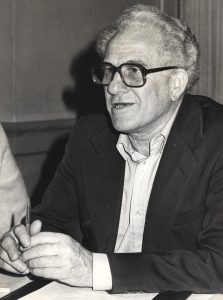
Jørgen Jensen became a member of DKP in 1941, a member of the Central Committee and the Executive Committee in 1952 and a member of the Danish Parliament in 1975. Until 1977, when he became chairman of DKP, Jørgen Jensen was particularly involved in trade union work. In 1962 he became chairman of Metal Lyngby and the party’s national trade union committee. In 1966, he became chairman of the National Association of Automobile Mechanics and a member of the Danish Union of Blacksmiths and Machinists. He was also active in the party’s peace work and from the early 1960s he was chairman of the Danish Peace Conference. As party chairman, Jørgen Jensen continued DKP’s Muscovite line, without the charisma of the two previous chairmen.
The archive consists of 6 archive boxes containing material from the party secretariat in the period 1981-1987.
Ejnar Kruse (1911-1964)
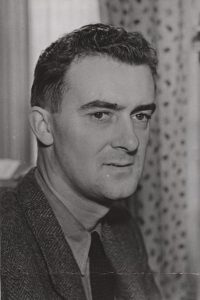
Doctor Ejnar Kruse was active in the resistance movement in Odense during the occupation. Kruse became DKP’s representative in the resistance forces’ Funen leadership and later chairman of the Home Guard Region IV. After the war, Kruse entered municipal politics and was a member of Odense City Council in 1946-1954. In 1953, Kruse was one of the initiators of the Danish Peace Conference, where he was secretary in 1954-1955. Until his death in 1964, Kruse was involved in campaigns against German rearmament and against Danish participation in the EC.
The archive consists of three archive boxes containing, among other things, interesting correspondence with the chairman of the Danish Peace Conference, editor Thomas Christensen (R), regarding the question of the role of communists in the organization.
Arne Munch-Petersen (1904-1940)
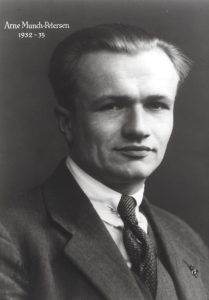
Arne Munch-Petersen’s political career was short and ended tragically. In 1925 he became a member of DKP, in 1932 he and Aksel Larsen were elected to the Danish Parliament as the Communists’ first parliamentary representatives in Denmark, and in 1936 he traveled to the Soviet Union to work in the Comintern. The following year he disappeared. It wasn’t until Ole Sohn’s 1992 biography that Munch-Petersen’s fate, which ended with his death in Soviet captivity in 1940, became clear.
The archive primarily contains copies of documents from the Comintern archive in Moscow, which DKP obtained in 1989 for Sohn’s research, but also correspondence between Munch-Petersen’s wife, Elna Hiort-Lorenzen, and the Ministry of Foreign Affairs from the 1950s. The archive consists of one archive box.
Ingmar Wagner (1921-1997)
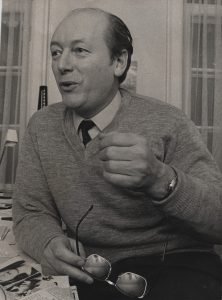
Ingmar Kurt Wagner, known as Laksko, actively participated in the resistance as a courier for BOPA and his father Svend Wagner (General Johansen). After the war, he became secretary and later national chairman of DKU and a member of the Danish Parliament (1953-1957). From the mid-1950s, Ingmar Wagner was centrally placed in DKP as party secretary and international secretary (1974-1992), with responsibility for peace and solidarity work. In the period 1974-1992, he was also Vice Chairman of the National Association for Cooperation between Denmark and the Soviet Union.
The archive consists of 3 archive boxes, which in addition to letters, manuscripts, etc. contain papers left behind from Svend Wagner and from Chr. Vilh. Hagen’s work in the party’s control commission in 1958.
Communist women
Communist women do not feature much in Danish historiography. On the other hand, the ABA offers good opportunities to write the history of Danish communist women.
By Anette Eklund Hansen
Communist women do not feature much in Danish history writing. In the 1970s and 80s, a few dissertations were written.
Hanne Caspersen’s study of Arbejderkvindernes Oplysningsforening 1925-34 (Årbog for Arbejderbevægelsens historie, 1978) stands quite alone. However, she continued her work on the influence of communist women on the social reforms of the 1930s: Moderskabspolitik i Danmark i 30’erne (University of Copenhagen, 1985)
In addition, a few women are biographed either in independent biographies (see Introduction to Danish and International Communism Research) or in Dansk Kvindebiografisk Leksikon. Morten Thing’s biographical article Marie Nielsen. En politisk biografi (Årbog for arbeiderbevægelsens historie, 1975), which is based on Marie Nielsen’s archive in ABA.
On the other hand, there will be good opportunities to write the history of Danish communist women. The ABA has many sources in archives and printed material that can shed light on this history. In the DKP archives, you can follow the political and trade union cases that the party’s women’s political committee has worked on. The same applies to the trade unions that have been communist-oriented. From the 1920s, Branch 5 of the Women’s Workers’ Union had a clear communist line, which resulted in the establishment of the Working Women’s Information Association.
The ABA has also received archives from communist women. From these, personal biographies can be elucidated, and issues such as peace work, gender equality issues, and theater and cultural engagement can be uncovered. In addition to Marie Nielsen, the registered personal archives include a number of other prominent female communists.
The communist women and their political and professional work are also reflected in the ABA’s other collections, such as photos, posters, flyers and memoirs.
Suggestions for assignment topics and further research:
- Danish communist women’s travels to the Soviet Union
- Communist women’s influence on social reforms in the 1930s/post-war period
- Communist women and the trade union movement
- Communist women and peace work
- Communist women’s ideas and influence on the welfare state
- The international work of Danish communist women
- 8.march – in an international communist perspective
Other communists
Aksel Larsen (1897-1972), chairman of DKP 1932-1958, chairman of SF 1959-1967
Dagmar Andreasen (1910-1991), factory worker
Erik Jensen (1937-2008), Vietnam activist, founder of Demos
Ernst Christiansen (1891-1974), chairman of DKP 1919-1926, minister (S)
Etty Hiort-Lorenzen(1905-1998), physiotherapist
Georg Jensen (1893-1979), conscientious objector, syndicalist
Hanne Reintoft (1934-), social worker, politician (SF, VS, DKP)
Hans Scherfig (1905-1979), author, painter
Harald Andersen-Harild Jr. (1906-1980), lecturer, council communist
Inger Merete Nordentoft (1903-1960), school inspector, politician
Leo Kari (?-1974), Spanish volunteer, resistance fighter
Martin Andersen Nexø (1869-1954), author
Svend Wagner, 1895-1971, lieutenant colonel, resistance fighter


