 Search
As a first result of the prioritization of the ABA’s registration work back in 2014, the Common Course archive was registered.
By Jesper Jørgensen
The history of Fælles Kurs began with the publication of the seamen’s and seafarers’ communist faction magazine of the same name in 1960. The communists were strong within the two maritime unions. At the same time, the seamen formed a strong faction within the DKP. Particularly influential was the charismatic chairman of the Seamen’s Union, seamen’s boss Preben Møller Hansen. In the latter half of the 1970s, however, he and his supporters came into conflict with the party, among other things over cooperation with the Social Democrats, which ended in Preben Møller Hansen’s expulsion from the party and the closure of DKP’s Maritime Department in 1979.
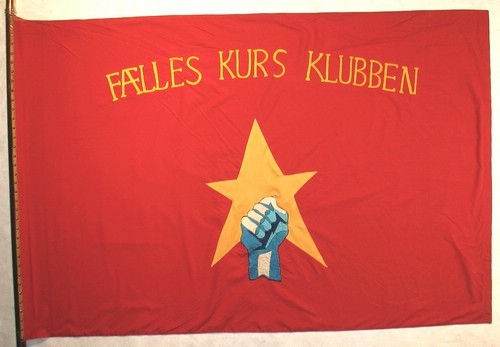
This was also the starting point for the Common Course Club, which was founded the same year with Jørgen Tved as national chairman and Preben Møller Hansen as vice-chairman. One of Common Course’s original goals was to unite the revolutionary left – Deruda’ – for union action unity, as its magazine was called in the early years – but apart from cooperation with small groups such as the Communist Workers Party Marxist-Leninists (KAm-l) and the Socialist League (FS), there were few results on this front.
Better results were achieved by Fælles Kurs, from 1986 as the Labor Party Common Course, with its focus on a friendly elderly policy and a critical immigration policy. Here, the party apparently spoke to new and prosperous moods in the population. The policy was rewarded in the 1987 general election, when Fælles Kurs won 4 seats. Unfortunately for the party, it only lasted until the following year, when it was voted out again.
Another distinctive feature of the party was its solidarity and friendship work in relation to North Korea and China. The material in the archive shows that the party regularly exchanged greetings, dinner invitations, delegations, experiences and views with the two countries’ embassies in Copenhagen.
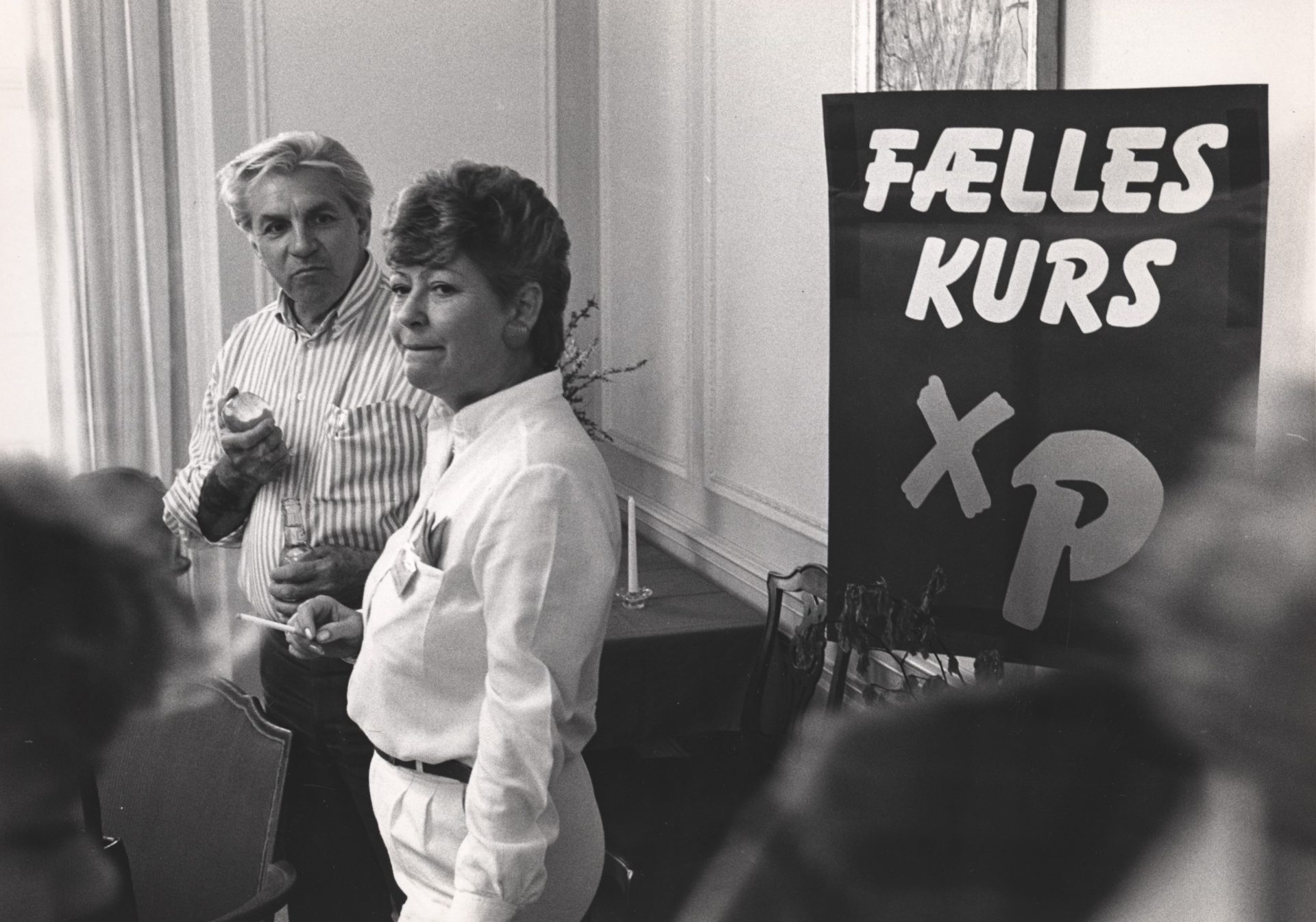
At an election night at Fælles Kurs during the parliamentary election on May 10, 1988
From 1989 to 2001, Common Course was elected to the Copenhagen City Council. One of the key issues was again the elderly. After this, it was the end of the road for Fælles Kurs. Financially, things began to get difficult from 1994, when the Seamen’s Union withdrew their support for the party.
Fælles Kurs was disbanded in 2003 in favor of DKP, from which it had originally sprung, and which it had probably never completely left behind. In a greeting to Common Course’s last national conference in 2003, Preben Møller Hansen made the following salute:
“WHEN SOME OF US WERE THROWN OUT OF THE DANISH COMMUNIST PARTY – AND LATER WHEN WE FOUNDED COMMON COURSE – MANY DID NOT BELIEVE THAT WE WOULD HAVE ANY OPPORTUNITIES. THAT WE WOULD HAVE ANY OPPORTUNITIES WHATSOEVER.
BUT WE HAVE SHOWN THAT WE DID.
AND WE STILL WANT A COMMON COURSE FOR OUR CLASS AND OUR PEOPLE!!!
OUR PEOPLE AND OUR CLASS NEED A UNITED COMMUNIST PARTY!!!
A PARTY THAT WILL DEFEND THE INDEPENDENCE OF OUR COUNTRY AND THE PROSPERITY THAT IS SOLELY DUE TO THE STRUGGLE OF THE WORKING CLASS OVER GENERATIONS.
A PARTY THAT WILL FIGHT THE RAVAGES OF MONOPOLIES AND WARMONGERS – AND FIGHT FOR PEACE AND FRIENDSHIP BETWEEN THE PEOPLES OF THE WORLD.
IT IS MY GREATEST WISH THAT SUCH A STRONG, DANISH COMMUNIST PARTY WILL BE RECREATED AS SOON AS POSSIBLE!!!”
The archive of Common Course consists of 10 archive boxes with meeting papers from national, national executive and executive committee meetings as well as correspondence and subject-oriented cases, covering the period from 1980 to 2003. In addition, a number of tape recordings from national meetings, conferences and interviews with Preben Møller Hansen have been preserved.
Fælles Kurs’ archive is accessible according to ABA’s general terms of access.
Find ABA’s material about Preben Møller Hansen and Jørgen Tved.
Others also read

THE STAUNING OF ALL OF DENMARK
Thorvald Stauning was a beacon in Danish politics and is the longest-serving prime minister in the 20th century

WITH THE LAW OR WITHOUT
In 1871, the living conditions for the few industrial workers in Denmark at the time were appalling. But when the labor..

THE BATTLE FOR TIME
Working 48 hours a week. It sounds like a lot for a Danish worker in 2019. But 100 years ago, it was just..


