Search
“One played the banjo, the other the mandolin…” so wrote the poet, journalist and socialist Oskar Hansen in “A song about three little musicians” in 1939. Hansen worked on the far left and wrote both fight songs and satire for the working people. Oskar Hansen remained a revolutionary to the end.
Oskar Hansen (23 July 1895 – 24 May 1968) was the man behind two of the most famous Danish workers’ songs – “Når jeg ser et rødt flag smælde” (1923) and the famous “Danmark for Folket” (1934). But his contribution to the political and cultural development of the labour movement was far greater than that. Oskar Hansen was the son of a typographer from Copenhagen. He became a typographer himself and supplied poems to the party newspapers at an early age. Later he became a journalist at Social-Demokraten.

Politically, Oskar Hansen belonged to the left wing of the Social Democratic Party. He became a Social Democrat as a young man and in 1913 he initiated the establishment of the Social Democratic Youth Association (SUF) in Sundby in Copenhagen. He followed SUF during the split with the Social Democrats in 1919 and supported the Communists. It was in the same year that his reinterpretation of the Russian battle song “March of the Red Guards” led to the Danish “Brothers let the weapons shine”.
In 1922, Oskar Hansen returned to the Social Democratic press, but he continued to have sympathy for the revolutionary struggle.
His great success “Denmark for the People” was written in 1934 to support Stauning’s party program during the crisis years, and its success was helped by a beautiful melody composed by Oskar Gyldmark after a competition. It almost made Oskar Hansen the official “party poet”.
However, Oskar Hansen also wrote many other working-class poems – about the sour everyday life, about the feeling of being unemployed, about life in Copenhagen for better or worse. His poetry collections include “Under røde Faner” (1929), “Kamp” (1932) and “Kammerater” (1935).
Oskar Hansen wrote several poems about the German occupation in 1940. “Big Black Birds” had to be “declaimed” according to special instructions.
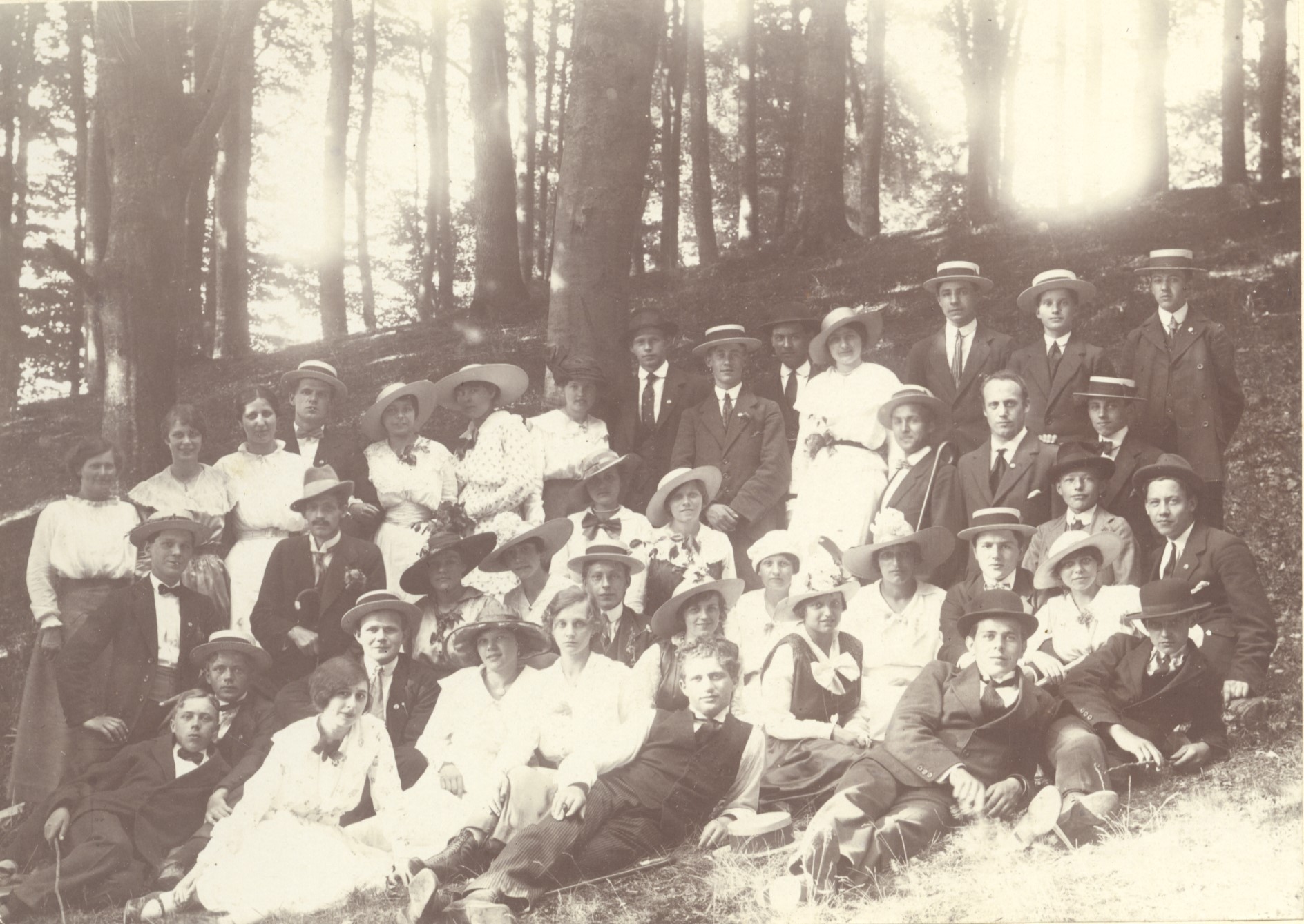
Satire and humor were also his field. He wrote plays and played an important role in the so-called “red revues” from 1931 onwards.
Even in his later years, he was critical of the influence of economists and organizations on the labour movement, expressing fear of pampering and opportunism, and worrying that the movement’s goals and fighting spirit might slip into the background.
See more photos of Oskar Hansen
Did you know that the Workers’ Museum & Library and Archive of the Labor Movement has Oskar Hansen’s large private archive with many of the original song lyrics, manuscripts and personal papers?
Others also read

THE STAUNING OF ALL OF DENMARK
Thorvald Stauning was a beacon in Danish politics and is the longest-serving prime minister in the 20th century

WITH THE LAW OR WITHOUT
In 1871, the living conditions for the few industrial workers in Denmark at the time were appalling. But when the labor..

THE BATTLE FOR TIME
Working 48 hours a week. It sounds like a lot for a Danish worker in 2019. But 100 years earlier, it was just..