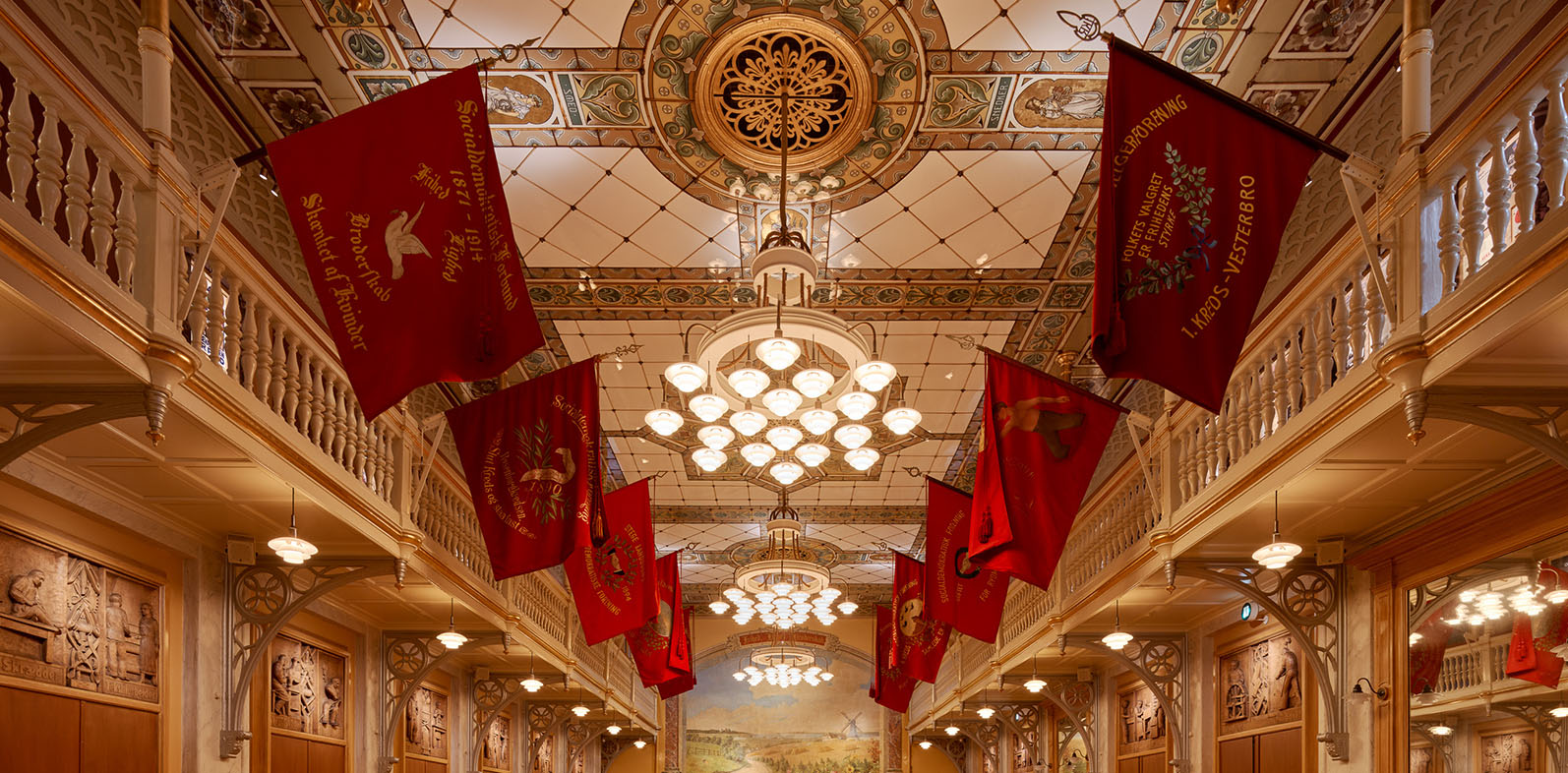
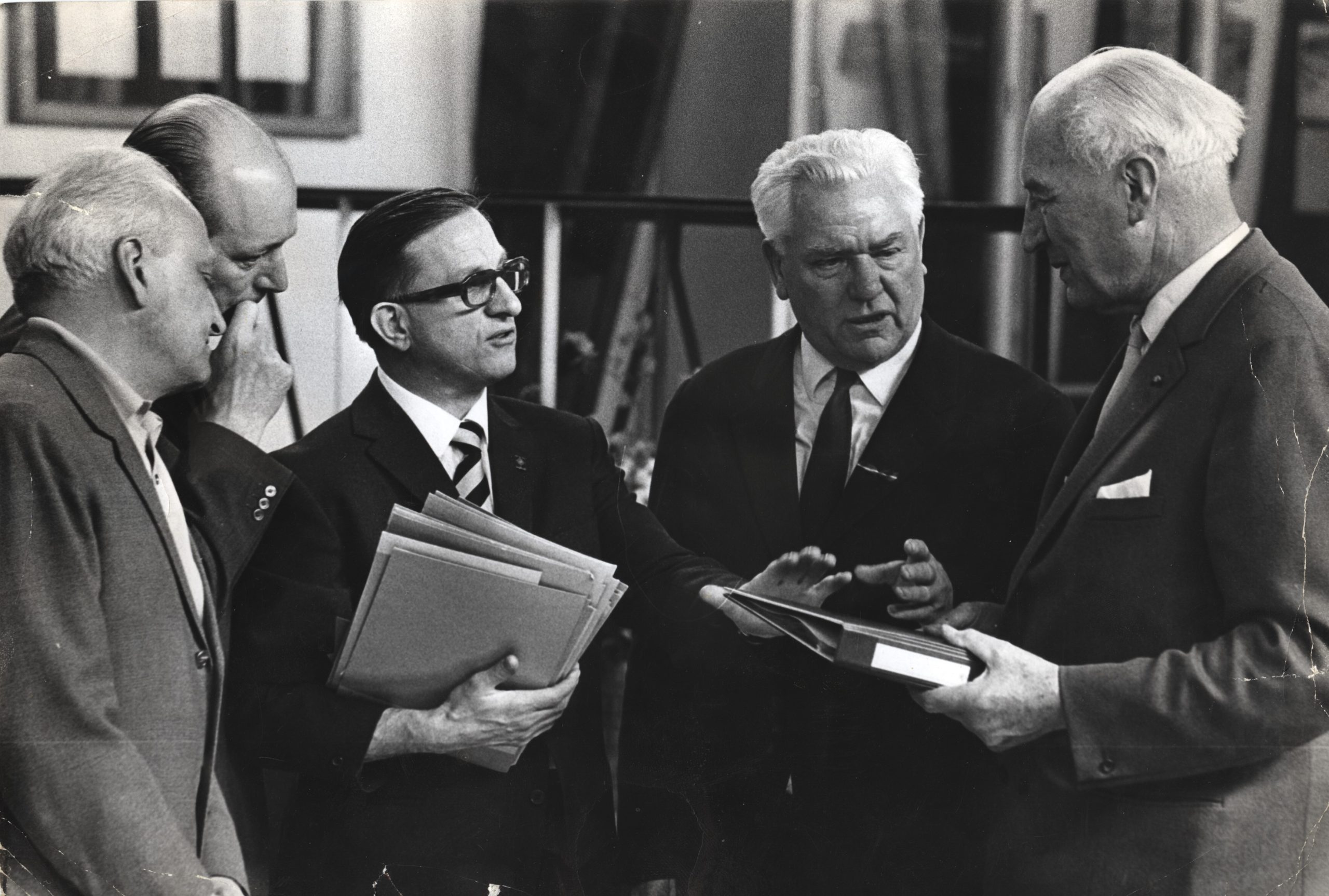
building the assembly hall
The Workers’ Assembly Hall was built as a meeting place in a time when assembling among workers was made difficult by the authorities. In the summer of 1871, the first socialist labour movement was founded in Denmark. It was carried forward by a new class-conscious group of workers who saw themselves in opposition to capital owners and employers.
However, the new labour movement met resistance from the start. The country’s bourgeois forces feared revolutionary conditions like those seen in Paris in the spring of 1871, when Parisian workers had declared a socialist commune in the French capital. Despite the formal freedom of speech and assembly granted in the Constitution of 1849, the Danish socialists were monitored and harassed by the police. Meetings had to be held in inns and dance halls where there was room for larger gatherings. But the innkeepers were threatened by the police and meetings were often interrupted or canceled. Eavesdropping and infiltration were also used by the police to stop the burgeoning labor movement. When the authorities banned a workers’ meeting due to fears of revolutionary uprisings, a violent clash ensued. The meeting on Fælleden became the Battle of Fælleden. The year was 1872. Then began a gathering of workers to build a meeting place of their own.
The road was long and winding. But in 1879, the house was ready. A meeting house built by workers, for workers and by workers – entirely with funds raised by the same workers.
“The company’s business manager, carpenter Andersen, gave the assembly a warm welcome under the roof, in the shelter of which he hoped that in the future voices would speak up for the cause of labor and freedom strongly enough to resonate in the homes of rich and poor alike. He hoped that with the strength of conviction they would tell the worker that he too had a claim to receive his share of life’s goods-that by acquiring knowledge and intelligence he must seek to attain the same height as the classes that were now influential, and that by awakening from the state of dullness in which he now often finds himself, he would bring society and himself a great step forward towards the great goal that should be so close to every worker. a better livelihood”
From the inauguration of the Assembly Building on April 23, 1879. Quoted from Social-Demokraten on April 25, 1879.
On April 23, 1879, the house was inaugurated. In the rear building, a banquet hall and meeting rooms were set up where the workers could meet without interference from the authorities. In the front building and the side building, apartments were created for private living. Gradually, private rentals disappeared in favor of trade union and union offices.
In 1920, the Assembly Building was expanded by purchasing the neighboring property in Rømersgade no. 24.
 Search