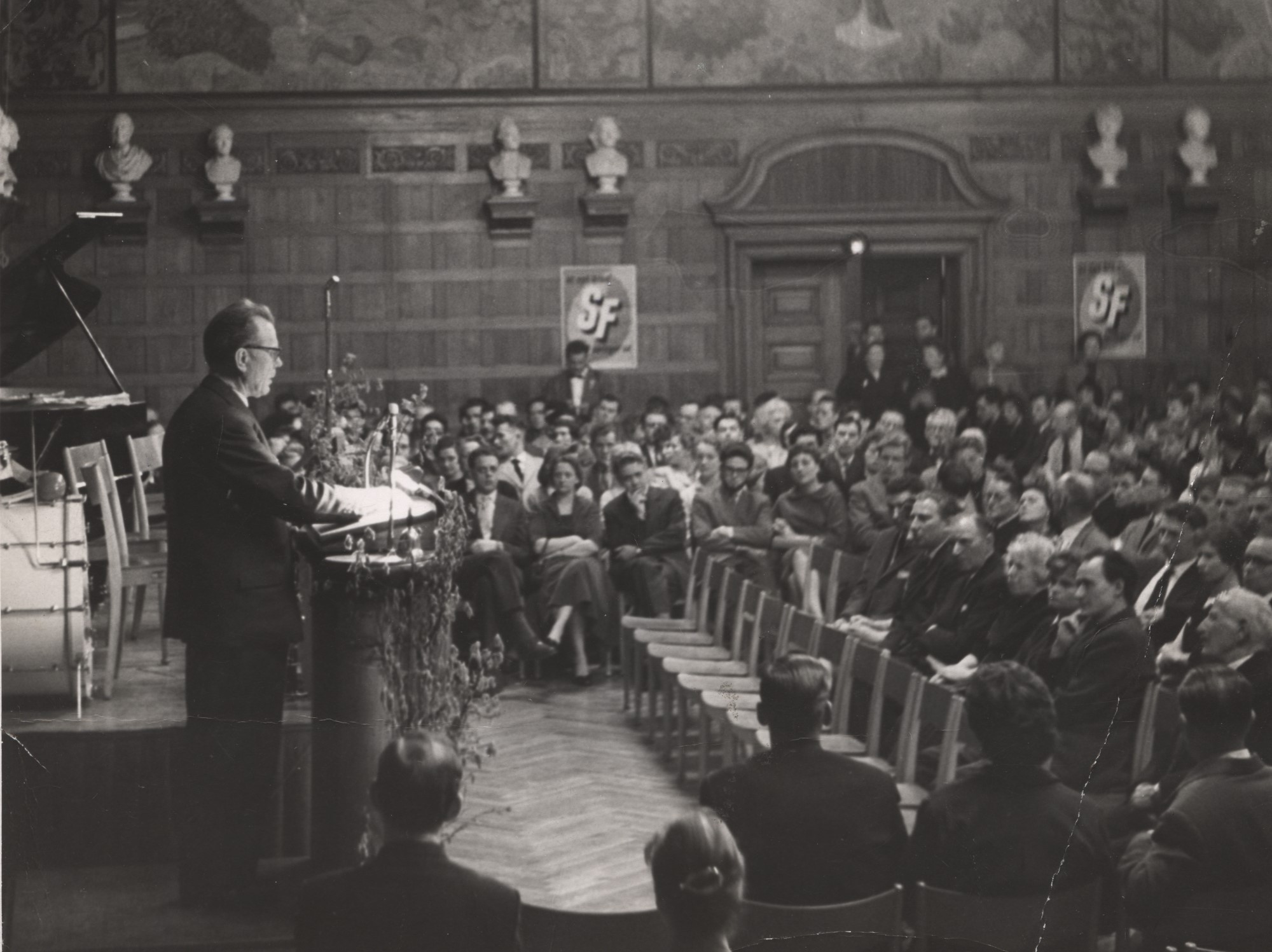
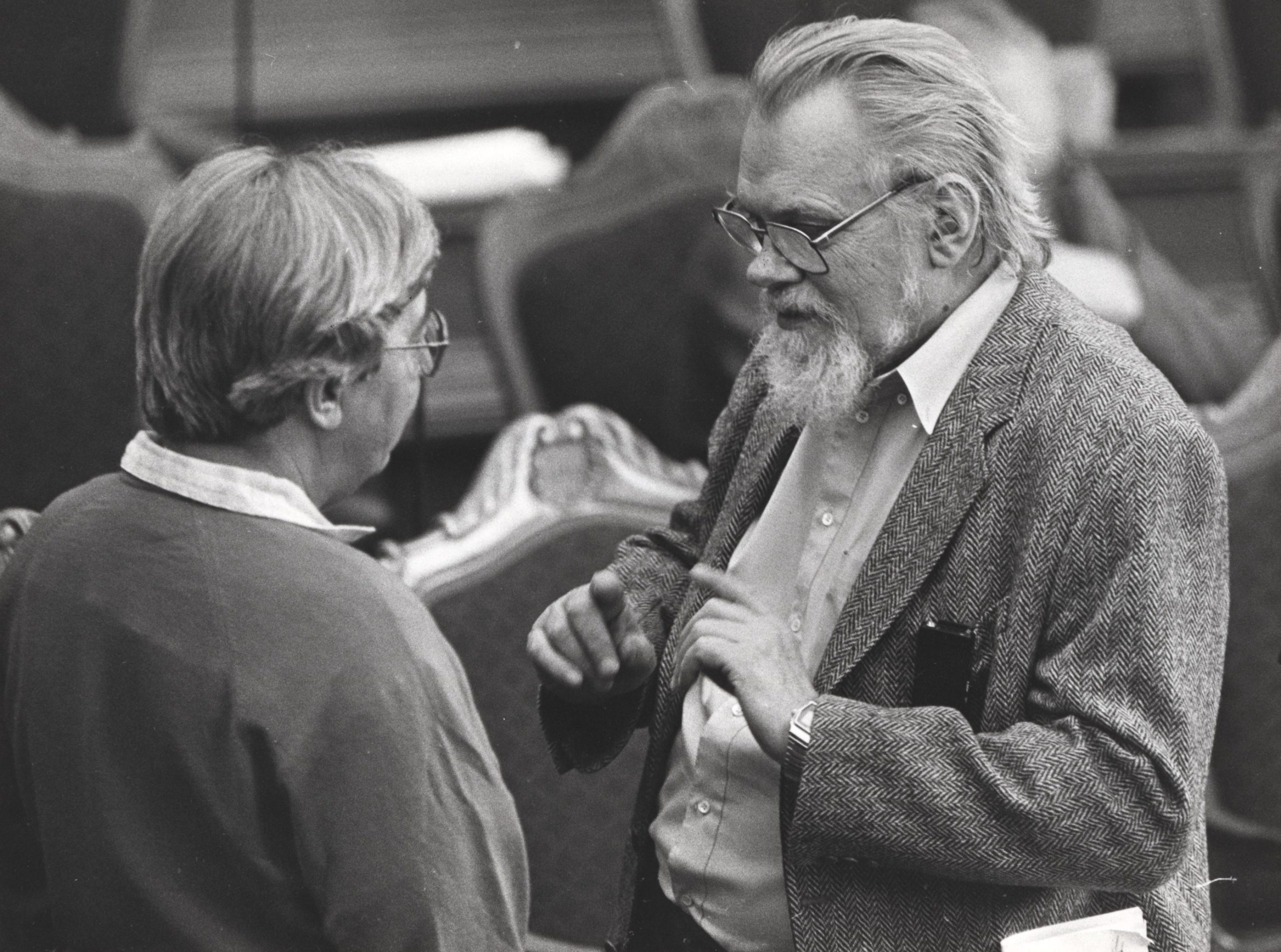
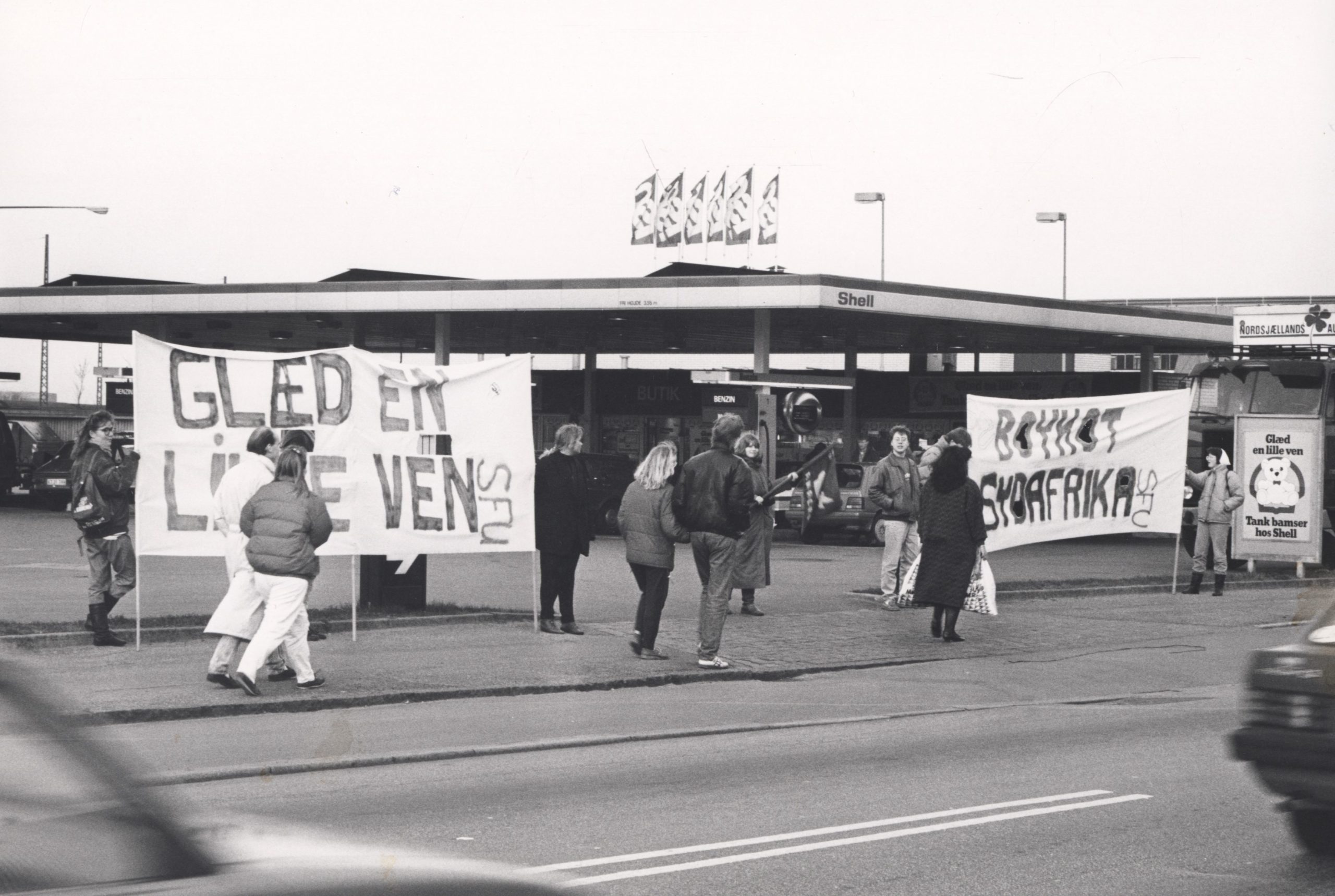
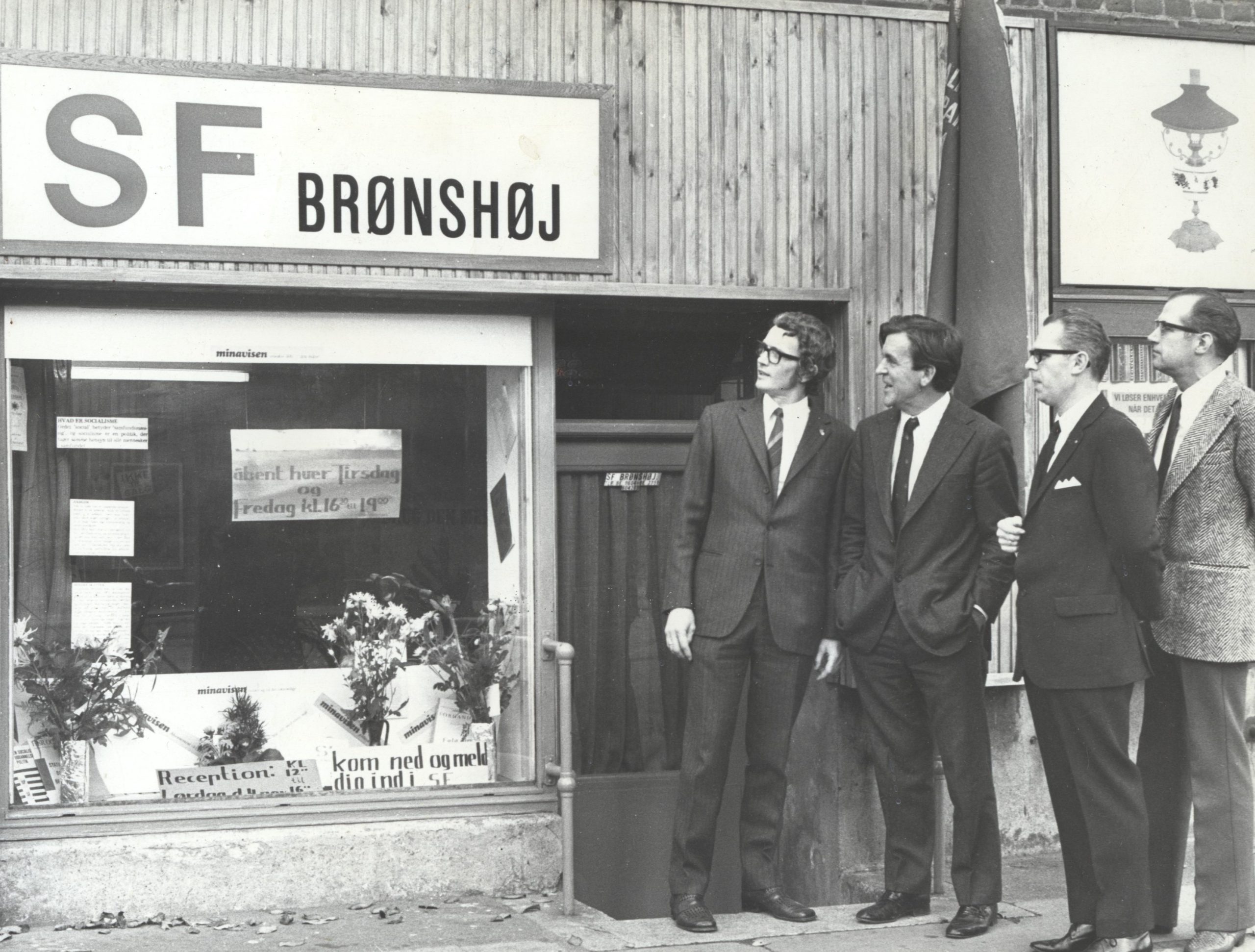
Throughout the 1970s, SF sharpened its socialist profile and focused on cooperation with extra-parliamentary movements in areas such as equality, environment and peace. At the same time, the party marked itself as an outspoken opponent of the EC. In the landslide election of 1973, SF lost 6 seats, and the following year Gert Petersen took over the chairmanship and held it for almost two decades. In the late 1970s, SF again experienced internal strife and electoral crisis, hitting a low point in 1977 with only 3.9% of the vote and 7 seats in parliament. However, the decline was short-lived and the 1980s was a heyday for SF with over 20 seats in the Danish Parliament throughout the period, although the party had little real political influence.
In 1991, Holger K. was elected chairman after a run-off election against Steen Gade, and in the following years the socialist profile was softened and EU skepticism toned down, while the environmental profile was prioritized. In the years 1994-2001, SF acted as a supporting party for the Social Democratic Party, but as was the case in the 1960s, this led to declining support and internal strife. This changed, however, when the party, led by Villy Søvndal from 2005, managed to establish a more independent opposition policy against the UK government, and in 2007 SF’s number of seats more than doubled to 23, the highest in almost twenty years.
Despite a setback in the 2011 election, SF managed to get into government for the first time, but once again the party burned its way into power. After a series of poor polls and internal disagreements, Villy Søvndal resigned from the chairmanship in 2012, which was taken over by the relatively unknown Annette Vilhelmsen after a competitive election. However, the internal strife and voter crisis continued and in January 2014, SF left the government and Pia Olsen Dyhr took over as chairman.
SF in the ABA
SF’s archive consists of 433 boxes and contains, among other things, minutes from meetings of the Executive Board, the Executive Committee and the National Trade Union Committee as well as material from national meetings and congresses. In addition, there is a 166-box archive of SF’s parliamentary group with material from political negotiations and parliamentary committees. Finally, the collections contain a number of photos and small prints as well as archives from several prominent SF members, from a number of local party associations and from the youth organization SFU.
Search the SF archive
Party programs from 1959-2012
1959-1961: What we want
Pamphlet published by the Socialist People’s Party in 1961 with the following content:
- Aksel Larsen: On the foundation and objectives of the Socialist People’s Party, 1959
- Program statement from the Socialist People’s Party, adopted by SF’s 1st congress, June 6, 1959
- SF’s election program 1960
1963: Program of principles for the Socialist People’s Party
Adopted by SF’s 3rd congress, October 1963. Reproduced after 15th edition/1975
1963: Socialist People’s Party policy here and now
Work program adopted by the party’s 3rd congress, October 1963. Published by the Socialist People’s Party, May 1964.
1980: Socialist People’s Party’s program of principles and actions
Adopted at SF’s extraordinary national meeting in Copenhagen on November 29-30, 1980. With an introduction by Aage Frandsen.
1991: Towards new times
SF’s principles and action program. Adopted at SF’s extraordinary national meeting, November 23-24, 1991.
1999: The trade union movement as a social reform movement
Trade union program of principles adopted by the Socialist People’s Party’s national meeting, 22-24 May 1999 in Aalborg.
2001: Debate booklet
Principle and action program, February 2001.
2002: Work plan for SF 2002-2004
Adopted by the National Convention of the Socialist People’s Party, April 26-28, 2002.
2002: The future lies to the left
Statement of principles adopted at the Socialist People’s Party’s national meeting, April 26-28, 2002.
2003: A new society in a new century
Draft of the Socialist People’s Party’s program of principles and perspectives.
2003: Program of principles and perspectives
Adopted by the National Congress of the Socialist People’s Party, May 18, 2003.
2012: Program of Principles for SF
Adopted by the SF National Assembly, April 15, 2012
 Search