Search
The Communist Manifesto did not play a direct role in Denmark until the 1870s onwards. Although the first edition of the manifesto from February 1848 included a statement that it would be “issued in English, French, German, Italian, Flemish and Danish”, it was not published in a Danish translation until January 1884 when it appeared in the newspaper Social-Demokraten. The following year, it was published as part of the Socialist Library’s writings edited by the Social Democratic Party Chairman P. Knudsen. That same year, “Kapitalen” was also published in Danish for the first time.

Indirect significance
The Communist Manifesto was not mentioned in Danish newspapers in the 1840s or 1850s, and there is nothing to suggest that either Marx or Engels played any particular role in presenting socialism to Danish newspaper readers during this period. However, their ideas about “the modern worker” indirectly influenced the Danish debate, and the Neue Rheinische Zeitung, which was edited by Karl Marx and Friedrich Engels, was often quoted in Danish newspapers.
In the last decades of the 19th century, Marxist and revolutionary ideas could be found in the Danish labor movement, but from the beginning of the 20th century, the reformist movement, which sought to change society through reform and parliamentary work rather than armed revolution, became increasingly dominant.
Resurgence in the 1960s
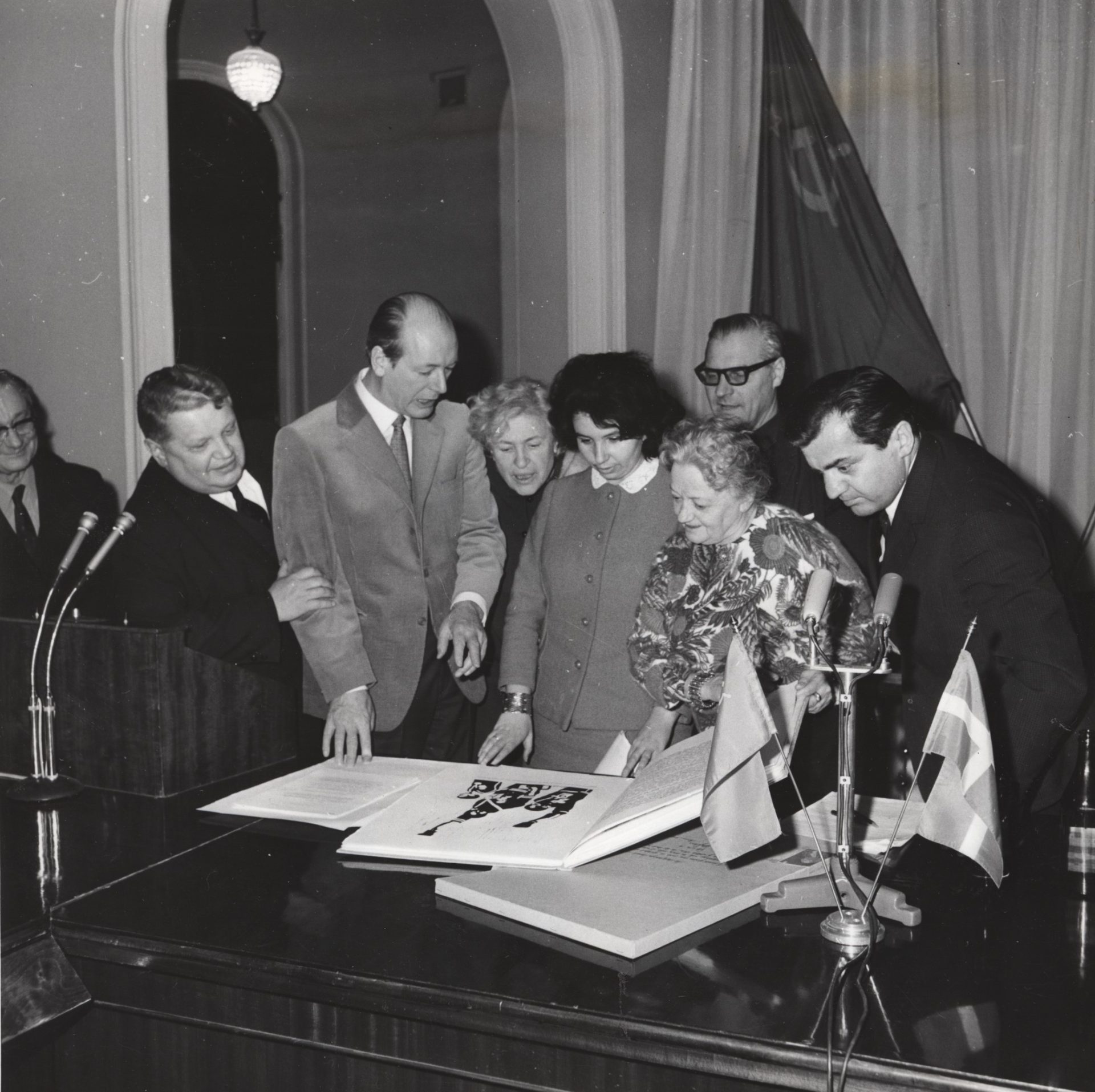
However, Marxism and the Manifesto enjoyed a resurgence from the late 1960s, when a number of new groups on the left took up class theories and revolutionary ideas again. This led to a number of reissues of the Communist Manifesto, including Dea Trier Mørch’s illustrated version from 1969.
Today, the ideas of Marx and the Manifesto live on in a wide range of movements and theoretical directions with a common starting point in a critique of capitalist development.