Search
In the 1890s, there are many strikes. Trade unions fight for better wages, shorter working hours and the right for workers to join a union. The Danish Employers’ Association is formed in 1896 and the Confederation of Trade Unions is formed in 1898. The employers want to break the young trade union movement and initiate a major lockout.
Employers and the Great Lockout
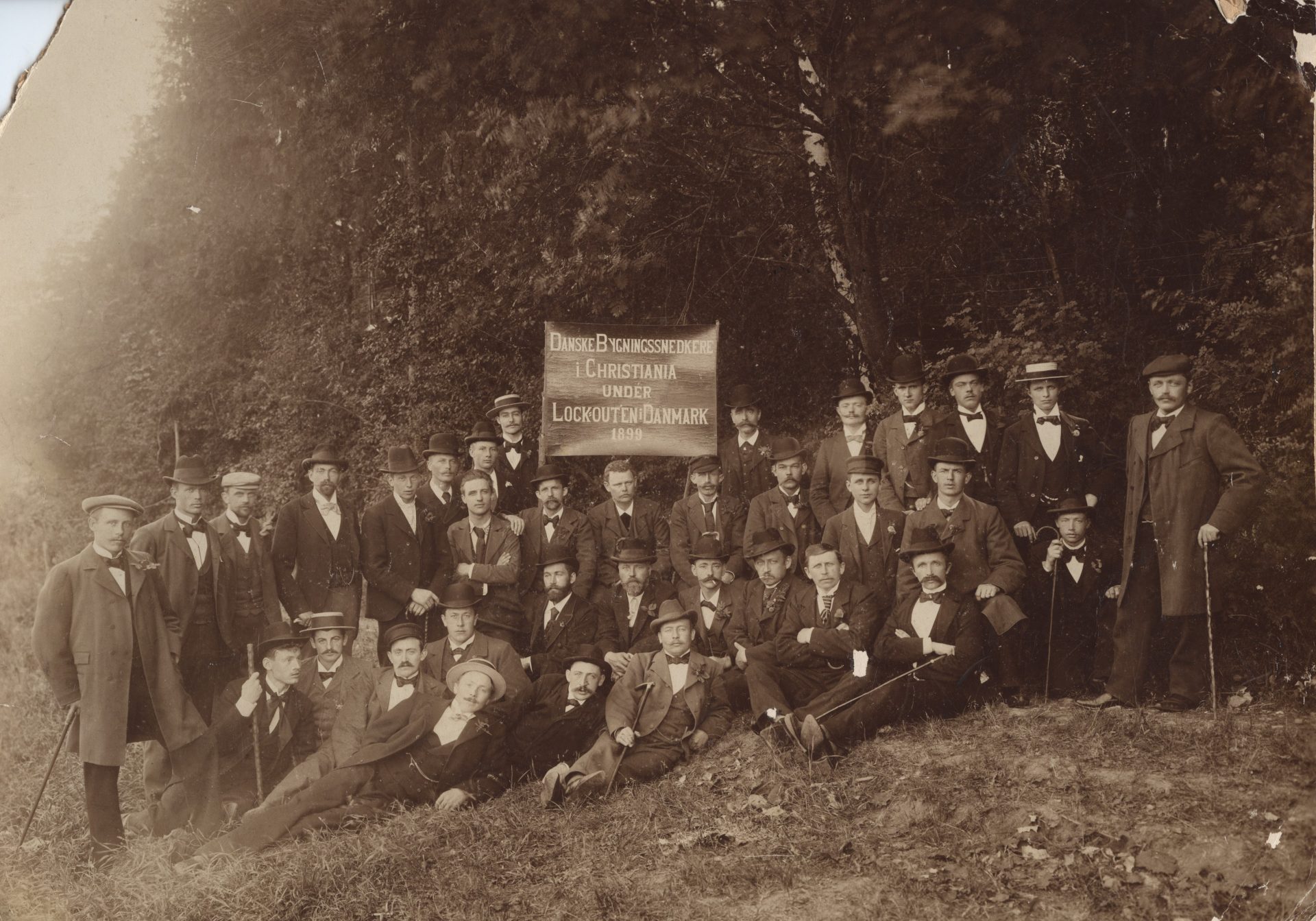
The biggest labor struggle in Danish history is the Great Lockout of 1899, when the then newly formed employers’ association wants to put the unions in their place once and for all. In the years leading up to the Great Lockout, there were many strikes. Often over pay and working hours, but also over the right to organize. This happens in 1892 when the night workers go on strike. The night workers empty latrines, and as Copenhagen is not yet sewered, both rich and poor are dependent on the night workers’ service, as no one has a toilet yet.
The Copenhagen Refuse Company puts scrubbers to work. But Lyngsie, the foreman of the workmen, has ordered the night workers to hand over the hundreds of keys to backyards and outhouses in a big pile.
No one can figure out which keys go where, so the stinking toilet buckets start to pile up all over the city. Complaints and pleas pour in to the municipality. The waste management company has to give up. And the night workers are given the right to unionize. Strikes like this are the order of the day. As a countermeasure, employers begin to lock out workers – that is, exclude them from the workplace. To stand united against an increasingly strong trade union movement, they set up the Confederation of Danish Employers in 1896.
Two years later, the workers responded with the creation of De Samvirkende fagforbund – what is now known as LO. De samvirkende is only one year old when the employers decide that it’s time to put the trade union movement in its place. They expand a small Jutland carpenters’ strike into a nationwide lockout. And on May 19, 1899, 30,000 workers take to the streets – that’s more than half of the members of De samvirkendes fagforbund. The employers’ chairman, Niels Andersen, sends DsF a letter stating that any negotiations are hopeless. Then he goes on a five-week spa vacation in Germany.
Workers and the Great Lockout
The lockout paralyzes the major cities, and bourgeois circles try to mediate. But for employers, it’s not about finding a solution, so instead of reaching a settlement, they throw another 10,000 workers out on the street. The unions can only pay a small amount of benefits, and hardship begins to spread in the working-class neighborhoods, as painter Anton Hansen recounts in his memoirs: “Poverty in the working-class neighborhoods degenerated into conditions bordering on famine. Rent was not paid, but as most landlords were aware that they could not expect rent from any new tenants, they let things go their way.”
Opposition to the Hunger War, as the lockout is called, reaches far into bourgeois circles. A “committee for collection for the locked-out workers” is founded. Among other things, the committee provides food for wives and children and sets up clothing rooms where workers can collect clothes. And many farmers take children from the cities on vacation. These are tough times for the locked-out workers and their families, but they persevere, says Emanuel Svendsen, Treasurer of De samvirke:
“As hard and long as the struggle was, and as much sacrifice it demanded, none of us were worried that the employers would get their way and crush the union movement.” At its peak, the lockout itself will involve 40,000 workers. It has many dramatic phases, but it also becomes a demonstration of solidarity and sympathy. On the workers’ side, the conflict is financed by both special dues and voluntary contributions.
Support for the workers
The Great Lockout is the largest labor dispute the world has ever seen in relation to the size of the country. Both sides are looking abroad for help. Employers make sure that those who try to get work in Germany are also excluded there. And on the workers’ side, donations are pouring in. 194,000 SEK comes in from Germany. A huge sum at a time when a well-paid worker earns 1,000 DKK per year. Smaller amounts come from the UK, the US, Sweden and Norway. And even from Africa there’s DKK 1,400. Meanwhile, employers are waiting for the workers to give up.
When the lockout has lasted for 10 weeks, Social-Demokraten writes a bitter article: “For 10 weeks now, the employers have sat and longed for the hunger to take effect, they have looked attentively at all the workers they happened to meet, whether the cheeks had become really pale, whether the eyes were blue-rimmed, whether the legs wobbled. They have noticed the workers’ children sitting by the gutter, whether hunger had left its mark on these skinny little bodies. But the employers moved on sadly. There were traces of the months of hunger, but they were not deep enough.”
Many children from locked-out homes are sent to the countryside. But here too, the conflict is having an impact. One of the cases that attracts the most attention is about a landowner from Falster who has taken in two children from locked-out parents. The landowner, Grandjean, demands that the children be sent back to Copenhagen. The estate manager has to give in, but at the same time resigns. Actions of this kind contribute to public sympathy for the workers’ cause.
The settlement
Finally, on September 4 – after four months of conflict – the employers realize that the unions are here to stay. A settlement is reached, the September Agreement, which recognizes the workers’ right to organize, but at the same time confirms the employers’ right to manage and distribute work. The agreement states: “The Confederation of Danish Employers and Masters and the Confederation of Trade Unions recognize…each other’s right to decree or approve work stoppages.” A number of trade union rules are also agreed. Rules that later lead to the establishment of the Labor Court.
The trade union movement and the employers’ association recognize each other as equal parties to resolve disagreements through collective bargaining or arbitration.
Spontaneous strikes against employers with a collective agreement become a breach of the rules from then on, punishable by fines to the striking unions, causing divisions. Some of the dissatisfied later come together in the syndicalist Union of Trade Union Opposition. They refuse to recognize the September agreement and the work of the Reichstag, and believe that socialism should be implemented through a general strike.
The coalition and the Social Democratic Party wage a relentless battle against these divisive people, as they call them. Stauning says in 1918 in the Reichstag: “The working class has come a long way precisely by showing respect for agreements made, for it also gave the workers the right to demand respect from the other party. I foresee the greatest harm to the workers themselves if respect for collective agreements breaks down.”