Search
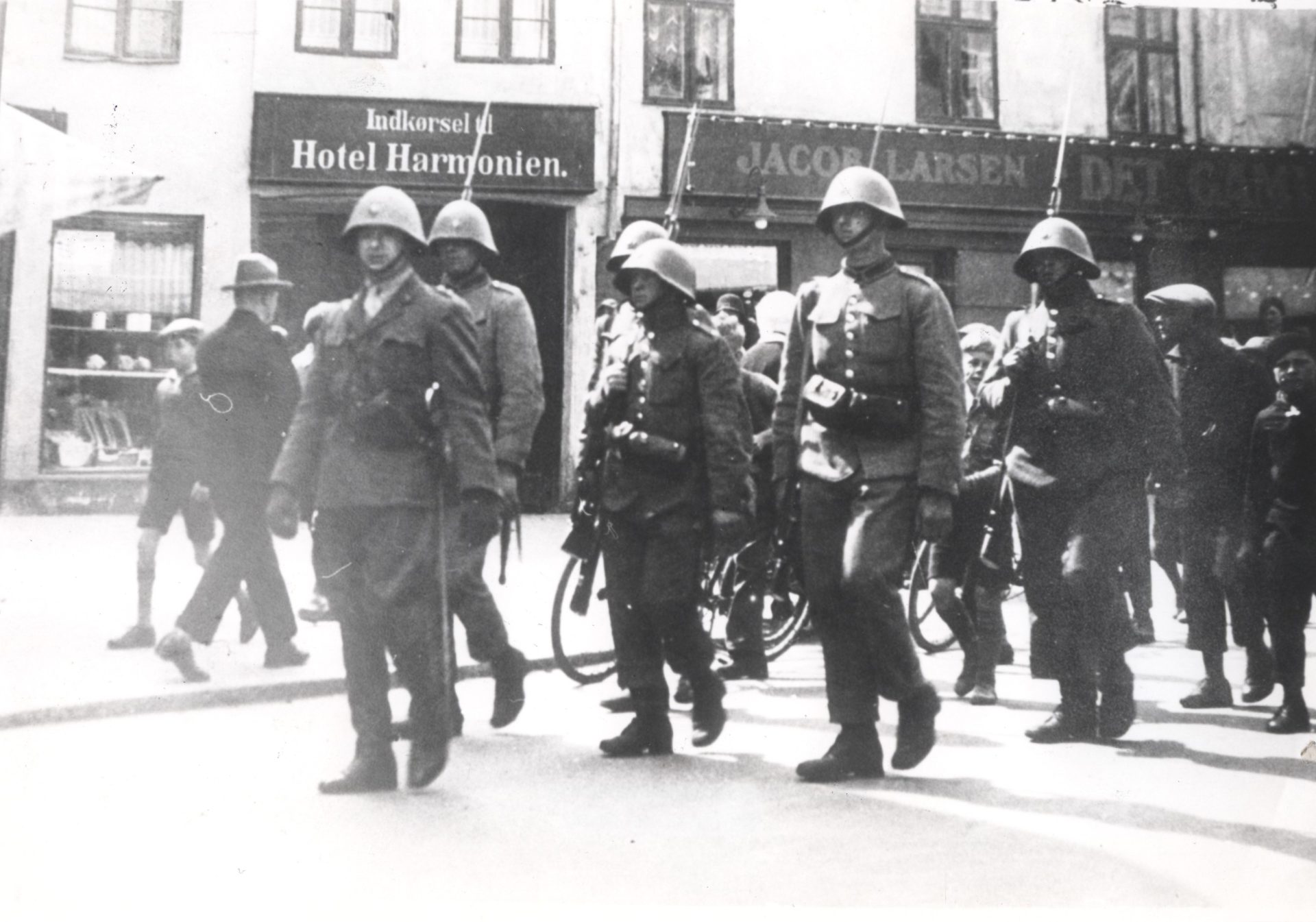
Workers leave the Confederation of Trade Unions after a major conflict in 1925. The worldwide crisis reaches Denmark in 1932. Unemployment rises to 43.5 percent. Riots break out in Nakskov and the police and military are deployed. The 1933 social reform brought a number of improvements for the unemployed.
The Great Conflict
In 1925, collective bargaining agreements are negotiated again, but the prospects for a settlement are not promising. The business community wants their cost levels reduced: no higher wages, and Prime Minister Stauning publicly states that it could be a difficult situation for a number of companies if wages rise. DsF keeps a low profile, but the unskilled workers, the laborers, who are the lowest paid, demand coverage of animal time and supplements for the lowest paid. They reject a mediation proposal recommended by the Stauning government and most of the DsF.
In March, the lockout and strikes come into effect, involving 95,000 workers. Soon after, the conflict is extended. The unskilled workers organize a transport strike that threatens to halt Danish agricultural exports of butter, eggs, bacon and pork. Stauning and the government are justifiably concerned about the economic consequences of the transportation strike. He tries to get DsF to agree to voluntary arbitration. But the proposal fails due to opposition from Lyngsie and his union. The government then considers whether to end the conflict through compulsory arbitration if the Workers’ Party does not adopt a new proposal that the conciliators put together.
With the votes 26 for and 17 against, the proposal is adopted by the Workers. The proposal gives workers wage improvements, but it does not meet the requirements for special allowances for the lowest paid. Nor does it contain guarantees for free negotiations. There is a lot of bitterness among the unskilled workers – especially towards DsF. The unskilled workers feel that the skilled workers are being favored. The workers leave the DsF and only rejoin four years later.
Unemployment laws in the 1930s
The worldwide crisis begins in the US in 1929 and reaches Denmark in 1932. Unemployment rises to 24.8 percent. The following year, unemployment is at a record high. In January, 43.5 percent, almost half of the insured, are on unemployment benefits. Partly against this backdrop, the 1933 Social Reform Act is passed, bringing a number of improvements for the unemployed. However, the social reform does not create peace around the Unemployment Act. Both the DKP and the government put forward several proposals for improvements during the 1930s. Unlike the government proposals, DKP’s proposals find no support in the Reichstag. At the beginning of 1933, the Reichstag passes two laws on a temporary and modest extension of unemployment benefits.
At the end of the same year, the benefit period was temporarily extended from 70 to 108 days as part of a larger package solution. In 1934 and again in 1935, the Social Democratic-Radical government put forward proposals for further extension of the benefit period and exemption from the rule of a certain amount of prior employment. The proposals are blocked by the Liberal and Conservative majority in Parliament.
During the discussions, the Liberal Party refers to the fact that it was precisely the purpose of the social reform to put an end to extraordinary help. The Conservatives emphasize: “That there is a shortage of labor in the countryside” and “That even where a decent salary is offered, you can’t get the necessary help in the house.” Several DKP proposals for winter help for the unemployed, an increase in state subsidies to unemployment insurance funds and relaxing the condition of prior work are rejected by the other parties. Until the revision of the law in 1937, there are no significant increases in unemployment benefits.
The unrest in Nakskov
Nakskov has been a Social Democratic stronghold since 1909. A working-class town that, after a few good years, experienced high unemployment. In 1931, the unemployed in the town form an organization that demands more money for the municipal relief fund. During a city council meeting, 1500 unemployed people demonstrate at the city hall, where 150 take a seat in the council chamber. There is a lot of commotion and the meeting ends with a terrified city council unanimously allocating DKK 20,000 to the relief fund. The next day, Parliament discusses the matter. It must be prevented that unemployed people across the country get the impression that they can force a city council to make concessions.
The leaders in Nakskov are sentenced to 4 and 6 months in prison. The city council cancels the grant, but still allows the relief fund to exceed its allocation without any amount being added. But this does not bring calm to Nakskov. 1. on May 1, the Communist Party calls a demonstration, but the police chief bans the meeting. This is a clear violation of the constitution, and the workers of Nakskov defy the ban and show up at the square. The entire police force is in place. The next day, 2-3,000 people gather to protest against the police terror. The police barricade themselves in the police station and the chief of police gives the order to shoot if anyone tries to enter.
Outside, the protesters throw stones and the chief of police calls for reinforcements. It’s one o’clock in the morning when the military from Vordingborg arrive. But by then the protesters have gone home to bed.
In the ensuing trial, nine men who are considered to be the ringleaders are sentenced to prison. Whether they are the real masterminds behind the unrest is a matter of great doubt. Among others, Emil Koch, the chairman of the laborers in Nakskov, gets a year in prison, even though he tries to stop the unrest.
The Great Lockout in 1936
The turning point in the crisis comes as early as 1933. Production begins to pick up again and prices rise. However, as wage growth remained flat, real wages remained at the same level or fell slightly. By referring to price increases and the industry’s improved conditions, DsF believes that there is a basis for “a reasonable increase in wages.” The employers’ association categorically refuses any increase and refuses to allow its sub-organizations to negotiate it.
This leads to the employers issuing the first lockout notice in January 1936. The very next month, the conciliator gives up trying to mediate. And on February 22, almost 100,000 workers are locked out. After two weeks, the conciliator resumes mediation. A mediation proposal that includes an improvement in the lowest wages and some changes to bargaining rules is voted down by the employers. Shortly after the rejection of the mediation proposal, the ministry proposes to Stauning to repeal the mediation proposal into law. The Conservatives and Liberals are furious. But Stauning’s bill is passed in March 1936.
The new law stipulates that work must resume. The organizations are given five days to reach an agreement. If they fail to do so, the matter is settled by an arbitration court. And so it is. At the beginning of April, the arbitration court issues its ruling, which essentially follows the mediation proposal from March. However, the proposed wage increases are reduced or postponed on a few points. The DA is deeply dissatisfied with the Social Democratic government’s intervention: “The DA wants to make it clear that we are not to blame for the upcoming commodity distortion.”