Democratic pedagogy and project assignments
Why and how?
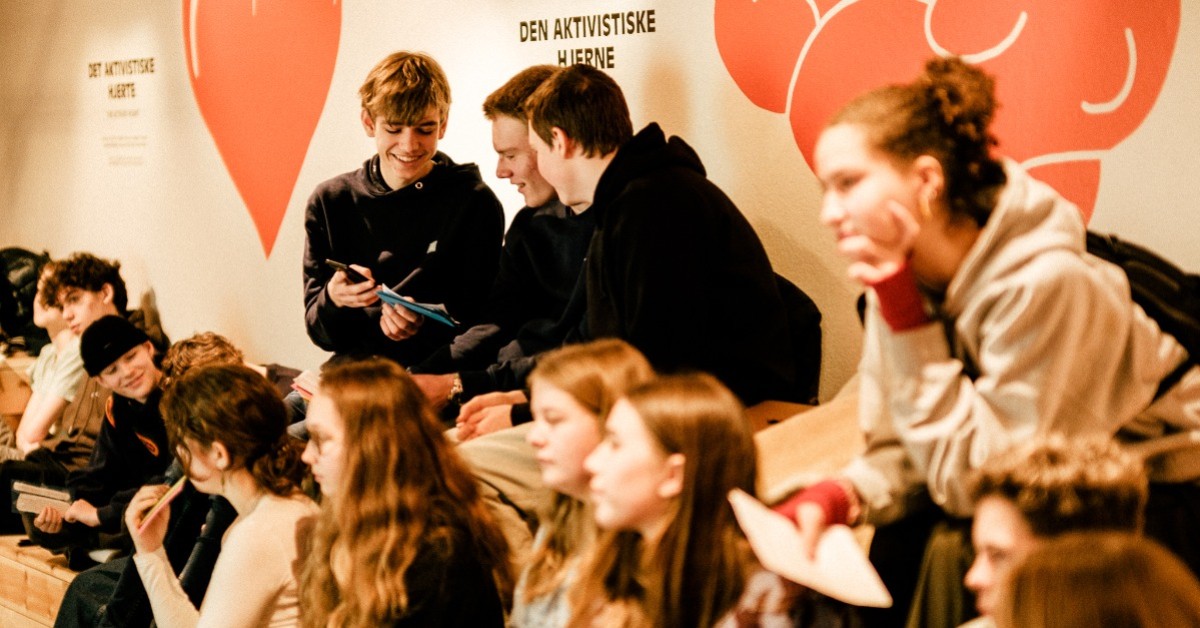
At the Workers’ Museum, it is a basic premise to continue the democratic heritage that the museum’s home, the old Workers’ Association and Assembly Building from 1879, represents. The Assembly Building created spaces for the democratic education of workers and in the same way, the museum aims to create democratic spaces for school students of all ages. In the project collaboration with Ingrid Jespersens Gymnasieskole, the museum made the exhibition AKTIVIST available to the students, their projects, voices and co-creation. AKTIVIST formed the framework for an entire program that fell into three phases
Special benefits from the course
Three particular things stood out as particularly beneficial for the students during the project assignment course:
- The fact that they were able to use the museum as a special and additional student space in the process.
- The fact that they received additional guidance from the museum’s teachers and professionals.
- The fact that their final products became more interactive.
Museum professionals as guides
Because the students revisited the museum throughout the project assignment process and met the same professionals again, the museum’s teachers and professionals were able to support the development of the students’ projects and products. The museum staff were used as experts and guides both on the topic of activism and on the students’ products, as well as on the form and content of the presentations. The students themselves expressed that it helped them to immerse themselves in their projects when they had more guidance options available alongside their own teachers.
Three tips for those who want to get started with a project assignment:
- Contact an external learning space near your school and ask how you can use each other in a possible project collaboration Do they have an exhibition you can use as a topic for your project? Do they have the resources to provide guidance? Or can you use each other in other ways?
- If you choose a museum, make sure the exhibition has broad topics and allows students to choose different subtopics so that students are not deprived of their choice of topics. The exhibition and topic should be associative and open to different subjects, disciplines and methodologies.
- Give students the opportunity to participate in other ways, for example by focusing more on creative products than oral presentations.
 Search