 Search
Ever since the beginning of the labor movement, the idea existed that workers also needed to be spiritually and culturally uplifted in order to help change Danish society. Therefore, a number of educational initiatives were launched from the start of the movement. On January 9, 1924, they were united in the Workers’ Education Association, which became the frontrunner for general education and popular education in Denmark.
On this page you can read more about the initiatives that led up to the founding of AOF in 1924. And on the following pages you will learn more about AOF’s founding and the role the educational institution came to play in the next 100 years.
Read about AOF from 1879-1924, AOF during the occupation and AOF from 1945 until today.
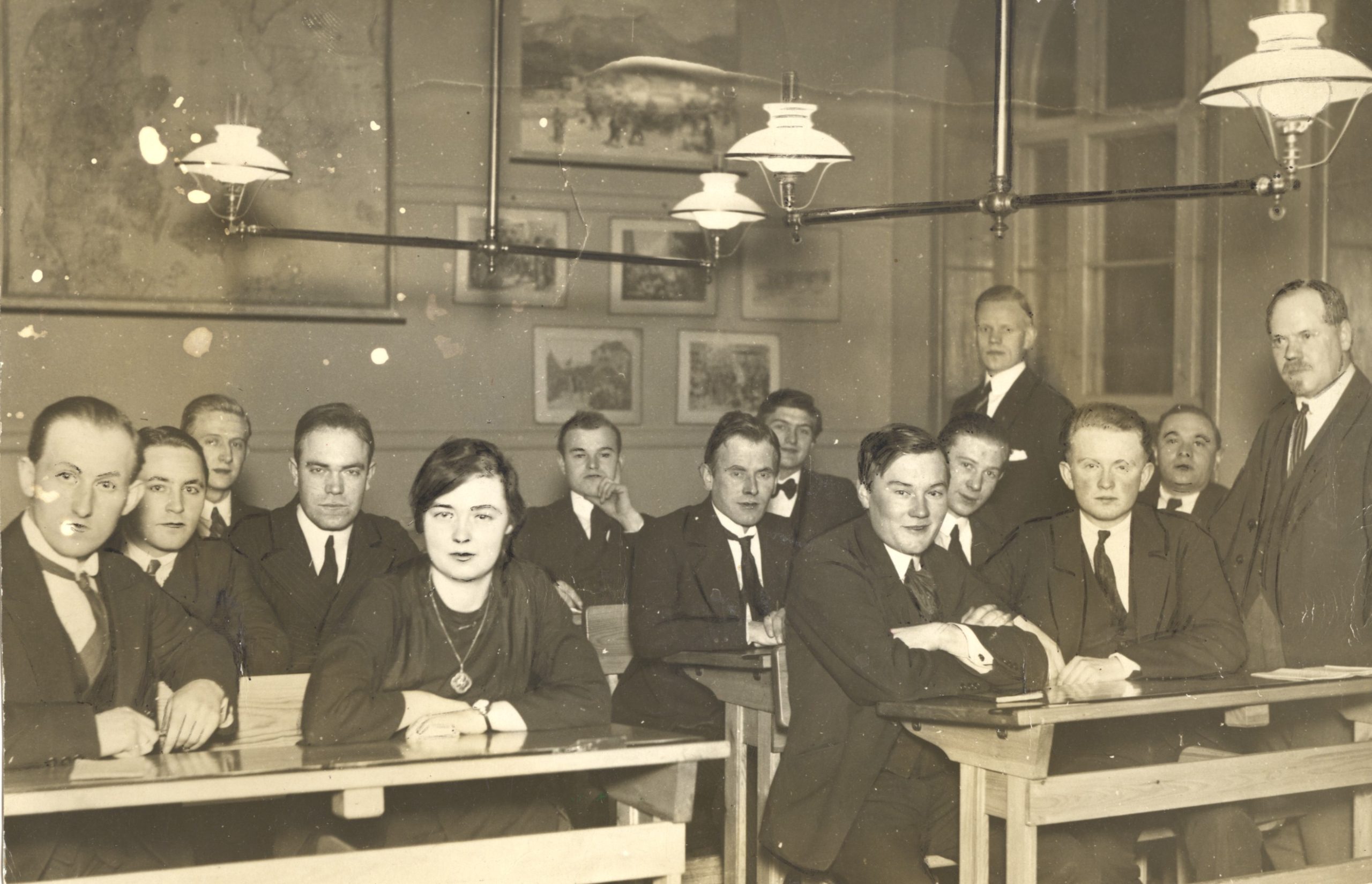
Worker education 1879-1924
The official founding of Arbejdernes Oplysningsforbund on 9 January 1924 was the culmination of several years of active work for the development of organized worker education.
In other words, the history of labor education goes back further than the establishment of AOF.
The earliest agitators
The beginnings of labor education are difficult to date. One of the earliest people to clearly agitate for enlightenment was Frederik Dreier (1827-1853), also known as Denmark’s first socialist. In 1848, he published a pamphlet entitled “Fremtidens Folkeopdragelse”.
Louis Pio also actively agitated for a better and more socialistic education for Danish workers than what was offered to them in philanthropic associations. Pio’s agitation for worker education took place in Socialistiske Blade, which was first published in 1871.
“Teach him, the worker, how, with the few legal means at his disposal, he can protect himself against the assaults of capital, give him the knowledge that belongs to him, so that one day, when the fullness of time comes, he can help to manage the factory in which he is now only an unwilling tool […]” – Louis Pio in his program statement in the first issue of Socialistisk Blade from May 1871
The Workers’ Reading Society
7. in October 1879, the Workers’ Reading Society was founded in the Workers’ Association and Assembly Building in Rømersgade in Copenhagen. Here, the growing working class could attend meetings, reading circles and listen to lectures. But most importantly, the Reading Society gave workers the opportunity to borrow books. Public libraries did not yet exist, and as books were expensive, low-income earners found it difficult to afford to buy them. The Reading Society quickly became a success and both the book collection and the number of members grew rapidly.
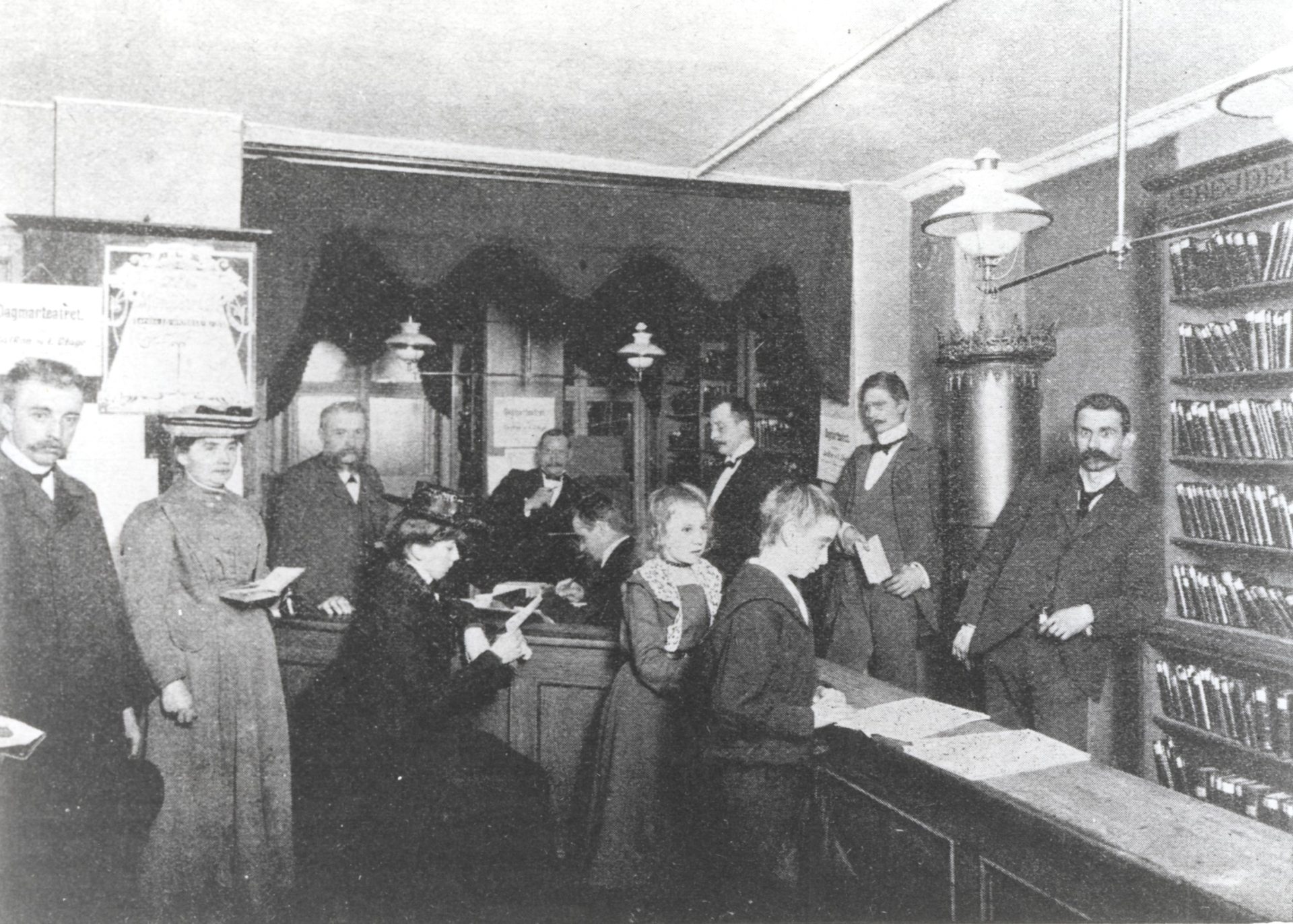
The society’s great popularity also meant that it was successful in attracting recognized authors to give presentations – including Jeppe Aakjær, Georg Brandes, Holger Drachmann and his sister Erna Juel-Hansen.
“Arbejdernes Læseselskab, founded in 1879, was the working class’ first attempt to break the shackles of ignorance and to enter the field of spiritual life. Books were an unknown luxury for the workers of my childhood. No one had the means to become the owner of a real book.”
Read also Prime Minister Thorvald Stauning’s speech at the Workers’ Reading Society’s 60th anniversary party in 1939.
Read the entire speech
On November 30, 1922, Arbejdernes Læseselskab acquired a property on Nørre Søgade. This is where AOF’s history began, as it was here that the joint committee held their meetings. From 1932, AOF’s Copenhagen branch was based in the Reading Society’s premises, which in the 1930s also housed DSU, DUI, Faglig Ungdom, Arbejdernes Samariterforbund and Smedendes lærlingeafdeling. The Reading Society’s domicile on Nørre Søgade thus became a cultural centre for workers’ education in the 1930s, which allowed for close unity between the organizations.it was therefore only natural that AOF’s Copenhagen branch took over both the house on Nørre Søgade and the company’s funds when Arbejdernes Læseselskab was closed down on December 20, 1962.
The Karl Marx Club
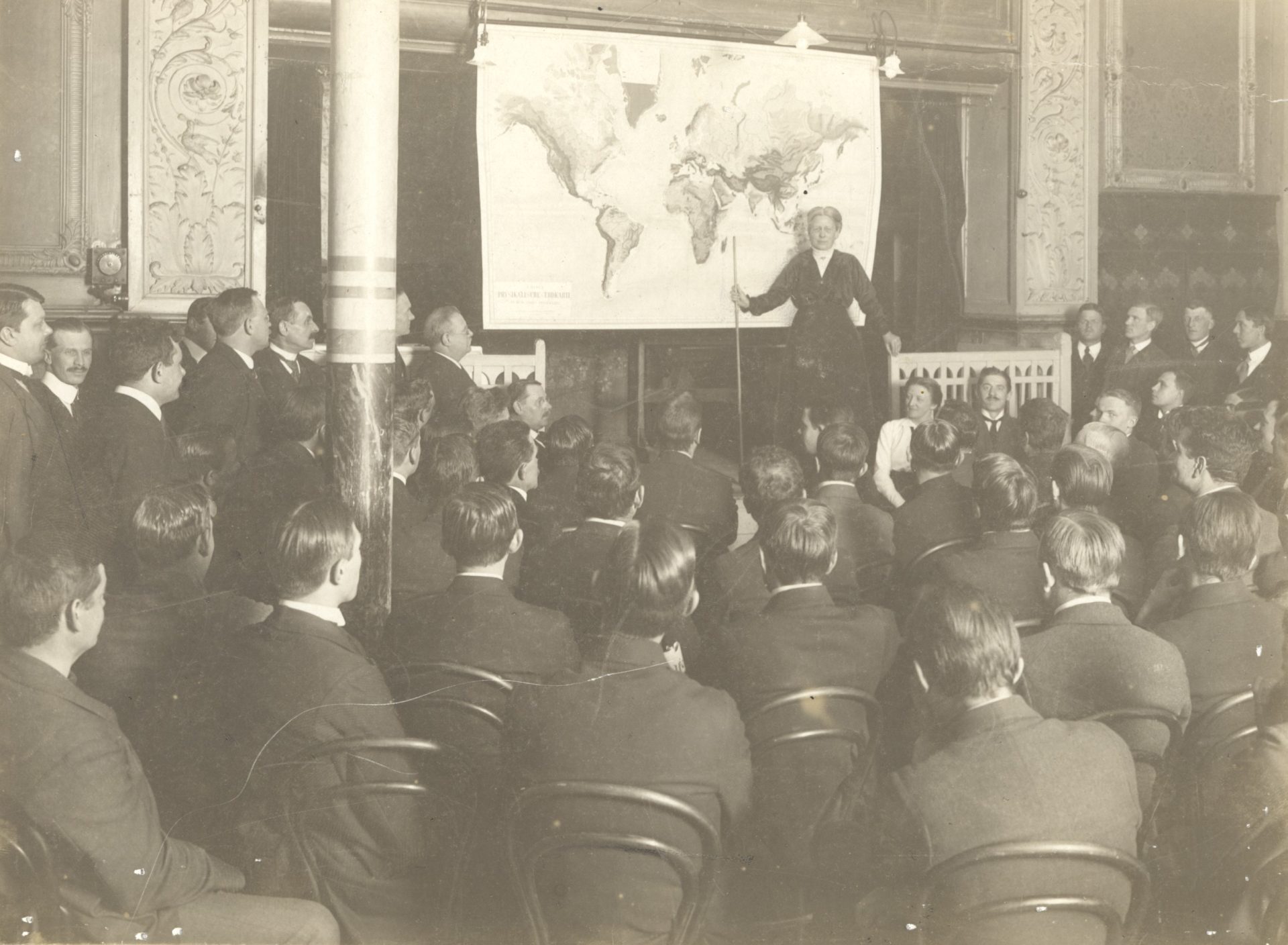
In the 1880s, a number of discussion clubs were established. One of them was the Karl Marx Club, founded by social democrat A.C. Meyer in 1886. In addition to an introduction to socialist literature, the club wanted to educate its members so that they could express themselves clearly when engaging in discussions. The Discussion Club also met in the Assembly Building in Rømersgade, where members were taught, discussed and debated the issues of the day.
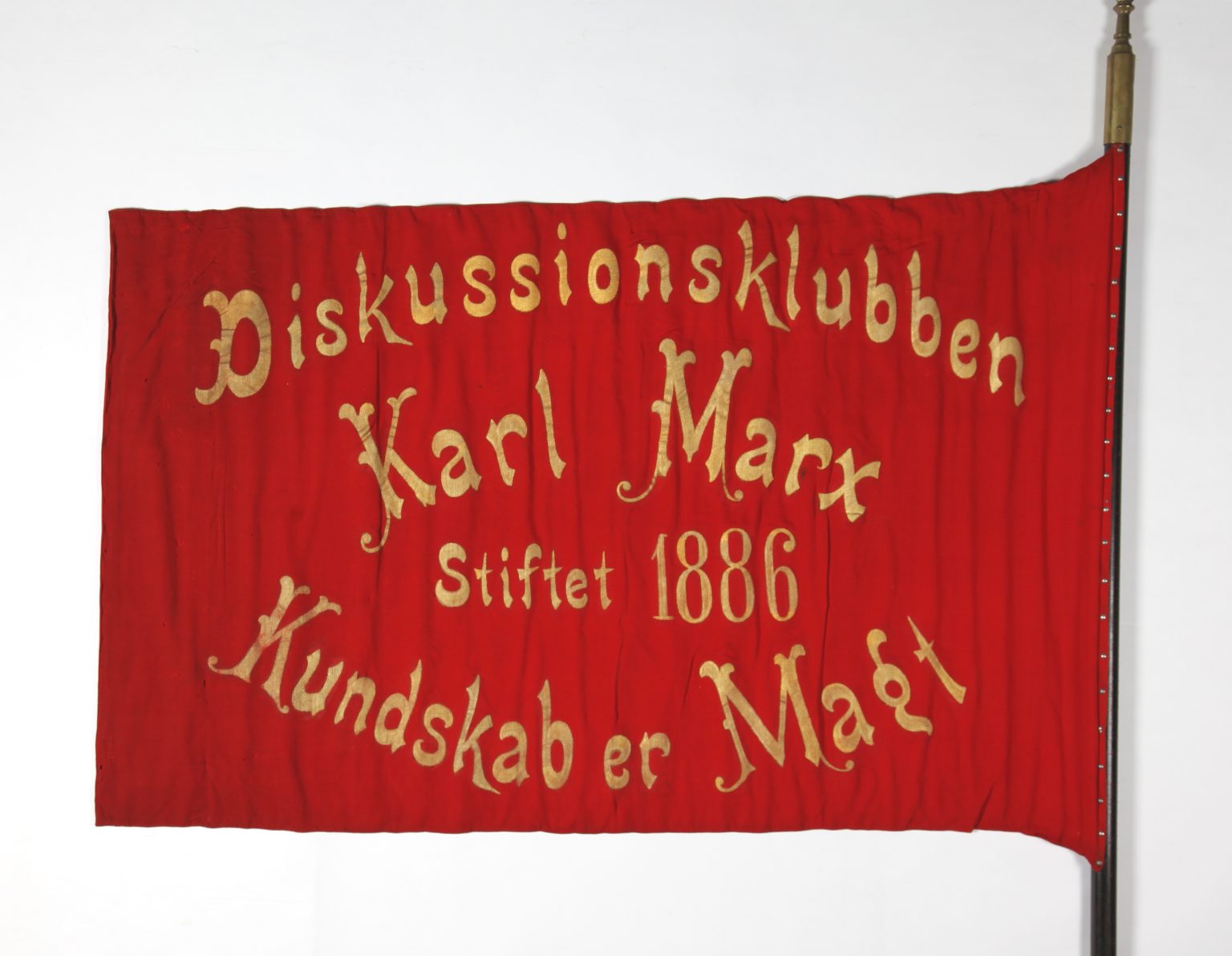
On July 1, 1898, the People’s University of Copenhagen was founded on the initiative of seven left-wing discussion clubs, including Arbejdernes Læseselskab and the discussion club “Karl Marx”. The aim was to spread knowledge of the methods and results of science and make academic education accessible to everyone. This happened in a hurry when Folkeuniversitet opened branches in several cities on Funen, Jutland and Zealand during the winter of 1898-99.
The desire for an evening school for workers was expressed at several Social Democratic congresses in the early 1900s. The party wanted more workers to be able to improve their professional skills, and it would also equip Social Democratic party members for the challenging, democratic work in trade unions and municipalities, among other things. In 1910, the first evening school for workers was founded in Copenhagen. The workers’ school had a difficult start-up period but was reorganized in 1916 under the leadership of Landtag member and lecturer C.V. Bramsnæs. The school was renamed “The Social Democratic Workers’ School” and was later expanded to be a 3-year education where trade unions could enroll particularly suitable members for training.
In August 1922, the head of the Social Democratic Labor School, C.V. Bramsnæs attended an international workers’ meeting in Brussels. The focus of the meeting was worker education across Europe. At the meeting, he realized that Denmark was lagging behind in terms of education work. Bramsnæs therefore set out to intensify the work for a systematic and organized information federation.
The idea of an information association
In collaboration with Social Democratic Party Chairman Thorvald Stauning – who was also passionate about the education issue – Bramsnæs put the issue of an organized education on the agenda for the Social Democratic Party’s main board meeting in the autumn of 1922. At the main board meeting, it was decided to set up a joint committee to further investigate the possibilities of a unified education activity. In addition to representatives from the party, the joint committee also consisted of representatives from the Confederation of Trade Unions (LO), the Danish Social Democratic Youth (DSU) and the Cooperative Union.
During the winter of 1922-23, the joint committee discussed the possibilities for the organizational structure of the information association. The joint committee reached an agreement that the Federation should be structured as an organization for organizations. The union would thus consist of the labor movement’s already existing professional and political organizations, which would pay a membership fee. The size of the membership fee depended on the organizations’ membership numbers. Thus, workers who were already part of an organization or federation automatically had a membership in AOF.
“The committee is convinced that a special institution with special bodies is necessary. But this institution should not be a new, independent organizational branch of the labor movement, merely in cooperation with the others. On the contrary, it must be the already existing organizations that, through such a joint body, unite the scattered forces in order to make the educational work within the labor movement as effective and fruitful as possible.” – (Joint Committee Report in the Proposal for the Workers’ Educational Association.)
The foundation
On January 9, 1924, Arbejdernes Oplysningsforbund was formally founded by the four pillars of the labor movement: De Samvirkende Fagforbund (later LO and from 2022 FH), Socialdemokratiet, Den Socialdemokratiske Ungdom and Det Kooperative Fællesforbund.
The labor movement’s various educational activities were thus gathered under AOF.
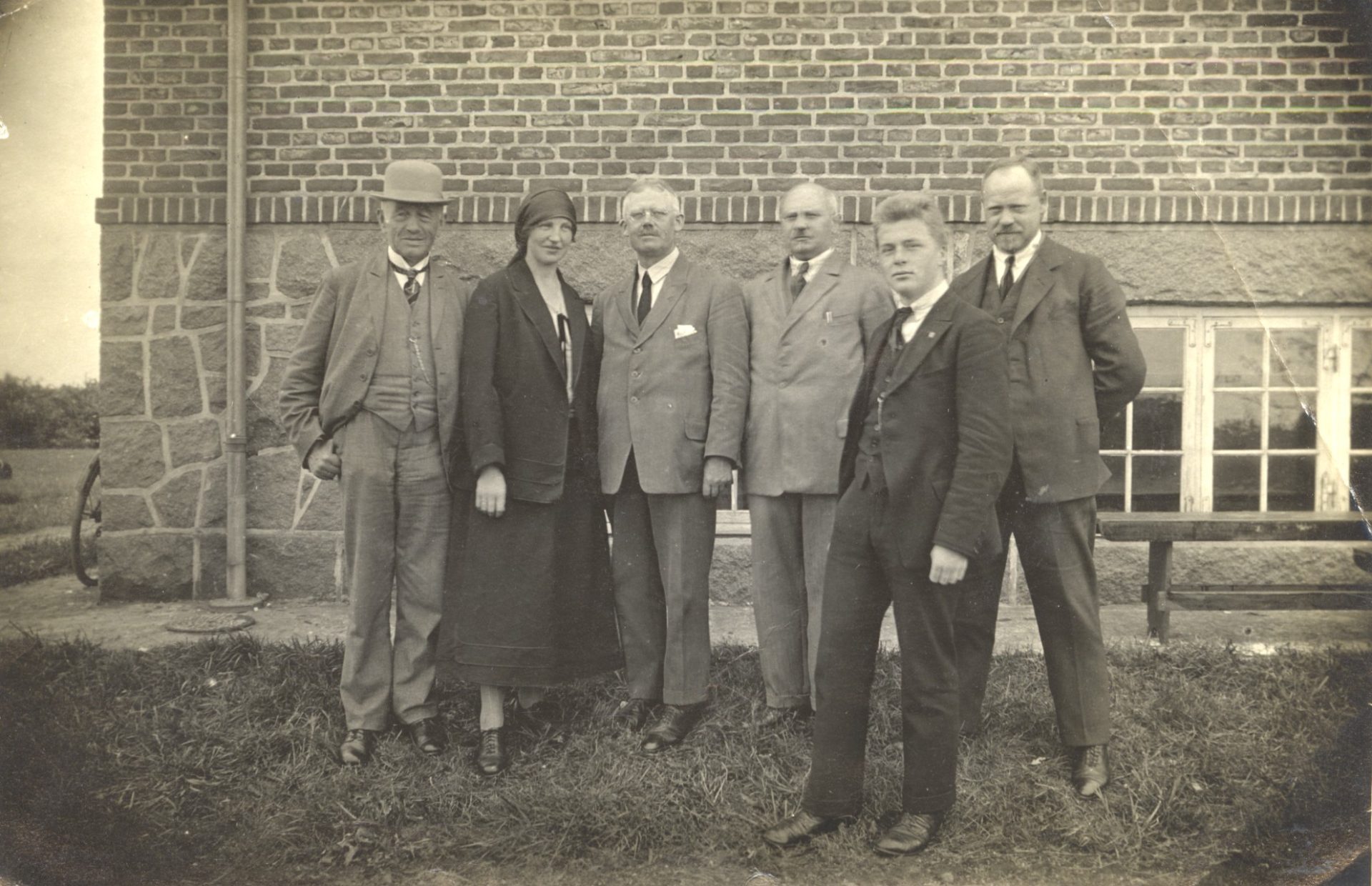
C.V. Bramsnæs was elected chairman and typographer Harald Jensen was elected secretary, in practice the association’s business manager. From the start, the board consisted of 18 members: The cooperating trade unions and the Social Democratic Party each elected 6 representatives. The Cooperative Union and the Danish Social Democratic Youth each had to elect 3 representatives.
The new information association was to embrace:
- “An ordinary, social information work with individual lectures, series of lectures and slide lectures.
- Study group work, where smaller circles of workers gather to review topics, such as the history of the trade union movement and Social Democracy, with the help of a leader.
- Evening schools with continuous teaching in everything the students want and need.
- Special courses (e.g. holiday courses) with lectures and practical guidance for municipal representatives, union board members, cooperation managers and officials, etc.
- Colleges with further education, and local day schools for the unemployed.”
(The Joint Committee’s proposal for the foundation of the Workers’ Information Association, including a description of the tasks the association was to perform. 1924)
The Workers’ Information Association quickly won great support and shortly after its foundation had the support of no less than 56 different trade unions. Shortly after its founding, a large number of local branches were established, especially in the larger cities. A number of regional county organizations were also established.
See the list of member organizations in AOF’s national federation 1924-1999 here
The first years in numbers
By the end of the year 1924-1925, AOF had 62 local branches, they had offered 161 different classes, held 943 different lectures and had had 22,452 participants in their activities.
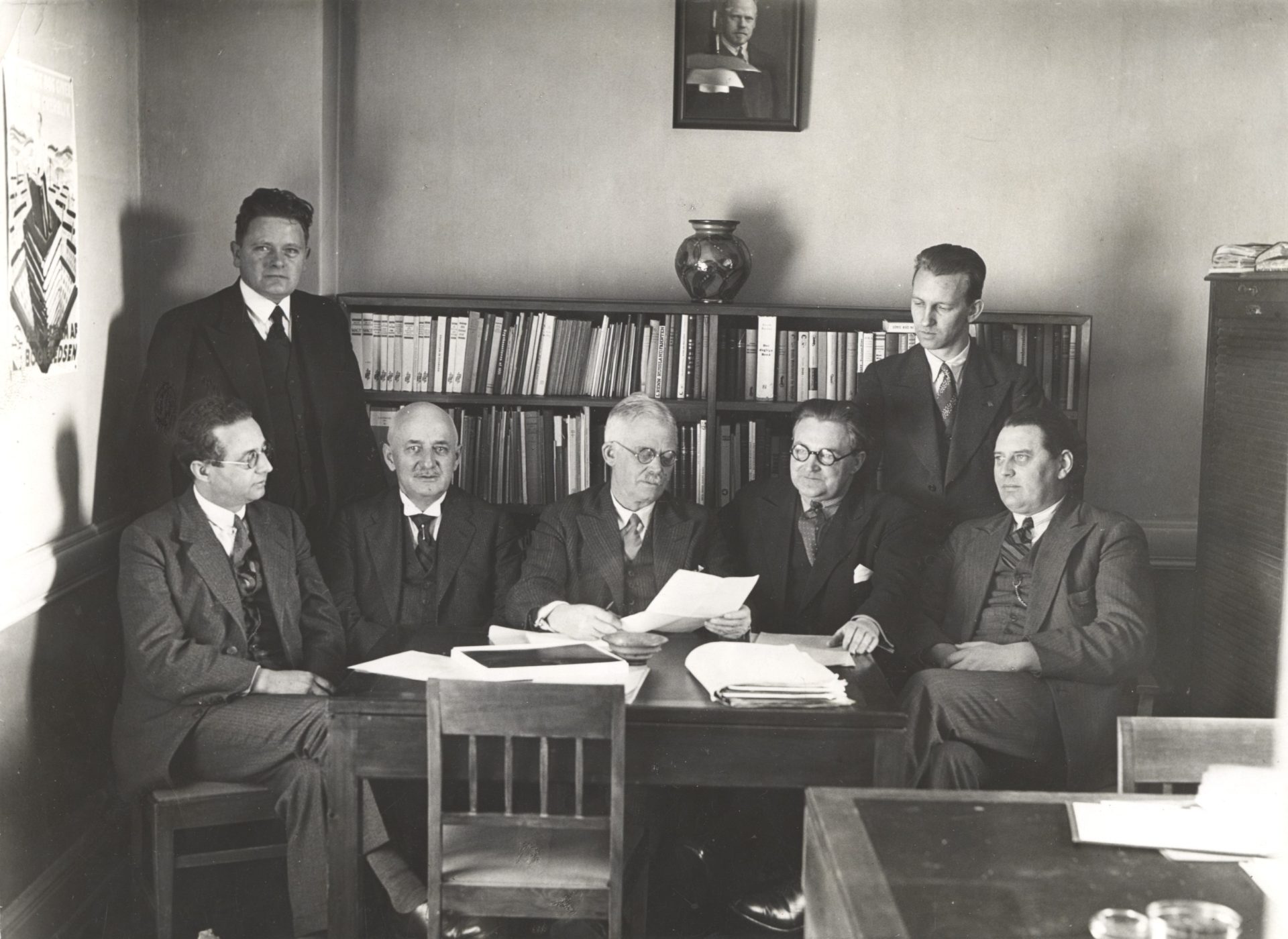
Already 10 years later, in the year 1935-1936, these numbers had increased significantly. By the end of that year, 85 local branches existed, 791 different classes had been offered, 1,610 lectures had been held and AOF’s branches had had a total of 113,526 participants in their activities. A percentage increase in participant numbers alone of more than 400% in just 10 years.
(source: Stubtoft, Erik (1999), Fra oplysning til uddannelse: Historien om Arbejdernes Oplysningsforbund 1924-1999. AOF Denmark, AOF’s publishing house. Volume 4, Statistics 1).
“[…] every major city across the country has bodies that take care of workers’ education.” – (AOF’s standard statutes for the education committees. 1924)
Arbejdernes Oplysningsforbund quickly became a great success. In just 10 years from the foundation of the association, the total number of participants for the activities offered had increased from 22,452 participants to a staggering 113,526.
A male evening school participant writes in 1925:
“Until two years ago I stayed in the country as a servant. And out there we were told that the Social Democratic Party’s work was only about getting higher wages and shorter working hours. I am grateful that the blindfold has been torn from my eyes through this winter’s study circle work. I have gained insight into what the labor movement is and what it wants, so that I now know where I belong and why I do it.”
In the statutes of the information association, §1 stated that the purpose was to spread information among the working population in Denmark. In continuation of this purpose clause, a major effort was to be initiated to establish local information committees in all the country’s municipalities. This was a laborious and time-consuming task, as in 1924 there were 1,378 urban and rural municipalities in Denmark.
Despite great support for the project internally in the labor movement, it was not until the formation of the first Social Democratic government in April 1924 – with Thorvald Stauning as Prime Minister – that the foundation was laid for AOF’s ambitious work. This was especially due to the fact that AOF already received an annual subsidy of DKK 10,000 (today it corresponds to approximately DKK 300,000) in the Finance Act for 1925-1926. An amount that in the following years was planned to increase to DKK 18,000 (today it corresponds to approximately DKK 550,000). The annual state subsidy gave Oplysningsforbundet legitimacy and a greatly improved financial basis.

Worker colleges
As part of the ambitious organization of the nationwide educational association, the workers’ folk high school in Esbjerg was incorporated into AOF’s national organization in 1929. Esbjerg Arbejderhøjskole was founded in 1910 as the first workers’ folk high school in the country. Several of the school’s principals, including Julius Bomholt, later went on to pursue political careers. In 1929, AOF bought Roskilde Folk High School in Himmelev and continued it as the country’s second working-class folk high school. Roskilde Folk High School was founded in 1907 by Thomas Bredsdorff and was run according to Grundtvigian folk high school principles until his death.
The folk high schools were the workers’ alternative to the traditional folk high schools and another platform where AOF could spread its educational activities intensively. The folk high schools also had good facilities for organizing courses that lasted several days and required overnight accommodation.
In his speech at the inauguration of Roskilde Workers’ Folk High School on June 9, 1930, Stauning said;
“Society has not given the youth of the workers’ homes the youth school that should have room for everyone. The workshop, the factory, the shop and the office call the young person to service, but the formation and development of the spirit is often neglected. (…) The child who is not introduced to the world of knowledge, and the young person who is not taught to read and understand when the abilities are otherwise present, is deprived of a share of life’s benefits. Much joy is gained by enlightenment, and much strength is derived from it. And it must one day come about that everyone who is born has equal access to cultural values, so that it is only abilities and interests that determine how far the spiritual development should be taken forward.”
In addition to AOF’s desire to educate and promote art and culture, the educational association also had a great desire for the labor movement to influence art and cultural life to a greater extent.
The Workers’ Songbook
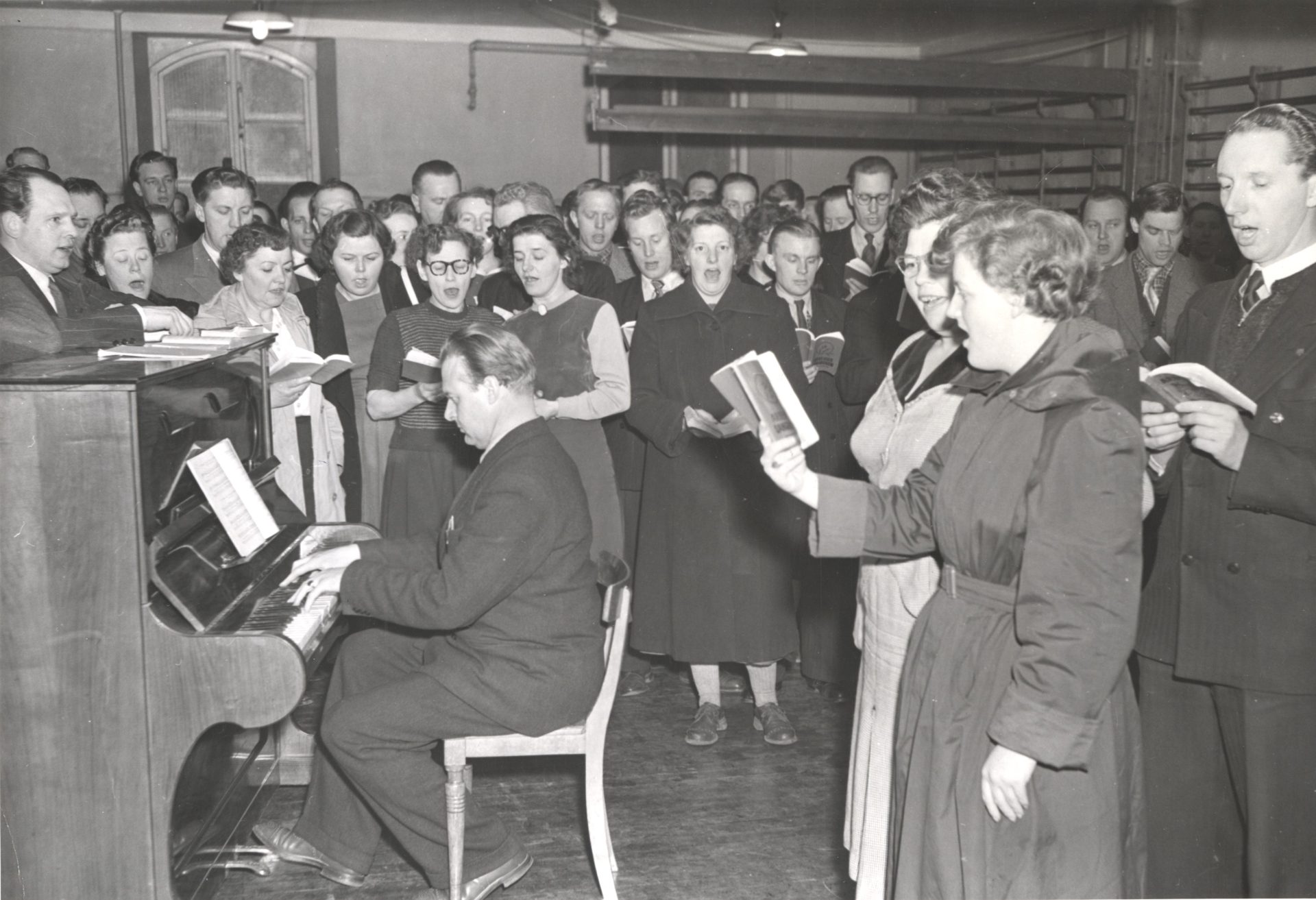
In 1926, Arbejdernes Oplysningsforbund published the first complete version of the Workers’ Songbook. It unites the treasure trove of songs from a number of associations and unions’ own songbooks. The songbook collected 245 songs, from battle songs, to enlightenment songs, folk songs, classic spiritual songs and more “jocular” songs. The book would not only be an association songbook, but also a songbook for the home. The songbook was a great success and has since been published in 8 editions in large editions and with numerous revisions. The songbook has been published in a total of 13 editions, the latest of which was published in 2015.
National airtime
AOF’s ambitions to enlighten and influence Danish art and cultural life meant that in 1928, the association approached the management of the Danish Broadcasting Corporation with a view to using the radio medium to spread public education. This led to Danes being introduced to AOF’s range of study circles one Sunday morning in 1933 on the nationwide morning radio.
In 1934, AOF buys Copenhagen’s 3rd largest movie theater on Nørrebrogade – Nora Bio. Nora Bio quickly became the center of AOF’s cultural dissemination through special film screenings. The screenings covered everything from Social Democratic Party films, travel films and in the 60s and 70s also Jean Renoir films and Hitchcock films. But the expanded facilities also made it possible to host large-scale lectures and meetings. AOF sold the cinema in April 1977.
AOF during the occupation 1940-1945
Esbjerg Folk High School was confiscated by the German occupying forces, and the school could not function as an educational institution during the occupation.
Despite the occupation of Denmark during World War II, AOF continued to be a success with increasing popularity. In 1943, AOF held 1,312 study circles, which was the highest number ever. One of the reasons for the high attendance at AOF was that the study circles gave people the opportunity to meet and talk about the problems of society and the war without outside interference. In the year after the outbreak of war, ‘civics’ was the most popular course in the AOF Copenhagen branch.
However, this great success changed abruptly after the overthrow of the Danish government in the August Uprising on August 29, 1943, and the introduction of the German military state of emergency in Denmark. AOF tried to continue its daily educational work, but martial law, curfew and local challenges destroyed large parts of the educational work. The tense situation also meant that many students were put off their activities for fear of the dangers lurking in the streets during the state of emergency. One student writes in a letter to his teacher:
” I don’t know if I will come to English lessons again this winter; it’s not because I don’t want to, but when I stick my nose outside the door in the evening, bullets whistle around my ears. The other day there was a big battle at Blaagaardsplads, and in the evening we had a whole bombardment of hand grenades in front of No. 17, so that all the windows of several houses were broken.” – Letter from a student from Blågårdsgade, winter 1944
Solveig Christensen and the Gestapo
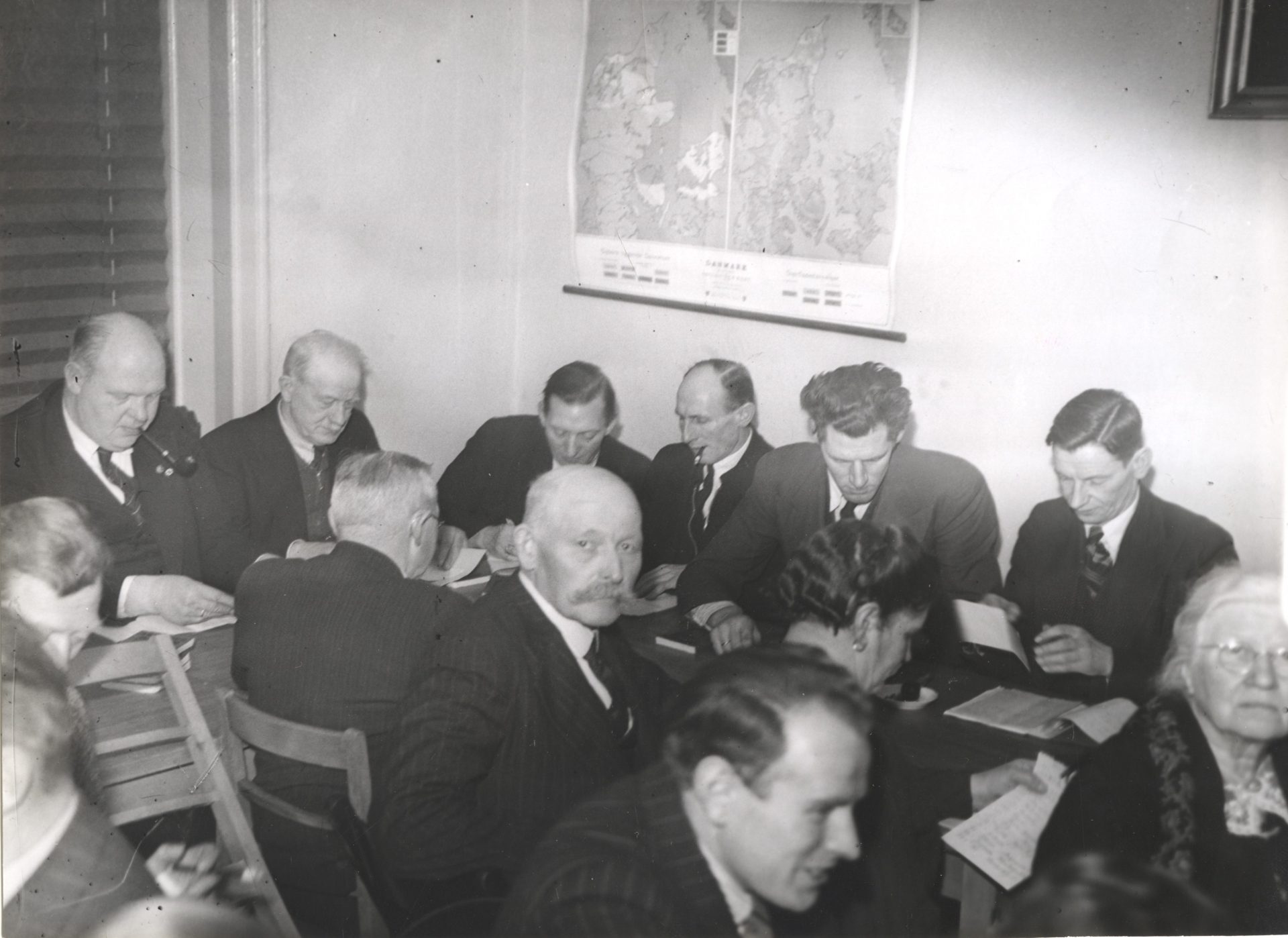
AOF’s national office in Nørre Farimagsgade was a hideout for a number of resistance fighters during the exceptional years and served as a distribution center for illegal information material about the resistance struggle. Several of AOF’s employees were active in the resistance and used the premises to hold meetings and show films about the resistance in other occupied European countries. During a search of the office on Nørre Farimagsgade by the Gestapo in 1944, AOF’s office manager Solveig Christensen was arrested. She was taken to Gestapo headquarters in the Shell building where she was imprisoned until March 1945. She miraculously managed to escape the same day the Shell House was bombed by the British Royal Air Force.
“Despite (or was it because of?) the atmosphere of constant tension, and despite the huge world events that could make you feel your own daily presence as insignificant and unimportant, school work was unusually busy. It was a wonderful winter, and perhaps we have never felt the power of camaraderie so strongly.” – Roskilde Folk High School principal Hjalmar Gammelgaard, 1945
AOF after 1945 and up to today
For the first 15 years of AOF’s existence, the educational association was closely linked to the Social Democratic Party, as Social Democratic leaders were also leading figures in AOF. AOF’s activities were also clearly defined by Social Democratic politics and ideology. This changed after the end of World War II, when educational activities gradually became more closely linked to the trade union movement than to the party. Both the trade union movement and AOF had an important role to play in the development of post-war society.
New educational associations see the light of day
After 2. After World War II, new information associations emerged with links to the Liberal Party (LOF), the Conservative Party (FOF) and the Radical Left Party (FO). Thus, AOF is no longer the only information association. Nevertheless, educational associations not only have different political roots, but also different functions in society.
AOF played a crucial role for several professional groups and specific job functions throughout the 1950s and 1960s. Among other things, AOF offered pedagogical training for teachers from 1955, courses for workplace safety representatives and union representatives in 1954 and 1967, and training for home helpers in the 1960s before the SOSU program existed.
In addition, AOF provided preparatory courses in single subjects for 9th and 10th grade exams in the 1960s and 1970s, until the preparatory courses became county municipal. Many of these programs under the auspices of AOF have influenced the educational and working lives of thousands of people and continue to do so today.
In the late 1970s, AOF was tasked with initiating activities and training in many parts of the country in order to reduce unemployment among young people. One of the initiatives was the establishment of day colleges with a wide range of courses on working life and working conditions. The folk high school in Assens was one of the pioneers in offering this type of course for the unemployed. The first day folk high school for the unemployed in Denmark was established in Silkeborg in 1979.
Need for Danish lessons
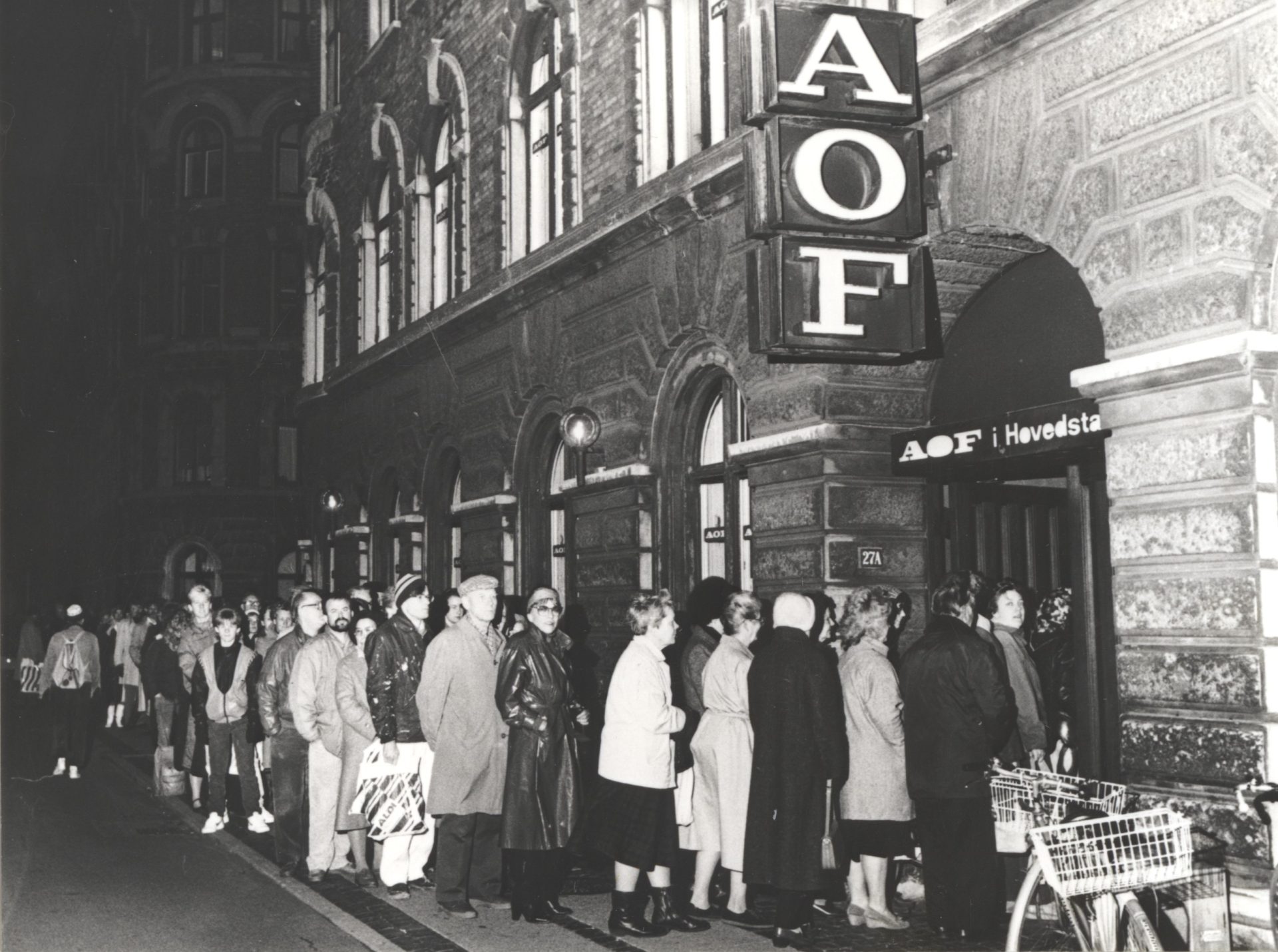
In 1980, the spotlight was turned on teaching newcomers from other countries. This is still a major focus today. In 2022, more than 4000 people received Danish lessons through AOF.
In 2023, it was possible to choose from 2732 courses at 45 evening school branches across the country. The purpose of the courses is not only to pass on education and information, but also to create social spaces for new meetings and community between people.
“You become a whole little family on the courses” – Grethe B. Madsen, sewing teacher at AOF Hovedstaden for more than 32 years. The year 2000. Grethe became known as ‘the underwear lady’ when she offered courses in Copenhagen and Frederiksberg, where AOF students could sew their own underwear.
“At AOF, we have worked with people who have had a short education or had difficulty getting a foothold. It’s one of the most important and wildest things I’ve been a part of in my working life, and I’m very proud to be a part of it. As I say, I carry AOF in my heart. When we’ve had students in and they’ve learned how to send a text message to their grandchild for the first time or read their first book. But then you know that for the individual person, it has had an impact on their living conditions, and you don’t get a higher reward in life than having been a part of something like that.” – Jørgen Thyde, head of AOF Midtjylland 1977-2014
Equal opportunities through education
Among AOF’s lighthouses are “Dyslexia education” and “Preparatory adult education”. AOF is aware of the inequality in education that still exists in Denmark today, and they work actively to “lift” those who need it.
“Heidi has enabled me to hear most letters to this day. How to put words together, how to make a text. Now I’m a mother, so it was also important for me to be taught how to write adult language for institutions and schools. Getting a course tailored to me has given me the courage to believe that I could manage on my own” – Carinas Helligsø Allentoft, dyslexia course participant 2021
AOF wants to make a difference for people where they are in life and help them to enter into an everyday life that can cause difficulties, for example if you lack professional skills or help with reading and language. This happens in the workplace, where AOF is present more than any other organization in Denmark. This is why AOF is still, as it was almost 100 years ago, an idealistic organization where difficulties in life are overcome and people are lifted up so they can participate in society on an equal footing with everyone else.
Learn more about AOF, listen to their podcast.


