Search
In 1936, a group of German refugees in Copenhagen took the initiative to establish an emigrant home where the “emigrants”, as they were called, could meet.
By Hans Uwe Petersen
The start
Due to the highly restrictive refugee policy of the Social Democratic-radical government in the 1930s, the Hitler refugees, misleadingly called “German emigrants” at the time, had difficulty obtaining work permits. This made the provision of basic necessities of life a constant problem for most exiles. The enforced idleness was perceived as a serious burden. In addition, the requirement to refrain from any participation in political activities excluded the refugees from even ordinary participation in society.

In “An attempt to alleviate the lot of emigrants”, some refugees took the initiative to create a place where they “could stay, read, be entertained, have a cup of coffee and a piece of bread”. They approached a number of people who had supported the refugees on previous occasions. The doctor Georg Moltved (Radikale Venstre) agreed to spearhead the initiative. Poul Henningsen and the architect Hans Hansen found some premises under the dormer in the building Rådhuspladsen 77 and the Supreme Court lawyer Hermod Lannung signed the lease, which cost DKK 2,000 annually and could be taken over on November 1, 1936.
In order to obtain permission from the authorities to establish the emigrant home and to raise the necessary funds to run the home, a Danish board was formed, which initially included Moltved (as chairman), headmaster Jens Rosenkjær, architect Vilhelm Lauritsen, Anna Westergaard, Henni Forchhammer and Else Zeuthen. The board adopted a set of statutes for the home that emphasized the purpose of conducting humanitarian work among the Hitler refugees. As it was also emphasized to the authorities, the home was not to be a political discussion club.
To take care of the home’s internal affairs, a management committee was established, to be elected by and among the refugees. The committee was composed of Gustav Rudof Thieme, Otto Piehl, Ernst Riggert, Adolf Hirsch, Max Friedland, Walter A. Berendsohn, Richard Schapke and Julius Jürgensen marked the most successful – but as it turned out relatively short-lived – attempt to create broad political cooperation between the various refugee groups during the exile years.
The Danish board launched a major fundraising campaign. In an appeal formulated for the purpose it was stated: “Anyone who has knowledge of the conditions under which the emigrants live must ask themselves the question whether something cannot be done to help these people who have been knocked off their path and who are living a sad existence without the opportunity to improve their position in a foreign country. Although the existing committees are doing a great deal of work to provide the German emigrants with the necessities of life, much remains to be done before one can speak of a dignified existence. The exiles are unemployed, most have extremely poor housing conditions, many only a place to sleep. But above all, they lack a place where they can meet and feel like human beings in reasonably cozy conditions. It is this task that we, the undersigned, will seek to solve: To provide a gathering place where emigrants, regardless of beliefs, class and race, can gather safely and freely and have access to reading newspapers, books, etc…”. The collection was a considerable success and the appeal was supported by – as Berlingske Tidene said (9.11.1936) – “a circle of well-known men and women, representing all political and religious views”.

Opening ceremony
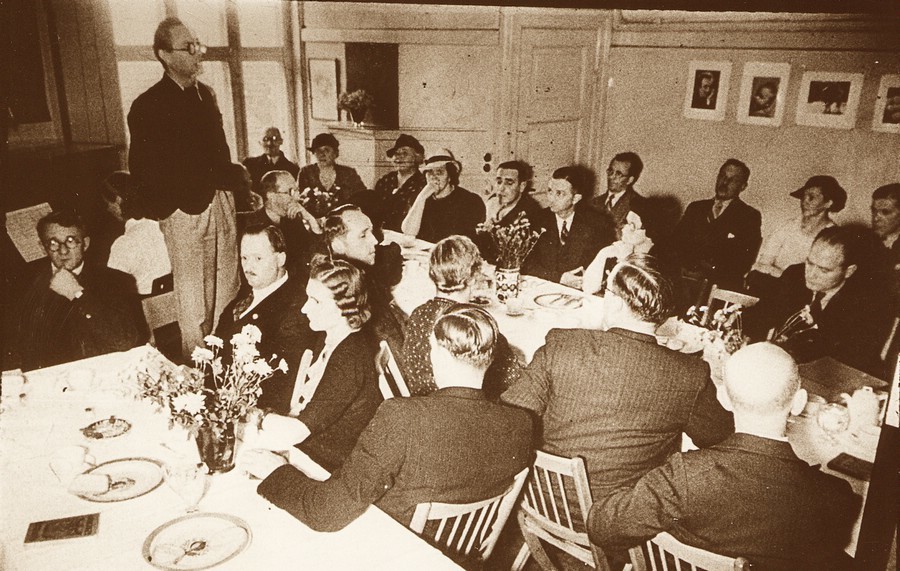
Moltved, Westergaard and Professor Aksel Jørgensen spoke at the opening of the home on November 8, 1936. In his acceptance speech, Rudolf Thieme said on behalf of the refugees”When, on the one hand, we take into account the gratifying fact that this beautiful home is due to the support, understanding and sacrifice of people from the most diverse classes and political persuasions, and on the other hand, we consider the widely varying composition of the random crowd of emigrants who came to Denmark, ranging from the class-conscious manual worker across the entire middle class to the scientific researcher, it seems difficult to find the supporting force that unites these opposites.

But if you just disregard all the complicated details of today, which make it difficult to assess the essential values of society, you realize that the entire history of the human race is really just a continuous struggle between reason on the one hand and selfishness on the other. The people as a mass are the more or less passive objects of the struggle, and the combatants are always and everywhere the few robust egoists and the equally few strong representatives of human reason. Egoism strives for power, and reason for humanity in the broadest sense of the term. In these two extreme opposites lies both the understanding of the despairing conditions of our time, and also the basis for such a beautiful example of humanity that their work has created. Beyond all national boundaries, from a moral and ethical standpoint, the urge to selfishness is a primitive human weakness and reason a strength. In the unshakable faith in human reason as the ideal instrument for mooring the value of social life for all, I believe I can see the common possession which brought us here more or less by force, and which led them to create this home in spite of the secondary differences mentioned and all external difficulties. The home is undeniably a victory for reason and humanity in a time when robust selfishness, under the most varied masks of obfuscation, prevails almost unrestrictedly. This gives these rooms and this home a value for all of us that far exceeds the purely material…”
Disagreements
Despite the great support from Danish refugee friends and the stated goal of the Emigrant Home, the high expectations of the opening were soon overshadowed by the existing differences between the exile groups and the aid committees. An attempt by the Danish board to establish a collaboration with the Danish Emigrant Aid Committees, which functioned as an umbrella organization for the Social Democratic Matteotti Committee, the May 4th Committee of the Mosaic Faith Community and the Committee for the Support of Exiled Spiritual Workers, failed due to these committees’ not unfounded fear that the Emigrant Home would be used for politicization in an undesirable direction, as well as espionage among the refugees. Furthermore, the Emigrant Home was seen as an obstacle to getting the refugees “assimilated with the population of the adopted country”. In particular, the German secretary of the Spiritual Workers Committee, Gerhard Breitscheid, was openly opposed to any political activity that sought to contribute to the anti-fascist resistance inside and outside Hitler’s Germany.
In an attempt to win the Matteotti Committee’s support for the Emigrant Home, a fruitless meeting was held at Moltved with representatives of the social democratic, communist and smaller socialist exile groups. On the contrary, the Matteotti Committee – with only limited success – instructed its refugees to completely refrain from entering the home.
Under the impression of this reluctance, Thieme resigned as chairman of the management committee. The entire committee was then dismissed and the actual management of the home was then handled – formally as Moltved’s deputy, but in reality as general manager – until around mid-1938 by Otto Piehl.
An initiative that originated in particular from Professor Walter A. Berendsohn to establish a kind of high school for refugees in connection with the Emigrant Home also had to be abandoned, as it was not possible to obtain permission from the authorities. This was a consequence of the rejection of the Emigrant Home by the Joint Danish Emigrant Aid Committees. While the authorities had a largely smooth cooperation with both the umbrella organization and its affiliated committees, their attitude towards Red Aid in particular made the authorities very skeptical towards the home.
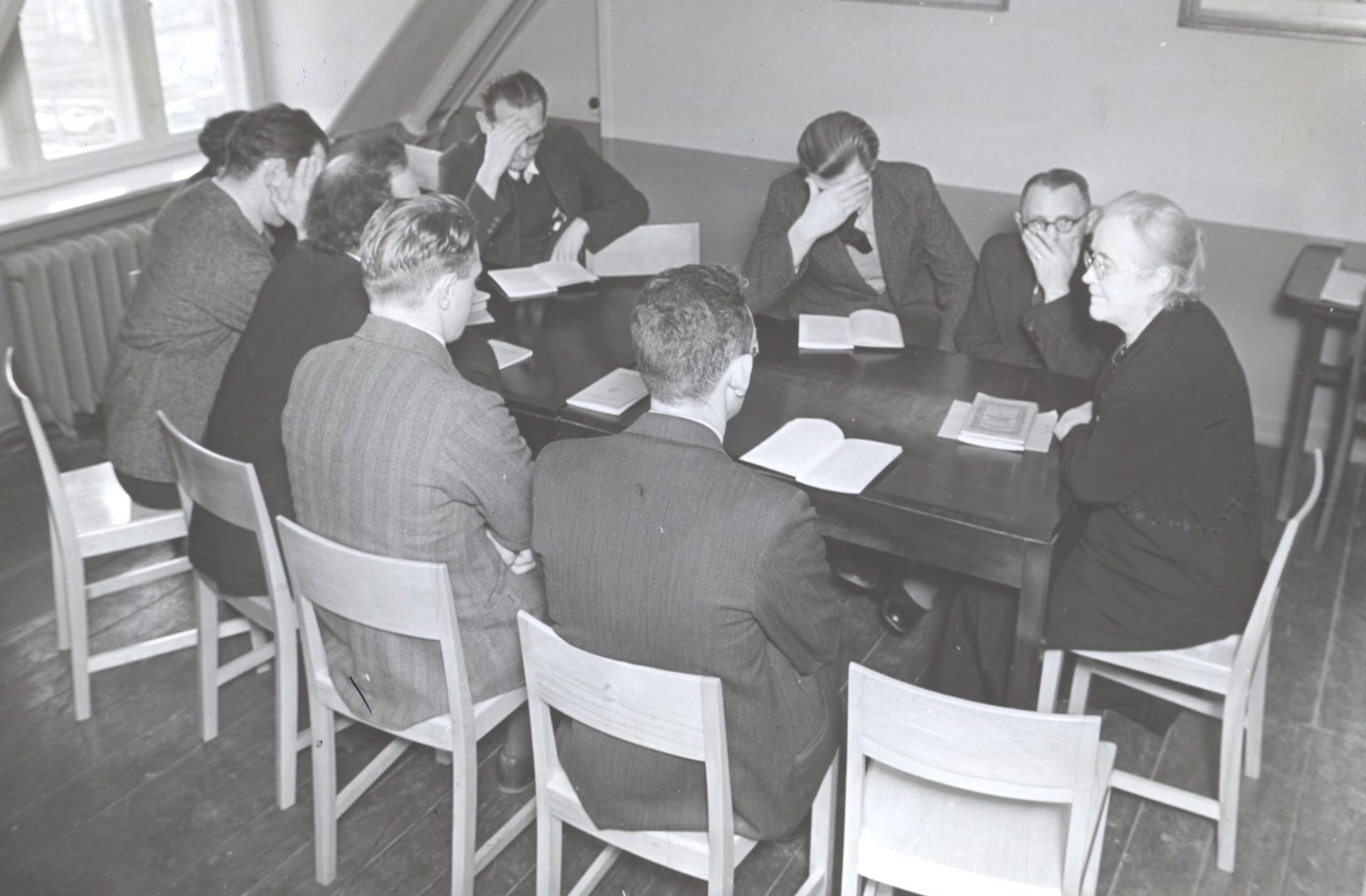
Despite these difficulties, it became clear from the start that the home fulfilled a distinct need among the refugees. By mid-December 1936, the home had around 200 members and the daily number of visitors was 60-70 people, with courses in Danish, English and bookkeeping. With the support of Berendsohn in particular, a library had been created with over 1,000 titles, and the reading room contained all the capital’s newspapers and a number of foreign periodicals. Every Saturday night there was entertainment. The fact that the home actually contributed to a significant exchange between Danish and German culture is clearly demonstrated by many of the home’s events. There were writers’ evenings with Marin Andersen Nexø, Harald Herdal, Bertot Brecht, Peter Freuchen and Walter Kolbenhof; song, music and dance evenings and performances by artists such as Lulu and Aase Ziegler; film screenings; May Day and Solstice celebrations and finally lectures by, among others: Elias Bredsdorff (on developments in Austria and Czekoslovakia), Ester Gretor (on women’s liberation), Ellen Hørup (on the peace struggle), Henni Forchhammer, Walter A. Berendsohn, Carl Fritz Sternberg and on current topics such as Southern Jutland, Spain and the Sudeten crisis. Per Knutzon made Riddersalen available for a refugee event. Puppet theater was performed for the children of the refugee families.
The refugee friends from Radikal Venstre organized excursions to Radikal Ungdoms hytte at Karslunde Strand, and other excursions were organized when funds allowed. For the refugees who came to the Emigrant Home, there was no doubt that the home was “the greatest choice that has been made for the emigrants. There used to be a lot of bickering and fighting among the emigrants because they were drifting around and couldn’t kill time. But now there has been a change for the better…” “…a little corruption and demoralization had begun to spread among the emigrants, but the emigrant home has remedied that.”
Spies
To prevent Nazi spies from entering the Emigrant Home – a problem that not only the Danish Emigrant Aid Committees but also the home’s supporters were very aware of – each individual’s identity was investigated before admission as a member took place. When an unknown person approached the home, they were asked for further information about their person and any party affiliation. Those who were recognized were issued a membership card with name, signature, reference and later also photo. During home visits, only the membership number was noted in a protocol. This was to prevent unauthorized persons from being able to read who came to the home.
The fear of spies and political opponents was certainly not unfounded. On the night of January 9-10, 1937, a burglary was committed, during which the perpetrators rummaged through all the drawers and removed a folder with lists of Danes who supported the home. The runic characters left on a blackboard and in the hallway indicated from the start that Nazi circles had been at play. However, the police were extremely reluctant to comment on a possible motive behind the break-in. The case was handed over to the investigating police and the investigation was led by Detective Andreas Hansen, who was known for his Nazi sympathies. The police did not find the perpetrators, even though only a few days after the break-in, the Nazi magazine Stormen announced under a big headline: “The Jewish-Communist murder center on Rådhuspladsen has been searched by our healthy boys. We promise that we’ll be back.” Several requests from Moltved to both the police and the Ministry of Justice remained unsuccessful. Attempts to spy on the Emigrant Home also continued in the coming years. In connection with the trial of the Nazi high court judge Pontoppidan and the resulting investigation of the conditions in the police’s then immigration department in January 1939, it emerged that Pontoppidan’s office, which happened to be located in the same building, had been used to eavesdrop on the refugees’ conversations in the home.

While the police were unable to solve the burglary, a greater zeal was shown in the surveillance of the Emigrant Home. In a memo from the Ministry of Justice from 1937, which was prepared in connection with the home’s application to the Ministry of the Interior for free access to Kronborg Castle, it was stated: The home’s management committee is “distinctly communist and the club rooms are the gathering place for all the more or less politically suspicious refugees. There is little doubt that among the members there are communist agents who seek to lure the more neutral refugees into frivolity (political agitation, sabotage of state police control of meetings) and gestapo spies.” With regret, however, it was concluded that “so far there has been no opportunity to take action.”
Barely two months later, the Discovery Police submitted a confidential report on the Emigrant Home to the Ministry of Justice. The report, whose content was based on a “borrowed German report”, was in itself a testimony to the interaction between the Danish police and the Gestapo. The author of the report was none other than Detective Andreas Hansen. He listed five circumstances that meant that the required political neutrality had not been met: disputes over the admission of a Trotskyist group, Communist agitation against Social Democratic refugees, so-called beer evenings with KPD propaganda, a cabaret where “a Communist spoke disgusting pornographic things masked as Hitler” and the performance of “Red Front” songs during a May Day party. According to the report, Otto Piehl did not live up to the neutrality requirement either. In July 1937, he had spent about five weeks in Paris and, among other things, conducted negotiations with the leadership of the German Communist Party there.
Division
Although it was refugees with ties to the German Communist Party’s exile group who had taken the initiative to establish the Emigrant Home, the membership was very diverse. It included the entire spectrum of political exile groups, non-party-politically organized intellectuals and refugees who were primarily driven into exile as a result of Nazi anti-Semitism. The broad humanitarian and cultural aims of the home were supported by the exile groups. A report to the Red Aid’s central management in Moscow from April 1937 states:” The emigrants participate very actively. There are no particular difficulties. We maintain the course of a broad democratic and humanistic institution and are against major political discussions taking place even in the home.”
At this point, the communist exile group still hoped that it would be possible to change the dismissive attitude of the Joint Danish Emigrant Aid Committees towards the Emigrant Home, just as they encouraged the other exile groups to develop their political activities outside the home. In the period from late 1936 to early 1938, the Emigrant Home thus marked a high point for cross-political cooperation between refugees and exile groups. But under the influence of developments in Spain, the Stalinist terror in the Soviet Union and the continuing setbacks in the fight against Hilter fascism, the old divisions and disagreements in the political exile increased and also left their mark on developments around the Emigrant Home. In their absurd fight against so-called Trotskyites and right-wing deviants, the communist exile group sought to exclude a large number of the home’s members. When they failed to win support, the exile group decided to withdraw from the Emigrant Home in June 1938. Red Aid then sent a request to Moscow to break off all contact with the home, just as the exile group’s leadership tried to justify the break in a letter to the home’s Danish supporters.
This step primarily meant the self-isolation of the communist exile group, while the Emigrant Home continued to be an important gathering place for Hitler refugees, including a number of ordinary members of the German Communist Party.
In the spring of 1939, library director Thomas Døssing replaced Moltved as head of the home’s board. In this connection, Døssing, together with Piehl, had several conversations with Deputy Chief of Police Begtrup-Hansen. Although he again emphasized the negative attitude of the other aid committees towards the Emigrant Home, according to the police, it was preferable for the home’s 300 members at the time to come there rather than be relegated to cafeterias or pubs.
In mid-1939, Piehl came into conflict with the other members of the home’s management committee, who presumably considered him politically unreliable due to his affiliation with the exile group of the German Communist Party. This led to his resignation as general manager. He apparently felt extremely aggrieved and subsequently made several pleas to the police that the home should be closed down because – according to police reports – it no longer fulfilled its original purpose and was now “strongly Jewish in character and completely dominated by Jewish elements”.
It is not known how long the Emigrant Home existed. According to Moltved, it existed until June 1941, while Hans Wolf, who had also been a member of the management committee, believes that the home was closed immediately after April 9, 1940. As a result of the authorities’ order to register, refugees no longer dared to enter the home.