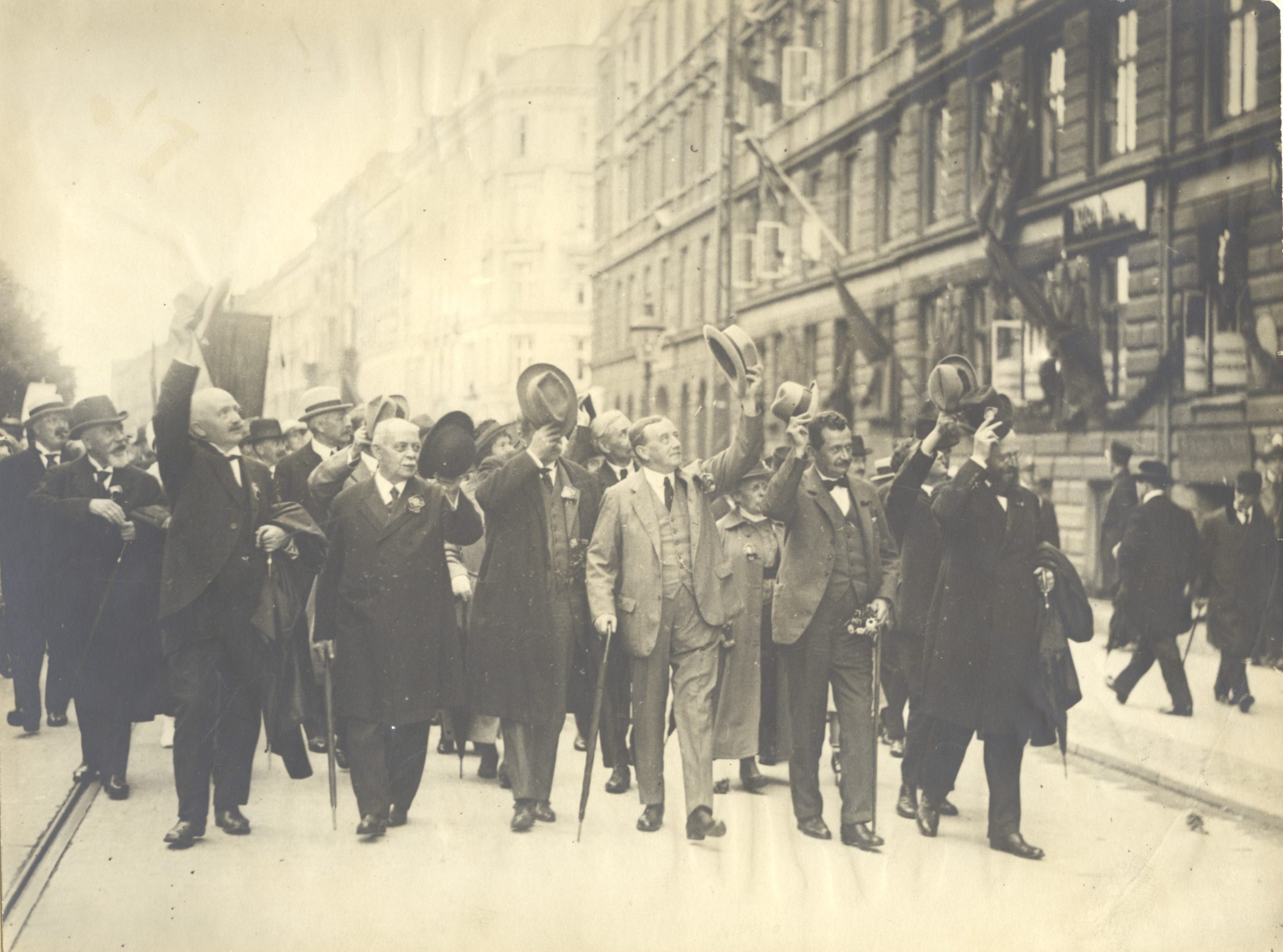
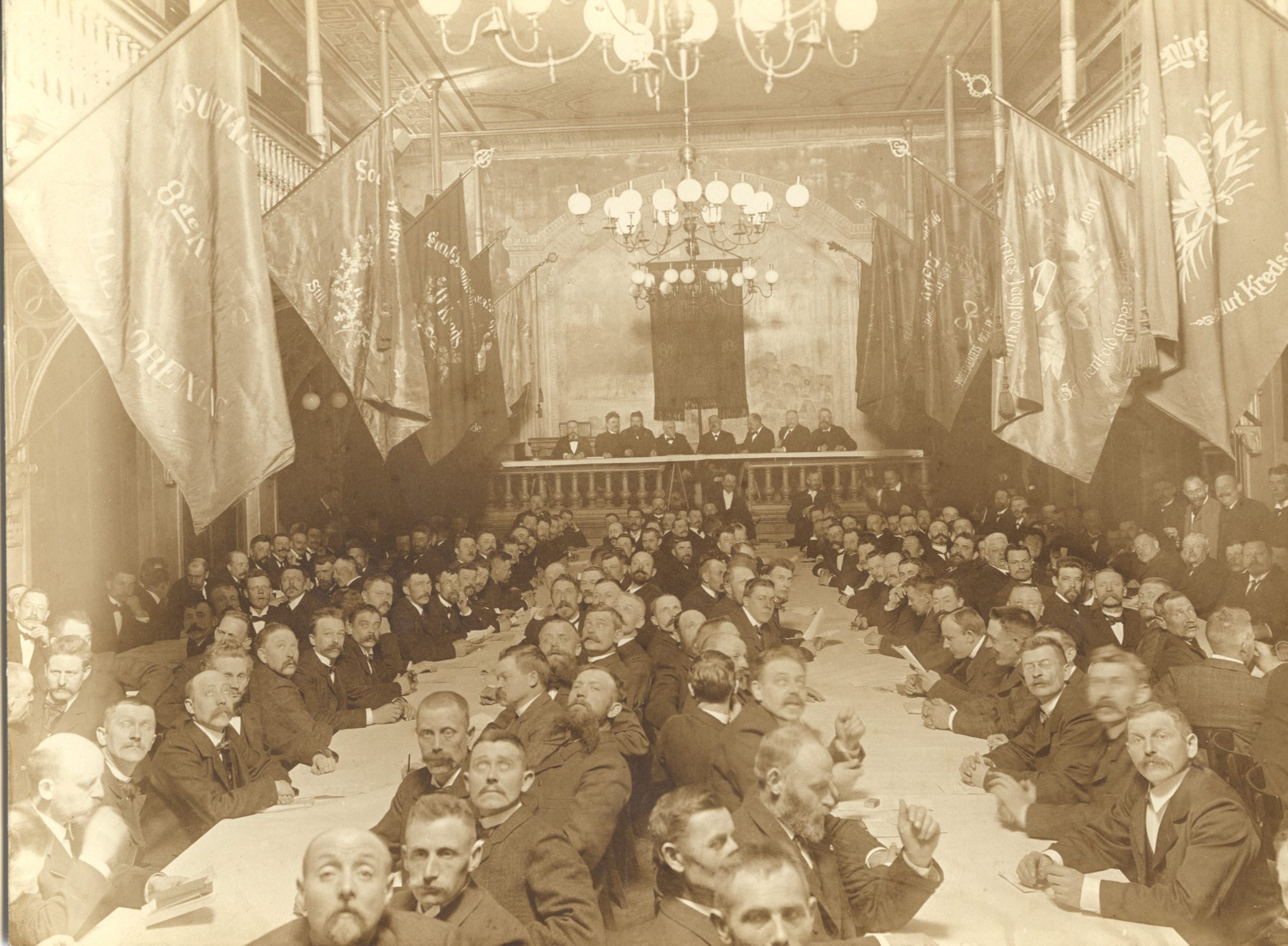
The movement manifested itself with the establishment of trade unions across the country and in all working-class professions, the building of the Workers’ Assembly Building in 1879, the founding of the main organization The Cooperating Trade Unions in 1898 and the conclusion of the “labor market constitution”, the September Agreement the following year.
Within the framework of the constitution, the party sought as much political influence as possible. In 1884, the first two Social Democrats were elected to the Danish Parliament. 40 years later, the Social Democratic Party became the largest party and formed its first government with Thorvald Stauning as Prime Minister.
One of the party’s original key issues was the extension of democracy to all adults in Denmark, the so-called equal and universal suffrage. This goal was achieved with the constitutional amendment of 1915, which gave women and servants without a household the right to vote.
The Kanslergade settlement
A major step towards a modern welfare society was taken with a series of crisis settlements and social reforms in the 1930s. Most famous is the Kanslergadeforliget with the Liberal Party in 1933, named after the street where Prime Minister Stauning lived.
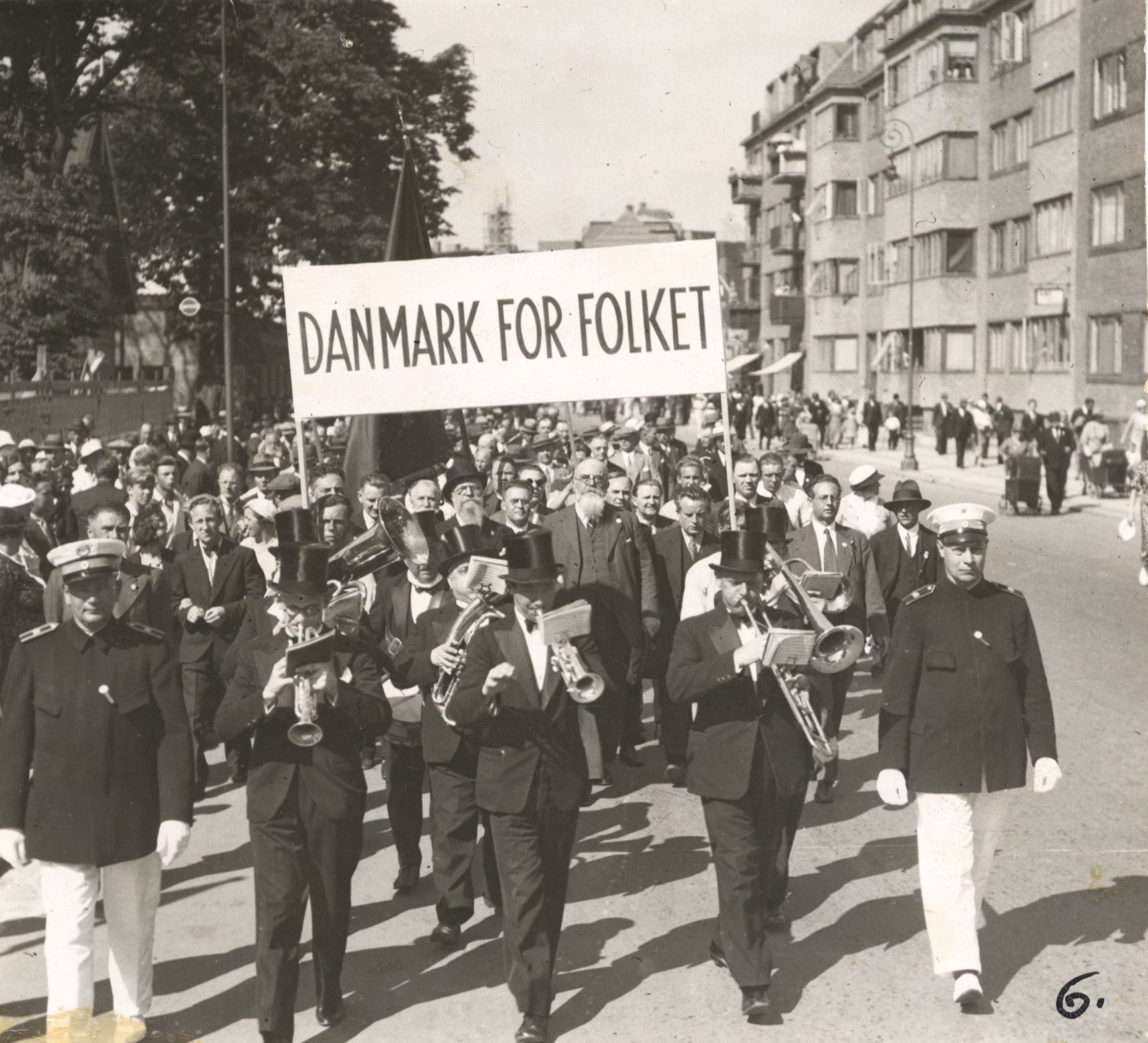
Denmark for the people
The Kanslergadeforliget was followed the next year by a new Social Democratic party program. It had been in the works since 1931 and was to replace the previous program from 1913. The main idea was a policy that would not only embrace workers, but the general population, including farmers, white-collar workers and the rest of the middle class. The program enshrined the Social Democratic Party’s transformation from a class party to a people’s party.
Read about Denmark for the People and see Party Programs from 1876 onwards
One part of the Social Democratic movement that gained momentum in the interwar period was the children’s organization De Unges Idræt (DUI).
Throughout the 20th century, the party became the longest-serving governing party and had a decisive impact on the development of the modern Nordic-style welfare society and the positioning of Denmark in NATO and the EU after World War II.
Unlike several other social democratic parties in Europe, the Danish party has adapted to and secured support for dealing with the many challenges of the new millennium. In particular, its stance on the refugee-immigrant issue looks set to become a hallmark of recent decades.
Explore the Social Democratic Party Archive
Party programs from 1876-2004
1876: The Gimle program
The Social Democratic Party’s 1st principle program.
1888: The Social Democratic Party’s program
1913: The Social Democratic Party’s program
The Social Democratic Party’s 2nd program of principles.
1918: The 18-point program
The Social Democratic Party’s work program, 1918.
1923: The Odense Program
The Social Democratic Party’s election and work program, 1923.
1934: Denmark for the People
The Social Democratic Party’s work program, 1934.
1945: Denmark of the Future
The Social Democratic Party’s work program, 1945.
1952: Freedom, work and security
Social Democratic Party Work Program, 1952.
1953: The road to progress
Social Democratic Party Work Program, 1953
1961: Idea and everyday life
The Social Democratic Party’s work program, 1961.
1961: The way forward
Social Democracy’s 3rd Program of Principles, 1961.
1969: The new society
The Social Democratic Party’s work program, 1969.
1971: 4-year program
Social Democratic Party Work Program, 1971.
1973: The Social Democrats shape the future
Social Democratic Party Work Program, 1973.
1974: The Social Democrats’ Overall Plan
Social Democratic Party Work Program, 1974.
1977: A society based on solidarity
Social Democratic Party Work Program, 1977.
1977: Solidarity, equality and well-being
The Social Democratic Party’s 4th Program of Principles, 1977.
1980: Our work program
The Social Democratic Party’s work program, 1980.
1984: For new progress
The Social Democratic Party’s work program for 1984-1988, 1984.
1987: Denmark for all the people
The Social Democratic Party’s program-like adoption, 1987.
1988: On human terms
The Social Democratic Party’s work program for 1988-1992, 1988.
1989: Time for the 90s
The Social Democratic Party’s program-like adoption, 1989.
1992: The new century
Social Democracy’s 5th program of principles, 1992.
1992: On human terms
The Social Democratic Party’s work program for 1992-1996, 1992.
1996: Common future – common goals
Social Democratic Party Work Program, 1996.
2000: Free and Common
Social Democratic Party’s work program for 2000-2004, 2000.
2004: Hand on heart
The Social Democrats’ 6th Program of Principles was adopted at the Congress in September 2004
 Search