Search
Karl Marx May 5, 1818 – March 14, 1883
Karl Marx was a German revolutionary socialist and social scientist. He has been considered the most significant figure in the history of the socialist movement. From the early 1840s and for the next forty years, he sought to show the way for the emancipation of the working class through understanding the development of capitalism.
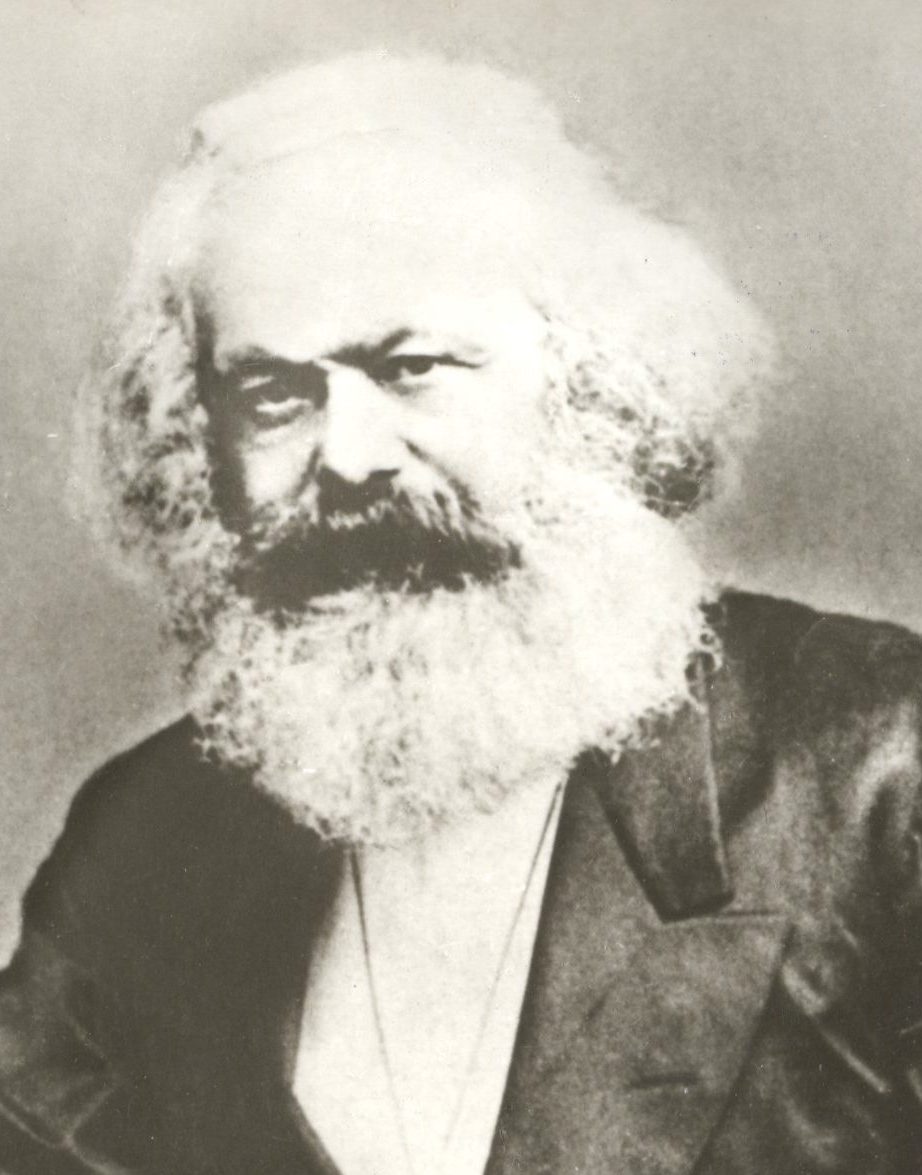
2018 marks the 200th anniversary
Karl Marx was born in Trier in western Germany on May 5, 1818, and 2018 marks the 200th anniversary of his birth.
Karl Marx was the man behind the development of modern socialist theory, the ideas of class struggle and the organization of a politically oriented labor movement. Central to Marx’s ideas was the notion that industrial production created special conditions for the working class. The organization of modern society led to the alienation of the working class from production as a result of another class (the bourgeoisie) possessing the means of production and controlling the production process in order to maximize capital.
Due to his radical political ideas at the time, Marx spent much of his life in exile. First in France, then in England, where he lived from 1849 until his death in 1883. Together with his friend and comrade-in-arms Friedrich Engels, he wrote numerous works that became classics of socialist literature. The most significant were the Communist Manifesto of 1848 and the giant work The Capital (1867-94).
Marx and Engels
Marx was inspired by his contact with labor groups and German émigrés in Paris, the writings of French “utopian” socialists (Henri de Saint-Simon, Charles Fourier and Pierre-Joseph Proudhon) and economists like Adam Smith and David Ricardo. However, it was his collaboration with his compatriot Friedrich Engels that became Marx’s strongest inspiration and in many cases also provided the economic basis for his work.
Karl Marx also played an enormous organizational role in the development of socialism. Together with Friedrich Engels, he became the de facto leader of the Communist League in London. And in 1864, he helped found the International Workers’ Association, later known as the First International. This federation of workers’ associations aimed to counteract international strikebreakers and work for the political strengthening of the working class.
Because of Marx’s central position in the international labor movement, he was also among the leading foreign forces that Louis Pio sought advice from when he fought to establish a Danish branch of the International in the first half of the 1870s.