 Search
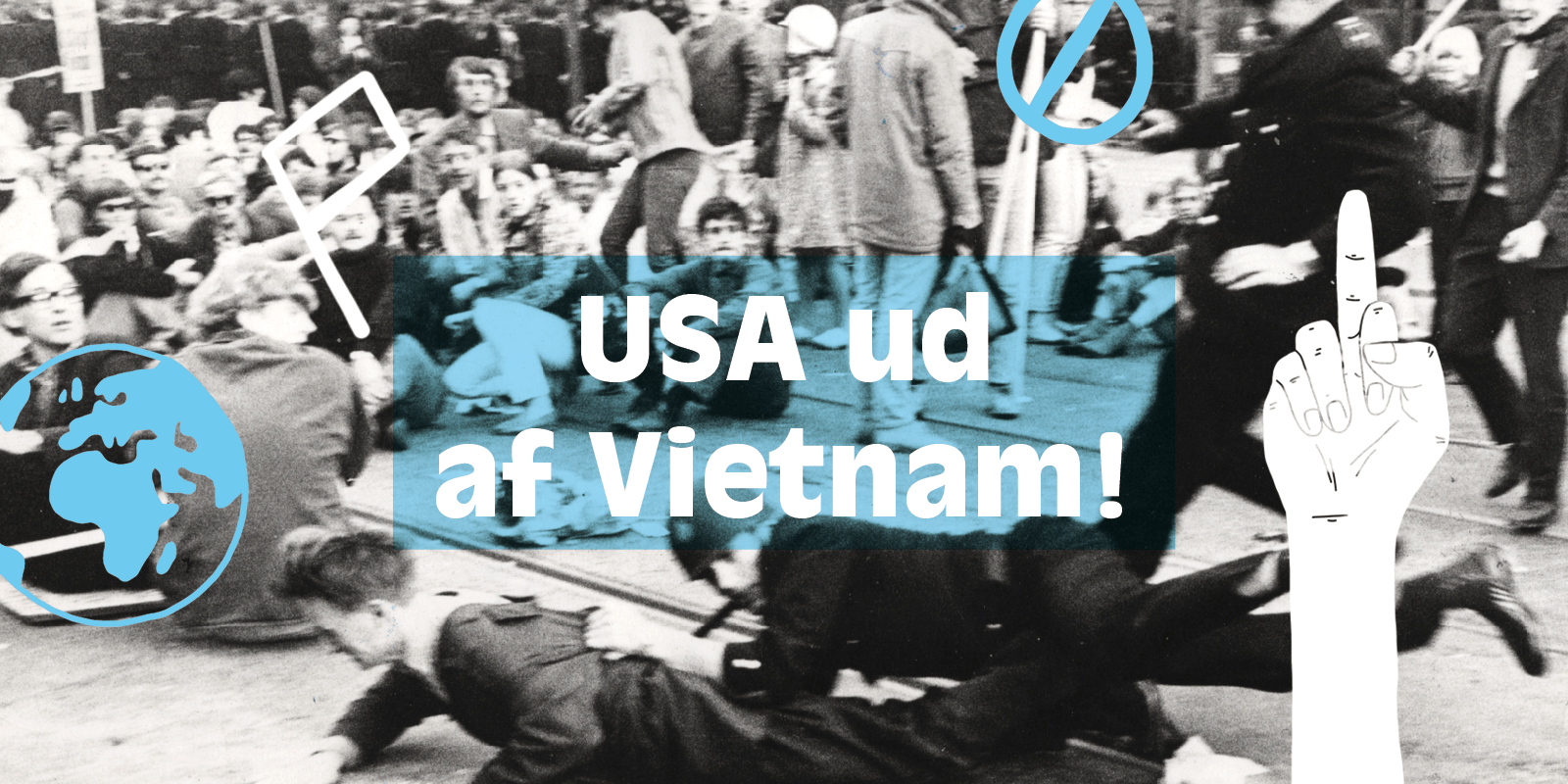
Start by watching the movie below
It introduces you to the topic of activism and working with memories as sources.

YOU NEED TO WORK WITH
ACTIVIST: Tove Jensen (born 1944).
ORGANIZATIONS: Has been active in the Danish Vietnam Committees (DDV), Amager Vietnam Committee and Demos.
EVENTS: Demonstration in 1968 against the war in Vietnam and activism and other activities in that connection.
INTERVIEW: The audio clips, where Tove Jensen narrates, are from an interview made by Jesper Jørgensen, archivist at the Labor Museum. The interview was conducted on April 23, 2019.
Task 1
Read the questions below first and then go to the source, which you will find just below the questions.
This assignment includes Source 1, where Tove Jensen talks about her parents and her childhood experiences.
Start by listening to the source presentation and then go to the source itself.
Question:
- What do you notice in the source? Why this particular one?
- What does Tove say about her parents? What do you notice in it?
- How has Tove’s background and her parents’ parenting influenced her?
- Why do you think Tove’s background affects her in this way?
Sources for task 1

Source presentation: Source 1
Listen to the clip to get the context for Source 1
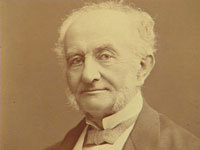
Source 1: Memory from Tove Jensen
In the clip, Tove Jensen talks about her parents and childhood. The memoir was recorded on April 23, 2019.
Task 2
Read the questions below first and then go to the sources found just below the questions.
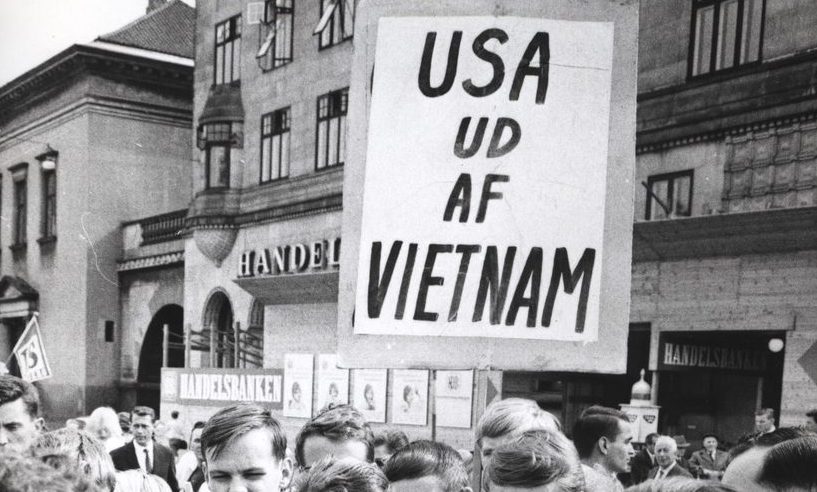
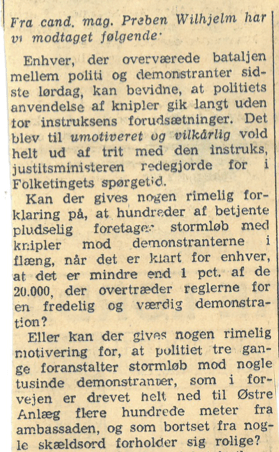
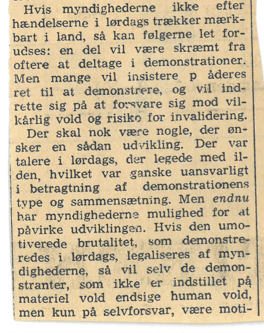
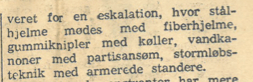
This assignment includes Source 2, where Tove Jensen talks about a demonstration in 1968 against the Vietnam War, and Source 3, which is an excerpt from a letter to the editor about the events at the same demonstration.
Start by listening to the source presentation for Source 2 and then listen to the source itself. Do the same with Source 3.
Question:
- What do you notice in Tove’s description of the demonstration? What is your impression of the events based on Tove’s description? Provide quotes from Tove’s recollection that support or exemplify your impression.
- Compare Tove’s description with Preben Wilhjelm’s letter to the editor. Do the two descriptions give the same picture of the demonstration and the police actions in it? Provide examples from the two sources.
- Preben Wilhjelm writes that there were speakers (i.e. activists who spoke at the demonstration) “playing with fire”. What do you think this means?
- What do you think Preben Wilhjelm’s purpose with the rhetoric in the “Østerbro-bataljen” was? And why has it been his purpose?
- Why do you think Tove says that today we won’t wonder about the (police) form? How do you think this experience affects the relationship with the police?
- Reflect on and discuss whether there are good reasons why the police acted as they did according to Tove’s, Preben’s and other activists’ descriptions? Find both arguments for and against.
Sources for task 2

Source presentation: Source 2
Listen to the clip to get the context for Source 2
Source 2: Memory from Tove Jensen
In the clip, Tove Jensen talks about a demonstration against the Vietnam War in 1968. The memoir was recorded on April 23, 2019.
Source presentation: Source 3
Listen to the clip to get the context for Source 3

Task 3
Read the questions below first and then go to the sources found just below the questions.
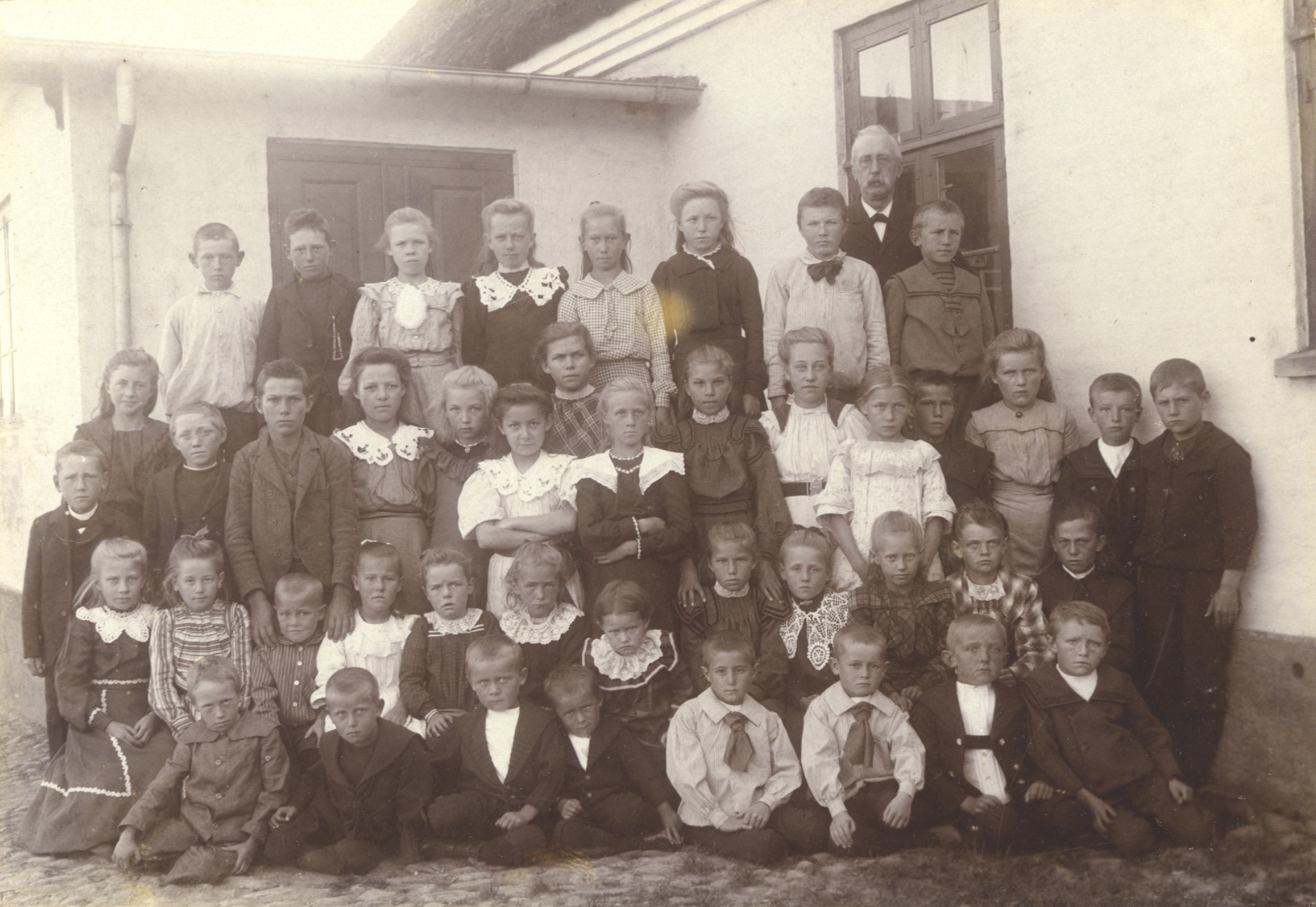
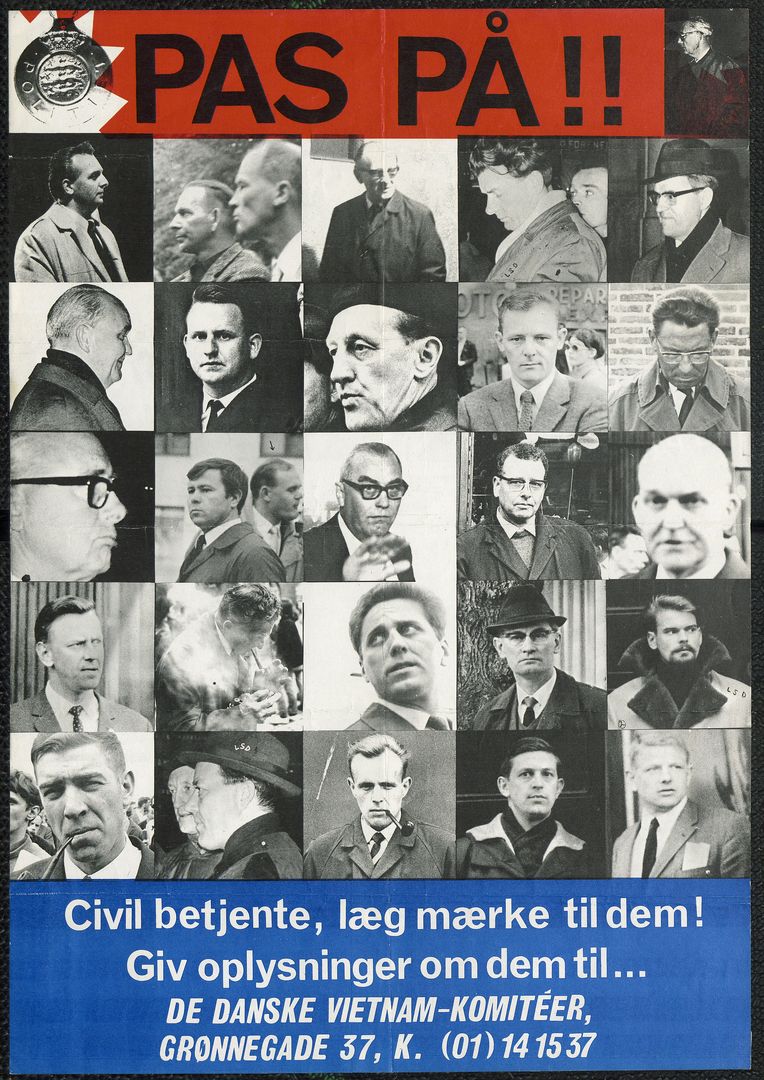
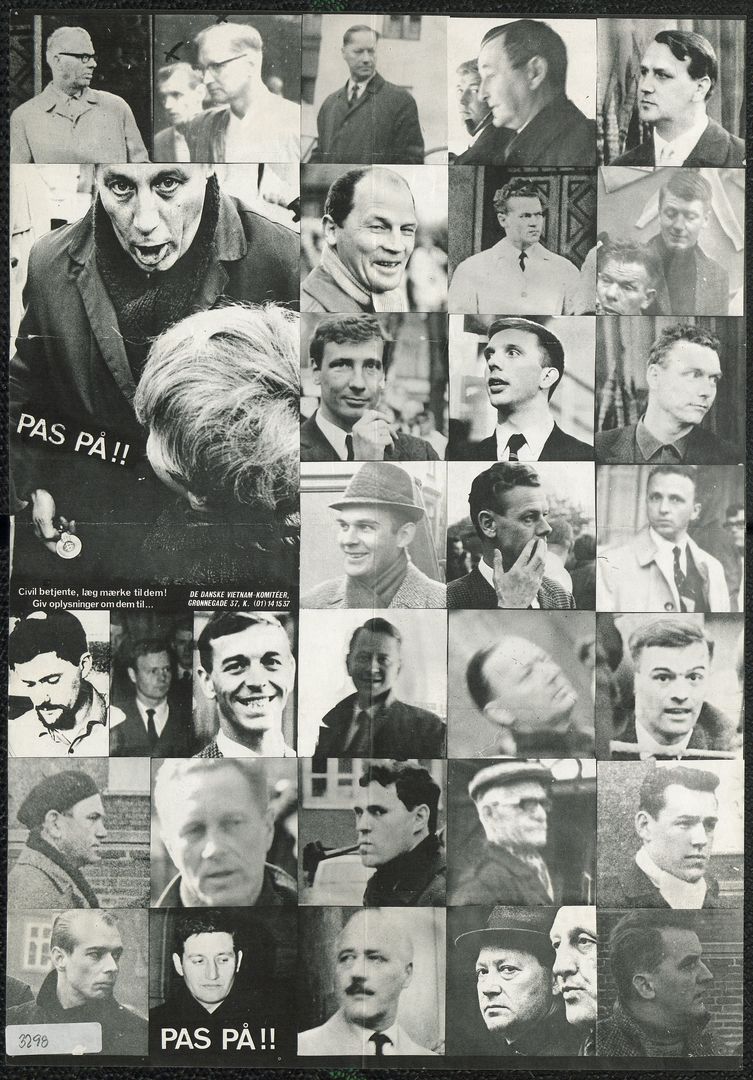
This assignment includes Source 4, where Tove Jensen talks about some of the work the activists started after the demonstration, and Source 5, which is a poster published by the Danish Vietnam Committees after the demonstration.
Start by listening to the source presentation for Source 4 and then listen to the source itself. Do the same with Source 5.
Question:
- Why did Tove feel that her own and the other left-wing activists’ freedom of assembly was threatened? And why were the left-wing activists actually being monitored?
- Why could it be important for activists to recognize the civilian police officers on the placard at demonstrations?
- Tove says that she didn’t think the police would have come up with the idea of hitting the protesters so hard. What do you think she means by that?
- Why did Tove and her fellow activists file a lawsuit against the police? What does Tove say about the trial and why was it so important?
- What does it mean for Tove’s credibility that many witness accounts were collected from other people who were at the demonstration and that the witness accounts were used in the lawsuit that Tove and her fellow activists brought against the police afterwards?
Sources for task 3
Source presentation: Source 4
Listen to the clip to get the context for Source 4.

Source 4: Memory from Tove Jensen
In the clip, Tove Jensen talks about the work the activists started after the demonstration. The recollection was recorded on April 23, 2019.
Source presentation: Source 5
Listen to the clip to get the context for Source 5.

Task 4
This assignment is a wrap-up where you will reflect on and discuss the sources and the activism they describe.
Questions for using memoir sources
- In the intro film, archivist Jesper Jørgensen talks about how, when working with memory sources, you need to be aware that it is a personal processing of something that happened – sometimes a long time ago. Can you identify signs that the events are long ago and that Tove remembers them? If so, could this affect the credibility of the recollection? Why/why not?
- Assess what the memory sources can be used for – what can they tell us about and what can’t they tell us about?
- How does it become clear that we are working with memory sources?
- Why should we work with memories?
Questions about the activism you have worked with
Tove Jensen was part of a movement that fought against the war in Vietnam and the American involvement in it. They did this because millions of Vietnamese were killed in the war.
- Is it fair that the activists targeted individual officers specifically (as in the poster) in their efforts to expose police practices? Try to find arguments both for and against and discuss them.
- Do you get the impression that Tove has changed her stance on some of the activism she was once a part of? Come up with examples to support your arguments.