Search
DUI – De Unges Idræt was founded on November 10, 1905 as the labor movement’s answer to the Christian scout and outdoor movement FDF (Frivilligt Drenge Forbund).
By: Hans Uwe Petersen
The initiative for DUI came from Louis Florin, who was a member of the Social Democratic Youth League (SUF) and also leader of the Voluntary Boys’ Federation (FDF). Florin found understanding for the desire to create a children’s (boys’) organization for working-class children in journalist and member of parliament A.C. Meyer. Meyer, who also became DUI’s first chairman.
In the social democratic labor movement, there was initially some skepticism towards DUI. Others in the movement found it necessary to counteract the Christian FDF and supported the intention to get children out of the backyards and into nature, to activate them through sports, physical exercise, music lessons and holiday camps.
DUI distanced itself from the militaristic forms of other children’s movements and instead wanted to help children become active members of society. The age limit was 8-16 years. Like other children’s organizations, uniforms were compulsory (white sailor blouse with a black round cap).
1906: The Girls’ Sports Association is established (disbanded in 1908).
1917: DUI begins to admit girls as members.
1918: DUI has its breakthrough in the provinces and branches are established in Hedehusene, Bogense, Brabrand, Ringsted, Nørresundby, Odder, Lyngby, Horsen, Aarhus and Aalborg.
1919: The national union is founded with a total membership of almost 5,000.
1923: At the congress in Aarhus, it is decided to include camp sports in the program.
1926: ‘De Unges Idræt is the workers’ children’s organization in Denmark; it has emerged as a natural part of the Danish labor movement and is managed in accordance with the Social Democratic program for education and public education’. (mission statement)
1929: The white uniform is replaced with a blue blouse and red scarf. DUI organizes an international camp “Children’s Republic of Ermelunden”.
1931: Close cooperation with the Danish Social Democratic Youth is initiated. The mission statement now read: ‘The task of De Unges Idræt is to organize the children of the working class in order to educate them to become conscious co-fighters in the Danish labour movement. De Unges Idræt is a part of the social democratic labor movement. The organization’s educational work is carried out on a socialist basis’. The membership is around 9,000.
1935: On the back of DUI’s membership card is printed the organization’s 9 “commandments”: We are Workers’ Children. Working boys and girls stick together. We are good comrades. We will maintain discipline, and our word can be trusted. We do not taunt or slander anyone. We will avoid alcohol and fight nicotine use. We will read good books. We will keep our bodies clean and healthy. We will learn to understand our slogan: Order – Solidarity – Friendship.
1936: National camp in Aalborg
1937: The Congress in Odense decides to end the collaboration with DSU and concentrate on the “purely pedagogical work” of offering children leisure interests that could give life greater meaning. The aim was to develop the children’s independence and sense of responsibility, give them knowledge of cultural values and social conditions, and give them an understanding of the work of the labor movement in contemporary society. National camp in Tønder.
1940: At the start of the occupation, the membership was 9,776, a decrease of around 2,000 compared to 1938, and during the occupation years the membership increases to almost 13,200 in 1945.
1946: International friendship camp in Roskilde. Until
1947: Membership increases to 14,254.
1950: DUI has 152 branches with 9,729 members. In the 1950s, membership fluctuates between just under 9,000 and well over 10,000. In this and the following decade, DUI placed a lot of emphasis on helping to educate children to become good, free, creative and democratic citizens.
1968: Name change DUI-LEG and VIRKE. The uniform is abolished. This was to mark the fact that the organization had evolved from a uniformed children’s corps to a democratic family organization with many different activities for children and young people. In addition to member events, the organization introduced so-called “open activities” – interest groups etc. in which anyone could participate. The Copenhagen branches could not agree to this basis and the resulting split was not overcome until the national meeting in 1977.
1974: DUI-LEG and VIRKE decide to reaffirm their affiliation with the labor movement and the Social Democratic Party.
the 1970s and 80s were a quiet period. In the 80s, “full” member democracy was introduced, as all members, including children, could be elected to the boards.
Throughout the 70s and 80s, the organization expanded its activities to include: Children’s theme films, a Travel Club and a Children’s and Youth House in Copenhagen as well as 3 boarding schools: Blykobbe (Bornholm) 1980, Bisnapgård (Hals) 1982 and Billeshave (Middelfart) 1982. However, none of these survived for many years. Of the continuation schools, only Bisnapgård is still associated with DUI-LEG and VIRKE.
Until the end of the 90s, membership fell to around 6,000.
On a summer camp with DUI
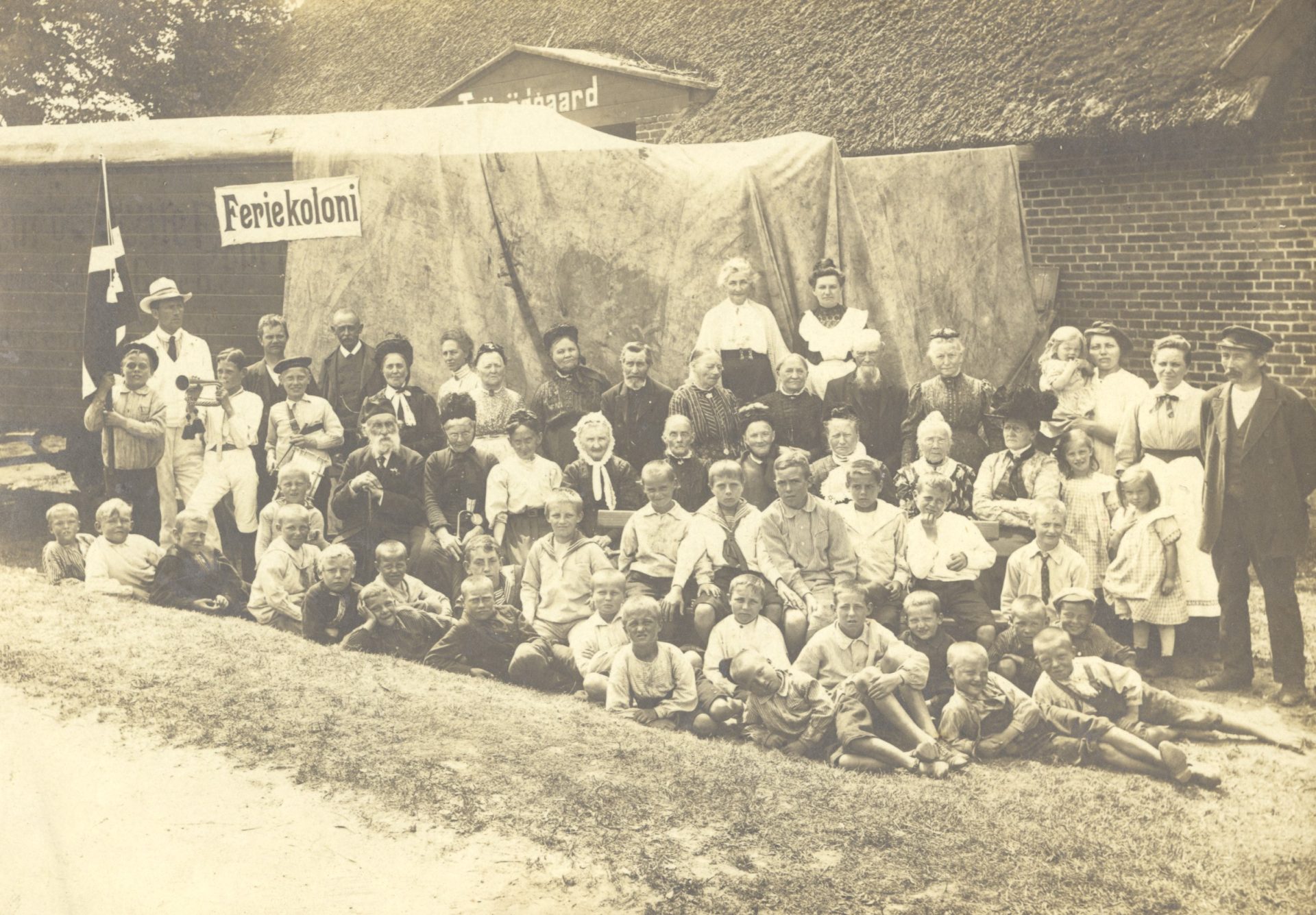
De Unges Idræt’s first summer camp was held in 1908. On July 26th, 57 boys went to the gardener’s residence at villa ‘Strandgård’ near Kokkedal station. The colony lasted 14 days and was organized in collaboration between DUI and ‘Folkets Avis’. While the DUI leaders sold 2-øre stamps for the benefit of the colony, the newspaper raised money from its readership and gifts in kind from merchants.
The boys were given a free trip on the excursion boat that sailed them from Havnegade to Rungsted. The gardener’s house was rented at a cheap rate. As a result, costs were reduced to 37½ øre per day per participant. The locals also welcomed the children. A haulier showed up one day with two wagons to take the boys for a ride and from ‘Rungstedlund’ came an invitation to study the gooseberry bushes more closely. The holiday colony was considered a great success and it was decided to continue this work in the following years. The author C.A. Pedersen, whose father Frants Christian Pedersen was the head treasurer of DUI at the time.
A lot of pictures from DUI in the 30s
Until 1914, Strandmøllen was DUI’s first permanent holiday colony. The colony stay was financed through the sale of stickers and postcards and a small contribution from each participant. In 1911, the 80 colony children paid 4 kroner each. In the following years, DUI could even offer ‘Barnets Værn’ and ‘Børnenes kontor’ a total of 6 free places. But in 1914, the soldiers who had been called up as a security force due to the outbreak of World War II were accommodated alongside the children. The last colony in Strandmøllen, which lasted 32 days, included 116 children. As a replacement for Strandmøllen, the colony was held in a barn at Brøndby Strand in 1915.
During World War I, the first travel colonies were also organized. The reason for this was partly the desire to spread awareness of DUI outside the capital, and partly the lack of permanent vacation colony sites. After the establishment of branches in the provinces, the children from there also went on summer trips to Copenhagen.
Although the number of permanent campsites increased over the years, the need for vacation offers could not be met. It was only after several years of intense discussions that the congress in Odense in 1923 decided that DUI should add the so-called camp sport to the program. The misgivings, which manifested themselves in several departments’ protest resolutions to the association, were partly due to the militaristic character of the camp activities of the time in both the scout movement, which had arrived in Denmark in 1909, and the FDF, and partly a rejection of getting scout leaders to hold instructor courses in camp sports for DUI leaders. However, a single course was nevertheless conducted in collaboration with the scouts.
Despite the criticism and concerns, the pragmatic point of view prevailed at the congress in Odense: since children want to go to camp, and since DUI wants to bring children together, the organization must take up camp sports and run it in a way that avoids the military touch. This was the starting shot for a soon-to-be flourishing camp life in DUI. Camp activities were developed at all levels of the organization.
throughout the 1930s, large national camps were held: Oksø in Flensburg Fjord (1933), Vejle (1934), Aarhus (1935), Aalborg (1936), Tønder (1937). There were also Nordic and international camps: Children’s Republic of Ermelunden (1929), Falkenberg, Sweden (1939), Friendship Camp Roskilde (1946), England (1951), Germany (1952), Finland (1953), and the anniversary camp Hørhaven near Aarhus (1955).
Aalborg Camp 1936
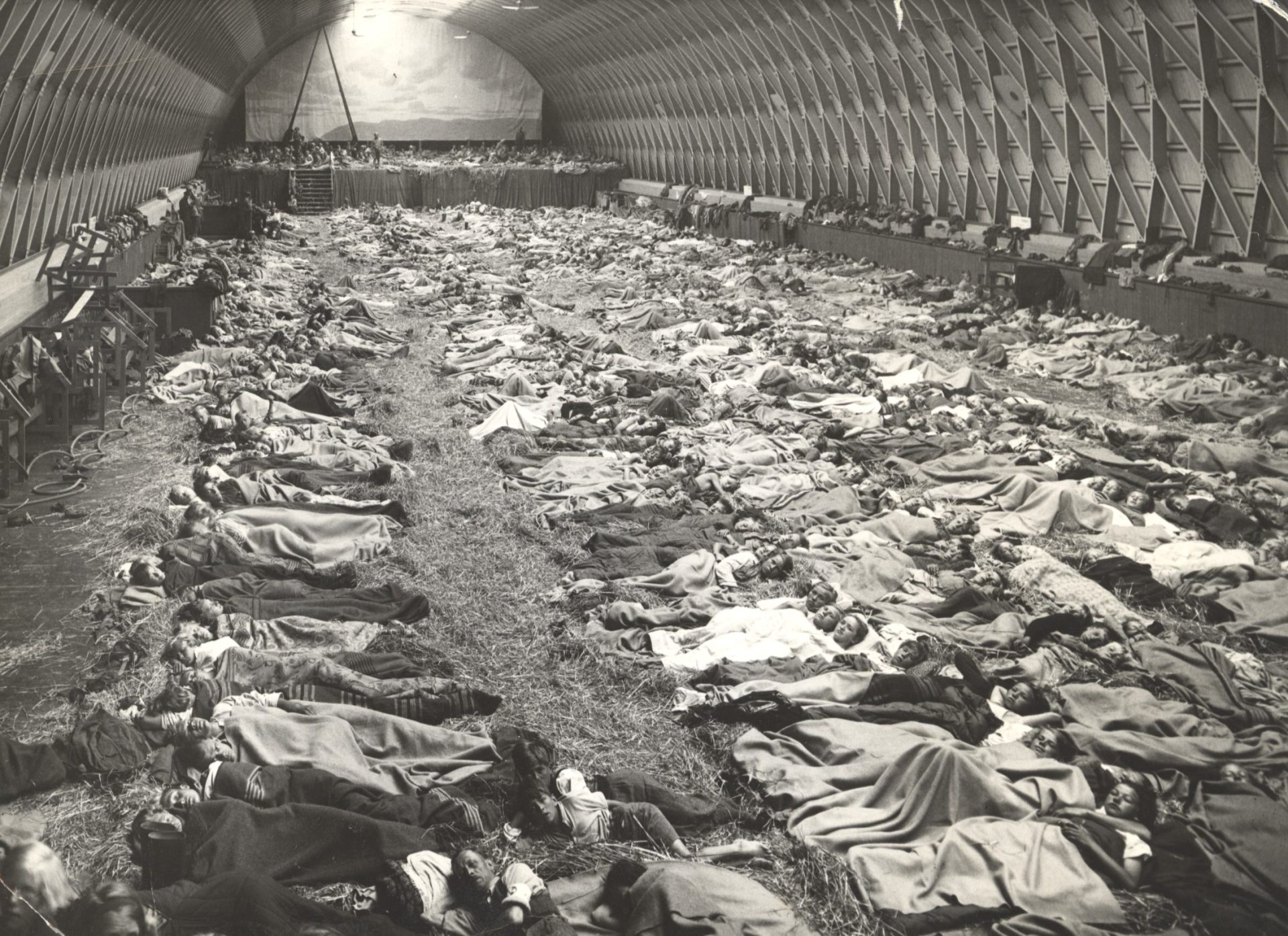
the ‘Aalborg Camp 1936’ had 1800 participants, as well as Czech, Norwegian and Swedish guest delegations. In addition to the usual camp activities, the program included a trip to the North Sea by train, company visits for the older children and sightseeing in the host city. A hurricane-like cloudburst necessitated the evacuation of the camp, which was moved to Aalborghallen. The vacationing children were then accommodated for a few days in private homes before returning to the tent camp. In a final demonstration, the participants in the ‘Aalborg Camp’ expressed their thanks for the great help and hospitality they had received.
Others also read

THE STAUNING OF ALL OF DENMARK
Thorvald Stauning was a beacon in Danish politics and is the longest-serving prime minister of the 20th century

WITH THE LAW OR WITHOUT
In 1871, the living conditions for the few industrial workers in Denmark at the time were appalling. But when the labor..

THE BATTLE FOR TIME
Working 48 hours a week. It sounds like a lot for a Danish worker in 2019. But 100 years earlier, it was just..