Search
Even before the Labour Movement’s Trade Union Political Secretariat (AFPS) really got going, the Social Democrats’ political opponents were on the offensive.
By Jesper Jørgensen
Only three days after the party newspaper Aktuelt broke the news in January 1987 that organization secretary Willy Stig Andersen would take over as head of the Social Democratic Party and LO’s new trade union secretariat on 1 March, trouble was brewing. In BT, former Social Democratic press secretary and later right-wing newspaperman Karsten Madsen wrote that “LO and the Social Democrats are now declaring war on SF. The trade union movement will spend DKK 5 million a year to throw SF and DKP members out of shop steward jobs in the workplace”, and that “LO fears the ‘wrong colored'”.
The shelling continued after the creation of the AFPS, and on May 23, 1987, Børsens Nyhedsmagasin revealed an internal LO memo that described how the AFPS was to assist the trade unions with a survey of shop stewards’ political views. Communist party chairman Ole Sohn told the same newspaper that he found the registration distasteful. Bjørn Elmquist, the Liberal Party’s legal policy spokesman, told Politiken: “LO is not a social democratic organization, and it must be investigated whether the registration is in violation of the Registration Act.” SF’s Ole Henriksen was also very concerned and was quoted in BT as saying that the creation of AFPS was an attempt to revive the defunct AIC, the Labor Movement’s Information Center, whose methods in the fight against communists in the first part of the Cold War did not always stand the test of time.
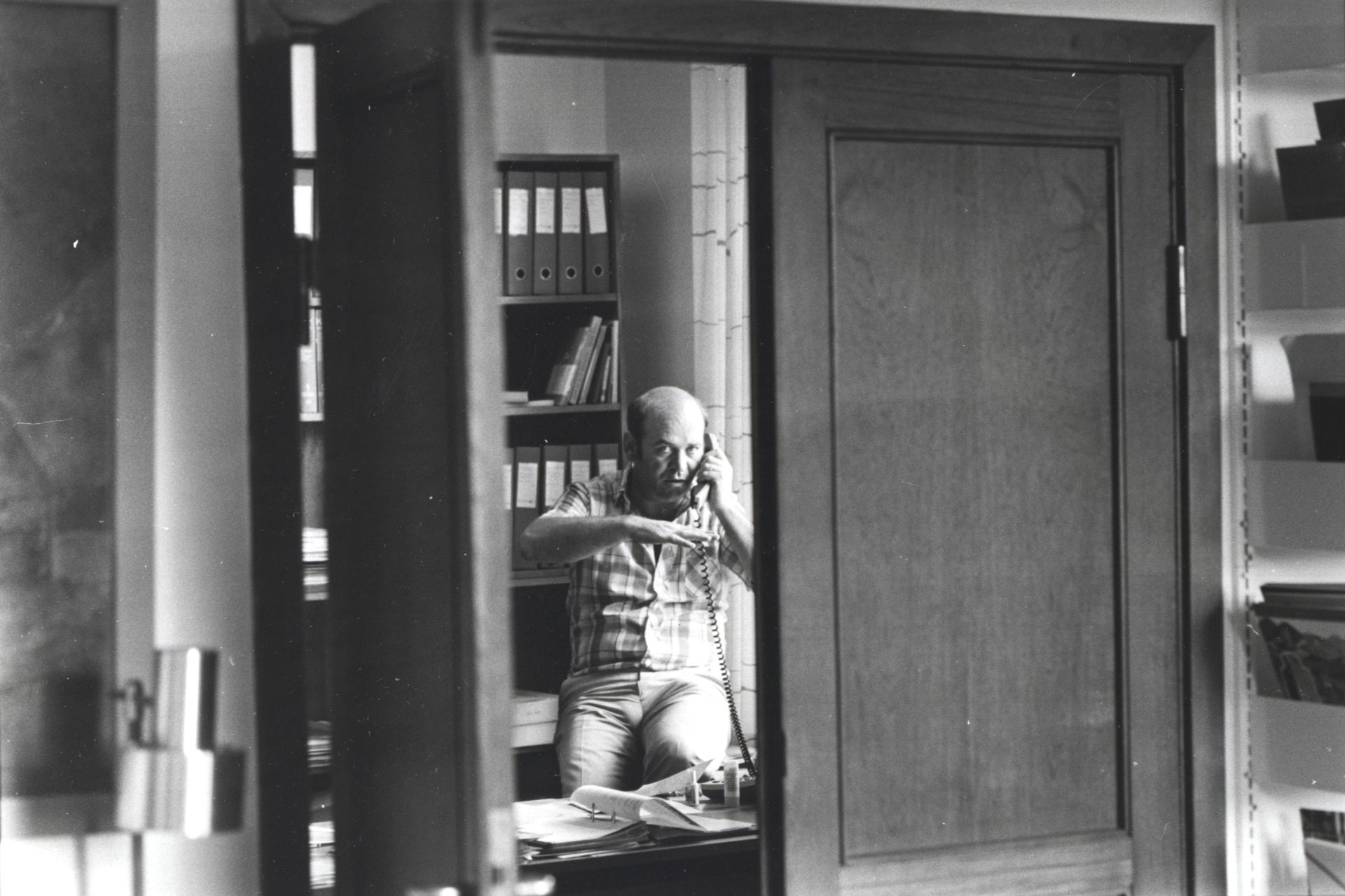
The media mill was well underway from the start, but the “register case” lost steam relatively quickly when the new head of the secretariat and other top party and trade union leaders explained that it was only a matter of voluntary registration of Social Democratic activists. Many probably couldn’t imagine anything else, but at the time they “only” had the Social Democrats’ word for it, so there must have been those who weren’t entirely convinced.
However, it is now possible to take a closer look at the ABA. The ABA has registered the secretariat’s 187-box archive, and here you can delve into the minutes from May 25, 1987 – two days after the case began its tour of the Danish media – from one of the so-called coordination meetings between the secretariat, the party and LO, where the case was obviously put on the agenda:
“6) Registration of trade union, political shop stewards: The daily press’ treatment of the secretariat’s tasks in this area – building our network of contacts – has been heavily debated in recent days. This has been done on a basis defined by the press and our political opponents. The secretariat only has the signatures of party colleagues who have given their commitment in the register. As Finn Thorgrimsson told Det Fri Aktuelt, the wording in the memo on the secretariat’s tasks approved by LO’s executive committee at the December meeting […] is unfortunate when it can be misinterpreted […] We neither can nor will deal with the ‘others’.”
Nor is there anything in the rest of the archive to suggest that the AFPS registered political opponents. In this way, the secretariat did not deal directly with the “others”, but indirectly of course. Thus, there are quite a few cases in the archive that deal with the secretariat’s help to local Social Democratic clubs in getting a Social Democrat elected as president of this or that union at the expense of a non-Social Democrat. In this way, the secretariat did not differ from the other parties’ trade union secretariats.
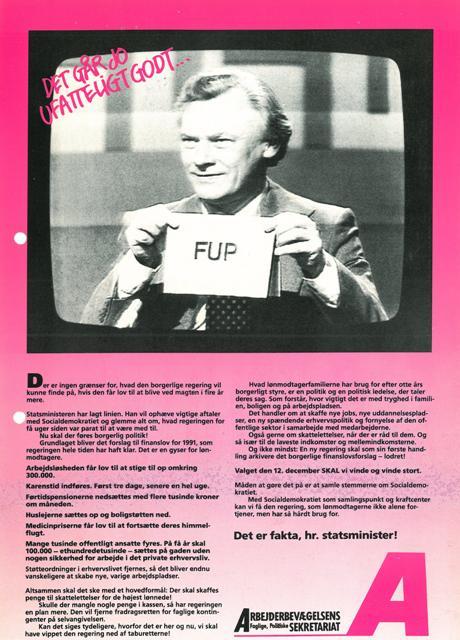
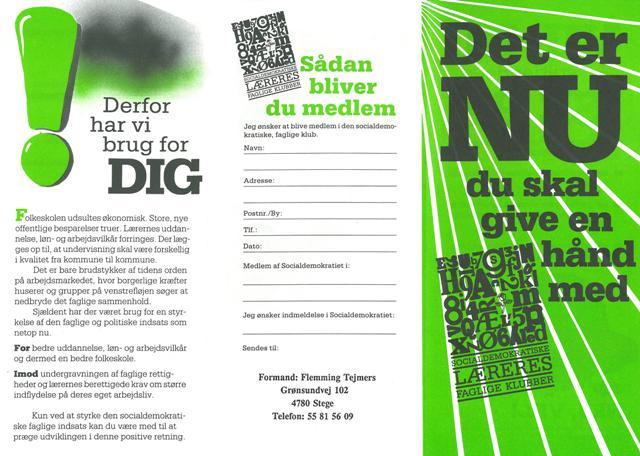
Central to the secretariat’s work was the large workplace contact network of Social Democrats, which distributed the secretariat’s magazine The Workplace and other information material from the Social Democratic Party and LO. Another main task was to support the establishment and operation of Social Democratic clubs at workplaces and in trade unions, including providing article service to club magazines through the distribution of “article packages”. In addition, the secretariat supported “positional” courses, campaigns, projects and conferences and contributed to the party’s election campaigns and May Day celebrations, etc. The purpose of the AFPS’ efforts was to strengthen Social Democracy’s position in the trade union movement.
While the issue of registration disappeared from the agenda, the AFPS’ funding from LO continued to attract criticism, which probably contributed to the secretariat being closed down in 2001. At the time, LO was generally in a period where its relationship with the Social Democratic Party was being reformulated. The daily newspaper Aktuelt was discontinued in 2001, and LO stopped its regular annual support for the Social Democrats in 2003.
The archive is accessible on the usual terms, with a general restriction on material younger than 20 years according to the Archives Act.
See the register of the archive.
See publications from Arbejderbevægelsens Faglige, Politiske Sekretariat in the library’s collection.