Search
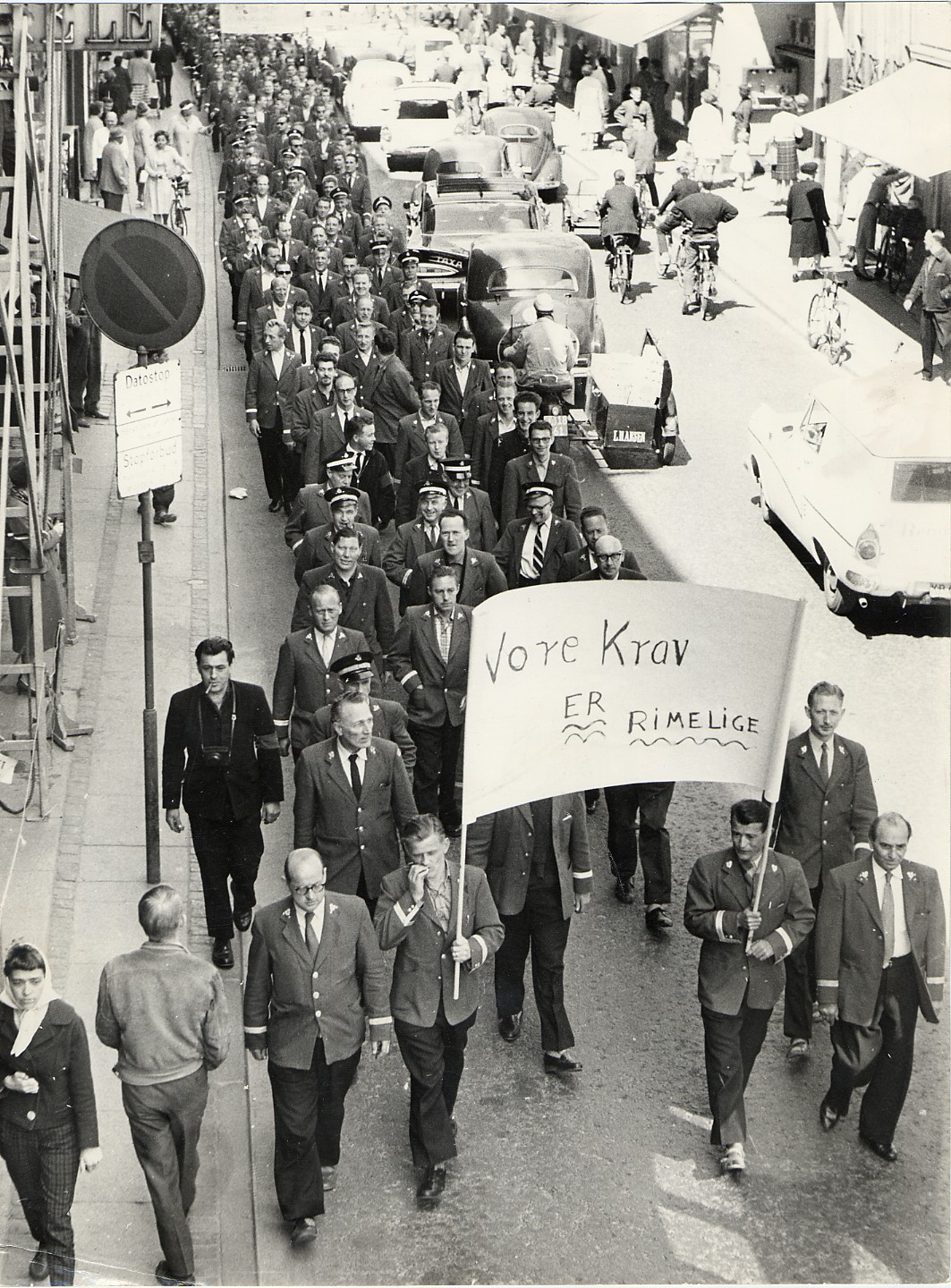
In collaboration with the Public Employees’ Organizations (OAO), ABA took a closer look at an archive delivery from Statsansattes Kartel (StK) during the spring of 2011.
By Jesper Jørgensen
The transfer contained the archives of OAO’s predecessor organizations StK and Statstjenestemændenes Centralorganisation I (COI) as well as smaller, related archives from Centralorganisationen af overenskomstansatte i staten (CO-STAT), Tjenestemændenes Fællesudvalg (TFU) and Foreningen af statspedeller.
After arrangement and registration, the four archives comprise a total of 1,464 archive boxes covering the period 1909-1995. The largest part is made up of journal cases from COI/StK, which OAO regularly orders via ABA’s remote archive function.
The story behind it
StK can rightly trace its history back to the Central Organization for the Railway, Postal, Telegraph and Customs Services (the Salaried Classes), which was founded on 26 November 1909 by Dansk Jernbaneforbund, Postfunktionærernes Fællesorganisation, Telegrafledernes Forening af 1896 and Toldrorsbetjentforeningen af 1904. In 1920, the name was changed to Statstjenestemændenes Centralorganisation (Funktionærklasserne), from 1937 Statstjenestemændenes Centralorganisation I (COI).
On 4 Decem ber 1986, COI joined the Central Organization of State Employees (CO-STAT) in the newly formed Government Employees’ Cartel (StK). From November 15, 1988, COI was referred to as the Civil Service Section of StK. The section was dissolved together with the other section, the Collective Agreement Section (CO-STAT), on January 1, 1994.
On June 21, 2007, Statsansattes Kartel merged with Det Kommunale Kartel. The new organization was named Offentligt Ansattes Organisationer (OAO).
StK’s was the central organization for government employees in primarily LO unions, including HK and 3F as the largest in 2007. They were referred to as belonging to the lower white-collar classes and were known as the “silver cords” as opposed to the higher white-collar classes of indoor workers “gold cords” in COII.
The organization negotiated collective agreements with the Ministry of Finance through its representation in the Central Organizations’ Joint Committee (CFU), formerly the Civil Servants’ Joint Committee (TFU). Prior to the Civil Servants Act of 1958, individual unions had the right to negotiate, which was originally achieved in 1910.
A boring case
One of the interesting cases – albeit a bit boring for the civil servants involved – that is preserved in the archive is about the Civil Service Tribunal of 1945. Up until October 1948, the court dealt with over 600 cases concerning treason and other activities detrimental to the country.
The crime could, for example, be membership of the Danish Nazi party or that the civil servant in question had helped the occupying power beyond the scope of his official duties, as formulated in the law. The papers show that a good number of police officers were brought before the court.
For the COI, it was a matter of appointing a judge to the court and, from 1947, to the so-called Court of Appeal for Civil Service Cases. The central organization chose the vice president, locomotive driver Soph. Jensen as permanent judge for the Court of Appeal for Civil Servants and secretary in Dansk Jernbaneforbund J. K. F. Jensen to the Court of Appeal.
As the minutes from a meeting with the Minister of Finance in the spring of 1947 regarding the revision of the law – with a view to providing access to appeal the court decisions – clearly show, they were not happy with the case in the COI:
“Sophus Jensen declared on behalf of the C.O.I. that the organization had never wanted the Civil Service Tribunal, and in any case is now interested in getting the case out of the world as quickly as possible, because this was about special treatment of civil servants: Statsansattes Kartels arkiv, box 1387
The appeals body was introduced anyway, and the civil servants had to live another year and a half with negative attention to another one and a half hundred appeals cases.
The case, like the rest of the material in the mentioned archives, is accessible according to the general terms of access.
Links to archive registrants
Archive of the Government Employees’ Cartel
CO-STAT’s archive
The archive of the Joint Committee of Civil Servants
Archive of the Association of State Employees
Anniversary publications and other publications