Search
EXHIBITION
tThe Banquet Hall
A core for communities since 1879

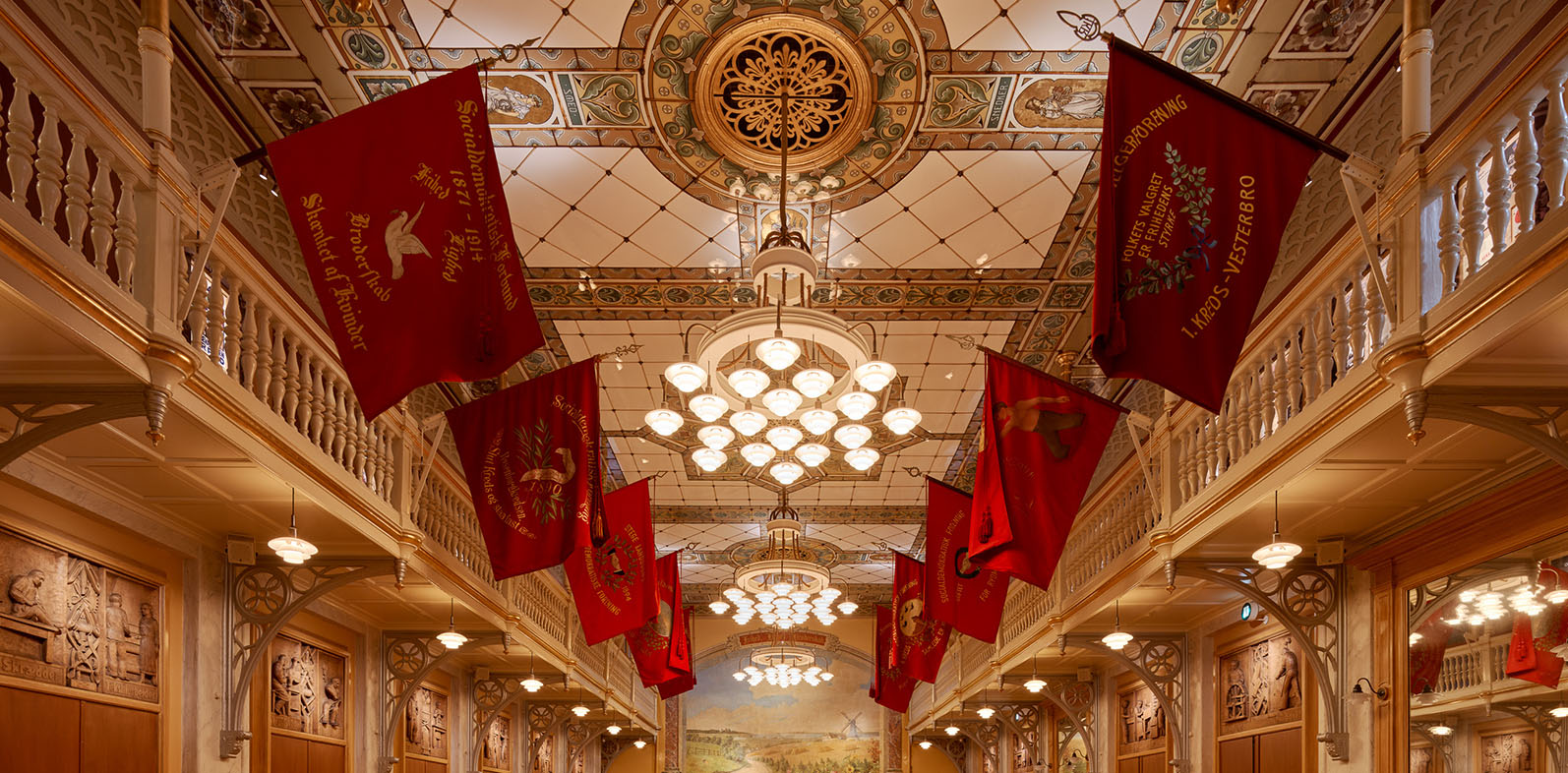
The Banquet Hall is the heart of the Workers’ Assembly Hall from 1879. It is embellished with decorations and picturesque details that testify to the pride of the many different trades and craftsmen who have used the building. The Banquet Hall has been the facility for countless meetings, political discussions, congresses, and parties, and here, thousands of workers have participated in democracy and community life.
The Banquet Hall underwent a major restoration in 2021. Enjoy the beautiful hall with its many stories from floor to balcony. Explore the life that has unfolded in the hall over time and experience the exhibitions and the unique sound and light installation throughout the day.


newly restored ceiling decoration
A very special and unusually large ceiling decoration has been recreated by conservators from the National Museum of Denmark. It dates back to 1913, when the Banquet Hall was expanded. This year is the focal point of the Banquet Hall’s exterior expression today. See the decoration on the balcony.
The restoration is supported by the Augustinus Foundation, the AKF Foundation and the Danish Agency for Culture and Palaces.
♥️♥️♥️♥️♥️- 5 hearts from Politiken
⭐️⭐️⭐️⭐️⭐️- 5 stars from Berlingske

listen to the story
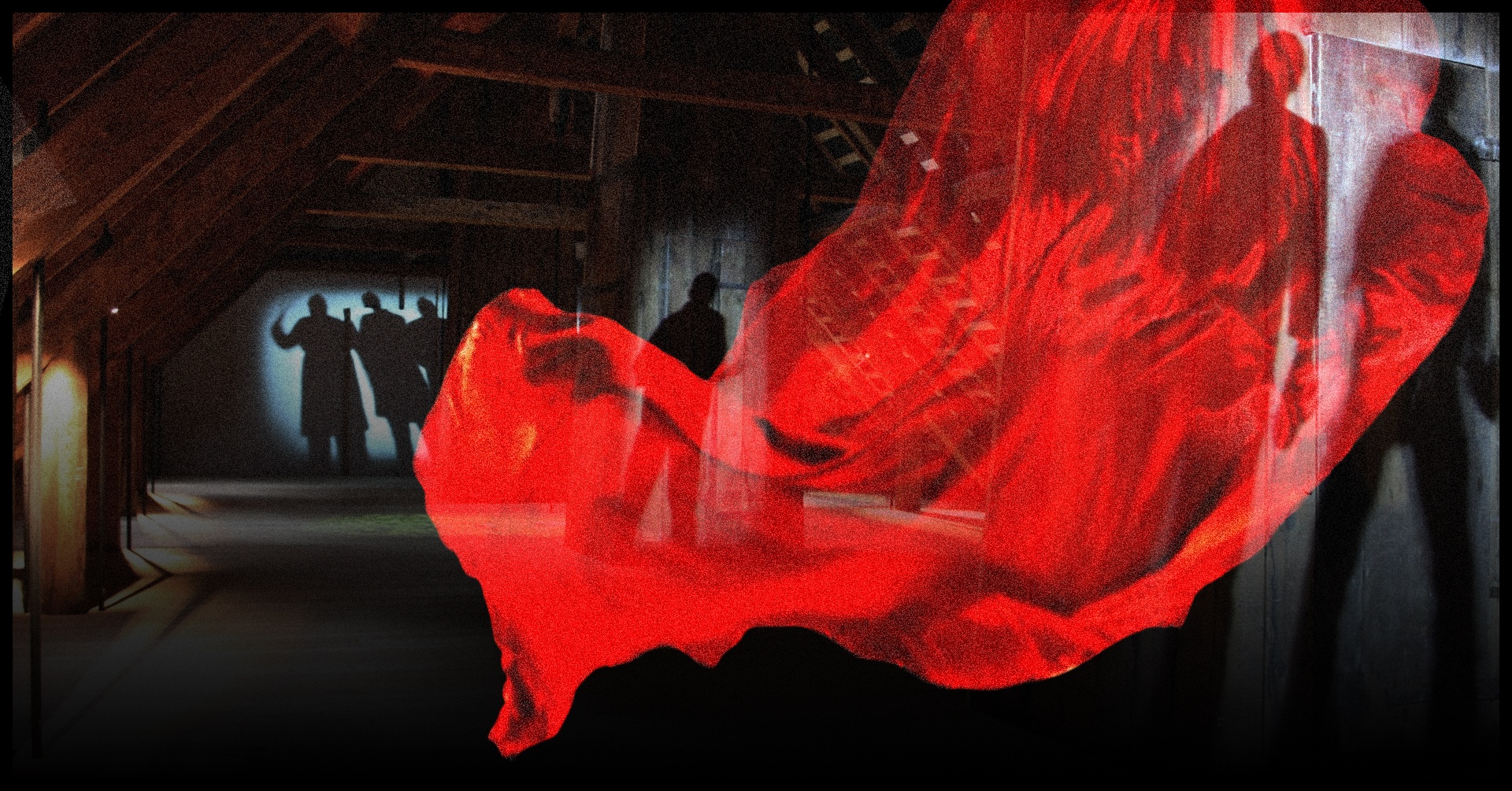
In the light and sound installation Voices of the Banquet Hall, you can hear the songs, speeches, and sound collages of the labour movement throughout the day. The Voices of the Banquet Hall tell the stories of some of the events that have taken place in the building.
The sound installation is created by the artist collective Von Trapp in collaboration with the Workers Museum. The work consists of three sound collages and a selection of workers’ songs sung by a workers’ choir established for the occasion. The work also includes songs submitted by individuals, evocative recordings from the movement’s universe and archival material from the museum’s sound archive.

The Workers’ Assembly Hall
In the room, Stauning, next to the Banquet Hall, you’ll learn the history of the Workers’ Assembly Hall from 1879. It presents the story of how the workers collected thousands of pennies and built the building they needed in record time.
The Assembly Hall was inaugurated on April 23, 1879, and thereafter became one of the focal points of the labour movement in Denmark. Here, individual workers could spend their entire lives in a multitude of activities that included both mandatory general meetings and leisurely activities.
The Assembly Hall was the frontrunner for the many People’s Houses that flourished across the country. Since 1983, the building has housed the Workers Museum, and the unique building stands today as the second oldest existing workers’ assembly building in the world, and stands as physical evidence of the workers’ cultural heritage.

Exhibition on the balcony
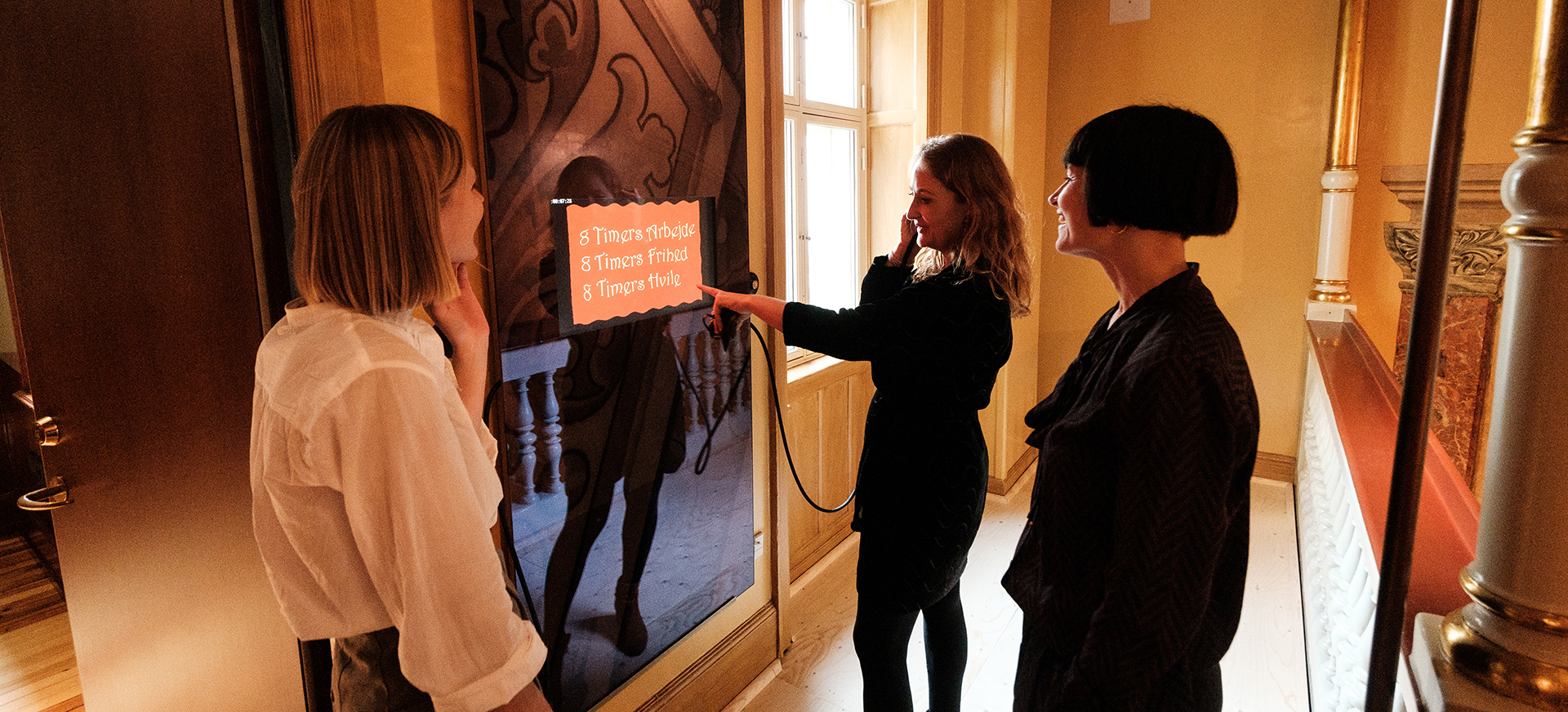
Visit the balcony in the Banquet Hall and experience the exhibition The Movement 1871-2021, which was created in celebration of the 150th anniversary of the labour movement.

knowledge is power!
On the wing side of the balcony, you can explore an exhibition about Louis Pio. In addition to serving as a meeting room, the room also tells the story of how knowledge has been central to the labour movement’s vision. Through enlightenment and knowledge, workers were to elevate themselves as a class.
The room takes its name from Louis Pio, who, as one of the founders of the labour movement, fought for better living conditions and securing workers’ constitutional rights. In his time, knowledge was dangerous, and Pio had to burn all his letters to protect his network.
The exhibition also tells the story of the Labour Movement’s Library and Archives, which, since 1909, has served as a nationwide information institution that has collected, preserved, and made knowledge accessible.