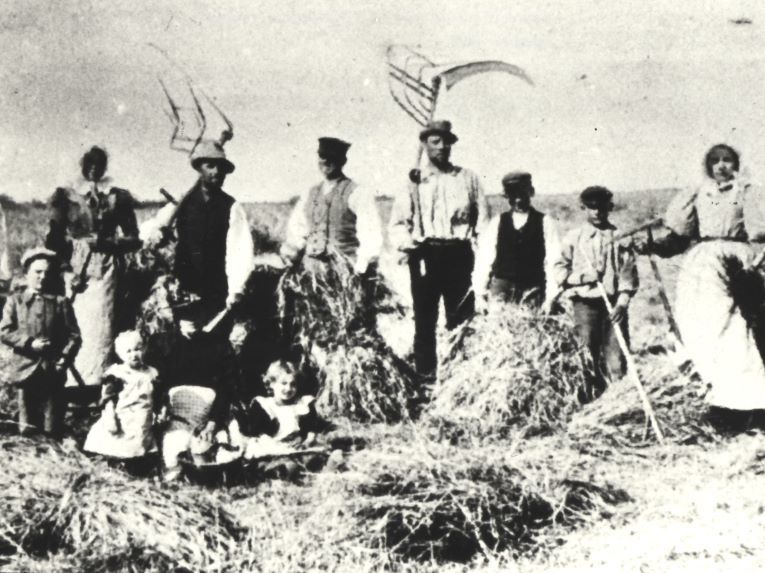
The servant

  • TARGET GROUP: Secondary school and upper secondary education
  • SUBJECTS: History, Danish
  • TEACHING MATERIAL:
    * Sources on the conditions and struggles of servants in the early 1900s
    * Teacher’s guide
    * Themes and working questions for students
    * Films about the serf
    * Photos of servants
    * Links to links

The servants had enough

Servants. Peasantry. Servants.

The great silent majority of servants, from maids, footmen, watchmen and goose girls to laundresses, kept society going by working in the house and in the countryside.The lives and working conditions of servants do not feature much in history books. And they themselves have left few traces until the early 1900s, when first maids and later farm workers began to organize and fight for better conditions.

Servants were given the right to vote when the Constitution was amended in 1915, but formally belonged to the master in a household until 1921.

Sources for teaching

On this page you can get closer to the life of the serf through their own sources; digitized trade journals produced by maids and farm workers from the early 1900s. You’ll find everything you need to teach about the servant. Dive into the servants’ working conditions, housing and struggles for a fairer working life.

You’ll find a teacher’s guide, student page, sources, films and photos ready to use in your lessons below.

Undervisningsmateriale

Teacher's guide

Learning objectives, work questions, literature and links

Student page with tasks

Introduction to the servant through films, photos and texts. Tasks for further work with the servant and their own sources

Movie about the tyre

Short introduction to the service user and sources about and by the service user

SOURCES - THE SERVANT

Five target books 1835-1890

The deed books tell us something about the servants' employments and workplaces.

Maids

Announcements from the Copenhagen Maid Association, no. 1, (1900)

The first professional magazine published by the maids. Here you can read about their program and goals.

The maids' magazine, no. 8, (April 15, 1904)

Here you can read a description of the maids' living conditions.

Maids' Magazine, no. 22 (November 15, 1908)

Here you can read a description of the housing conditions, among other things.

The House Assistant, no. 6 (June 15, 1921)

The maids' trade magazine has now changed its name to Husassistenten. Read, among other things, a description of and comments on the new Domestic Helpers Act, which was to replace the Act on Domestic Servants.

The House Assistant, no. 12 (December 15, 1921)

Here you can read about the maids' views on the new maid law.

Farm workers

Jeppe Aakjær: "A Question". Skive Folkeblad, 1890.

Aakjær describes a boys' room he has seen. He later reuses the description in the novel Vredens Børn.

Tyendebladet, no. 1, (Oct. 6, 1907)

The farm workers' first magazine. Read Jeppe Aakjær's "Tyende-Sang" and what the farm workers wanted with their union.

Tyendebladet, no. 8 (November 24, 1907)

Here you can read about the chambers, among other things.

Tyendebladet, no. 15 (January 12, 1908)

Here you can read about the chambers

Tyendebladet, no. 20 (February 16, 1908)

Here you can read about the chambers, among other things.

Tyendebladet, no. 47 (August 23, 1908)

Here you can read about the chambers, among other things.

LINKS

Danmarkshistorien.dk

Read more about people's right to vote

Dorte Chakravarty

Podcast about the abolition of the Tyendeloven

Lecture about Marie Christensen

Watch a lecture about the champion of maids

Frydenlunds His2rie.dk

More digitized sources about the servant